Published on 6/28/2026
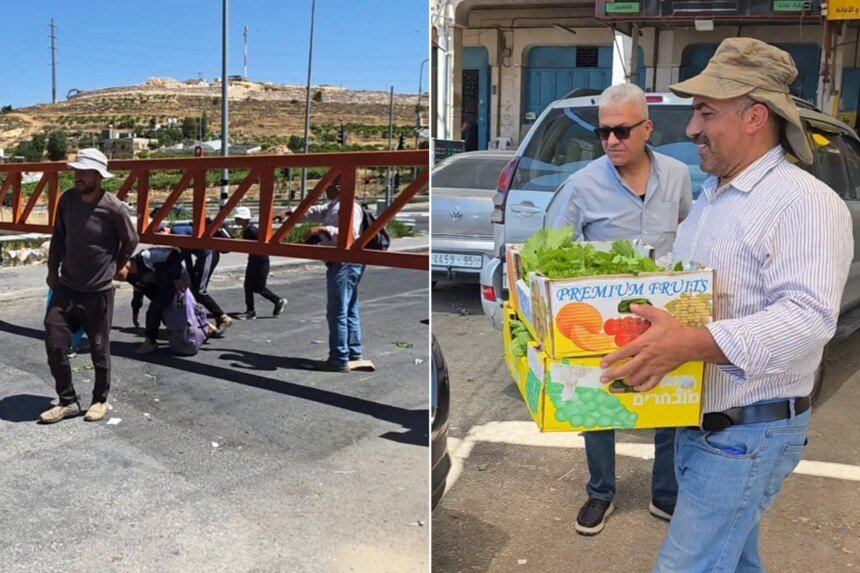
Israeli military gates and barriers are no longer a means of separating areas in the West Bank from each other, turning them into cantons and ghettos only. Rather, they have become a tool to punish Palestinians in their movement to and from their areas between villages and cities. But what is more dangerous is when they turn into a military measure to prevent a citizen from reaching his land and farm.
The town of Halhul lives north of the city of Hebron in the south of the West Bank. The details of this siege are the details of this siege, as the occupation prevents citizens from accessing their lands located in areas classified as “C” and under full Israeli control according to the Oslo II agreement of 1995, to plow them and take care of their vineyards, and they began to enter them surreptitiously.
Settlement outposts replace vineyards
These Israeli measures – says farmer Raed Al-Barbarawi – are destroying the land and leading to damage to the crops that they depend on as their primary source of income. In return, full facilities are granted to the settlers to continue their attacks and persecution of Palestinian farmers.
The suffering began to worsen further since 2020, when the occupation began constructing the “Ma’alia Halhul” settlement outpost (Halhul Heights) on the top of Mount Skullajma in the town of Halhul, with great motivation and instigation from settlement associations of the Israeli government at the time, as the area is described as “the highest mountains of historic Palestine,” according to Al-Barbarawi.
From this outpost, seven other outposts branched out, extending over citizens’ lands and enclosing 14,000 dunams (a dunam = a thousand square metres) behind them, meaning approximately that, according to Al-Barbarawi.
In the face of these measures, citizens no longer have any choice to reach their land except in two ways: either by infiltrating under the cover of darkness, which is often detected by soldiers who carry out the most horrific attacks on the people, or through coordination with the competent Palestinian authorities, which rarely succeeds.
Al-Barbarawi said, while he and his son Waseem were moving inside the land, that the land owned by thousands of residents is no longer available except to dozens and with complicated procedures.

Damage and lack of production
In practice, time is wasted on the road, as farmers are forced to walk a long distance, reaching several kilometers, because the occupation refuses to let vehicles in, and thus they do not complete their work, “and they hardly take a picture of their land,” Al-Barbarawi continues, adding that “gates and barriers are no longer limited to the entrance to the town, but rather are placed between the farms and the lands themselves.”
These Israeli measures had an impact on the agricultural production of citizens, as the land was not plowed or pruned in the required manner and time, but this did not prevent the farmer Al-Barbarawi from asking his son Waseem to pick “juicy grape leaves with a soft texture to satisfy the customers.”
This lack of production is felt by the merchant in the vegetable market in Halhul, Khalaf Nasr, more than others, as he confirmed to Al Jazeera that the market is witnessing a noticeable decline in the quantities supplied compared to previous years, due to preventing farmers from accessing their land.
He said: “The delayed arrival of agricultural products sometimes leads to damage to some of them or a decrease in their prices, and in 30 years of my work in the market I have never experienced a worse situation than this,” adding that the occupation continues to build settlement outposts and their infrastructure at the expense of citizens and their land.
A new decision targets Qalqilya
In the Qalqilya Governorate in the northern West Bank, the situation of farmers is no less bad, in the face of these occupation complications that have exhausted them and destroyed their crops, especially after an Israeli military decision was recently issued prohibiting farmers behind the Israeli separation wall from entering their lands with their vehicles.
This decision – says farmer Muhammad Zamel – will destroy them and cause them great losses, especially since the targeted area is the largest agriculturally in Qalqilya Governorate, which exports the guava, avocado and lemon products for which Qalqilya is famous abroad, and also exports 20% of other agricultural products in Palestine.
According to Zamel, the Israeli decision prohibits the entry of vehicles into the lands, which will cause great suffering to farmers and force them to return to the beginning by transporting their crops via animals.
The Palestinian farmer called on the concerned Palestinian authorities to intervene and put pressure to prevent the implementation of the decision.
According to data from the official Palestinian Wall and Settlement Resistance Authority, the number of military checkpoints and gates in the Palestinian territories is 916, including 243 gates that were installed after October 7, 2023.