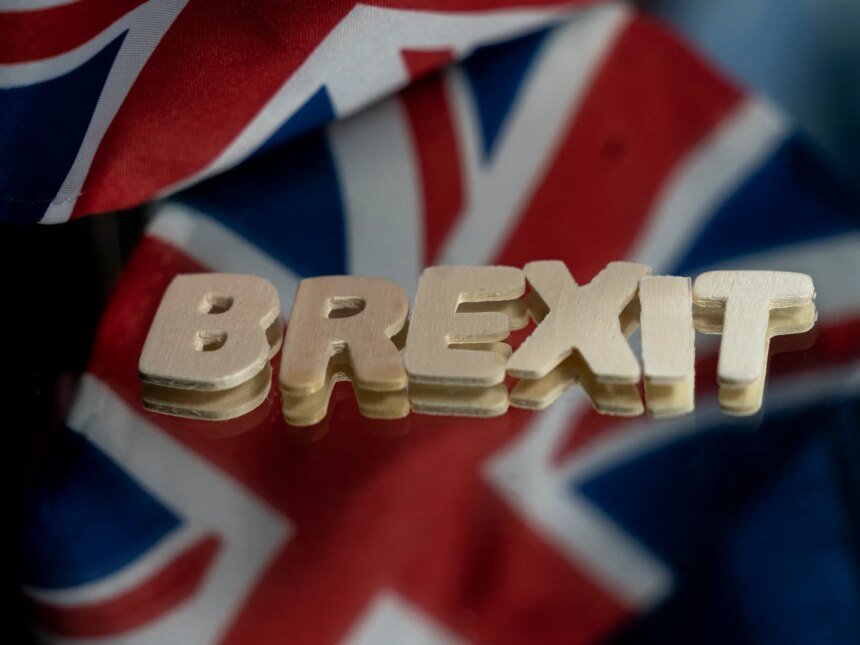
The collapse of British Prime Minister Keir Starmer’s government has raised a question that goes beyond the political crisis to the ability of British public finances to finance the state’s priorities, after the revenue base shrank compared to what it was since Britain’s exit from the European Union. Ten years after the 2016 referendum, the economic debate no longer revolves around the amount of lost output, but rather about the tax revenues lost by the public treasury, and the resulting narrowing of the margin of maneuver for successive governments.
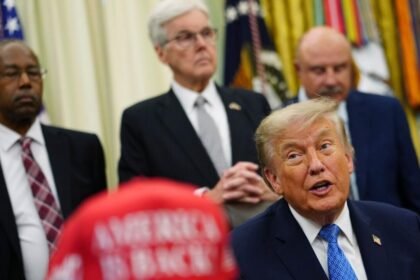
Starmer’s resignation on June 22, 2026 came after months of disagreements over public spending and defense funding, while Finance Minister Rachel Reeves found herself constrained by pledges preventing major tax hikes and rules limiting borrowing. Studies issued by the British Office for Budget Responsibility and independent research centers indicate that these restrictions reflect, to varying degrees, the long-term financial impact of Britain’s exit from the European Union, which has become an inherent restriction in every new budget.
Although Britain has faced other shocks during the past decade, from the repercussions of the global financial crisis to the Corona pandemic, the energy crisis, and the high cost of debt service, most economists believe that Brexit added a permanent structural burden represented by a smaller economy, a weaker tax base, and a narrower fiscal space for governments.
Smaller economy cost
The UK Office for Budget Responsibility assumes that Brexit will reduce the economy’s long-term productivity by about 4% as a result of a decline in UK trade intensity of about 15%. This estimate is based on the average results of 13 independent studies, forming one of the basic foundations on which the government builds its financial forecasts.

Based on the gross domestic product for the year 2024, this loss is equivalent to about 116 billion pounds sterling annually (about 153.1 billion dollars), according to calculations of the “Brexit Fact Piece” platform. The office also estimates that about 40% of this impact has already been achieved with the entry into force of the trade and cooperation agreement between Britain and the European Union in 2021.
Other estimates indicate greater losses, as the National Institute for Economic and Social Research estimated a decline in long-term output between 5% and 6%, and the Center for European Reform suggested a loss of about 5.5%, while Goldman Sachs raised it to 8%. A study by the US National Bureau of Economic Research in November 2025 concluded that the effect ranges between 6% and 8%. Despite the different methodologies, they all indicate that the British economy has become smaller than it would have been had it remained within the European bloc.
Tax revenues, not output
Although output loss is the most commonly used figure, any government’s ability to spend is measured by the size of tax revenues. The estimate of researcher at the Center for European Reform, John Springford, is one of the most cited estimates, as he believes that a 4% drop in productivity in Britain would mean an annual loss of approximately 40 billion pounds sterling (about 52.8 billion dollars) in tax revenues.
Springford adds that the tax increases that amounted to nearly 100 billion pounds (about 132 billion dollars) between 2019 and 2024 could have been avoided, most of which had Britain remained within the European Union, or chosen a more flexible exit formula.

However, if the entire assumed decline in productivity is achieved, the annual tax deficit will approach 50 billion pounds ($66 billion), according to Brexit FactPace calculations. Researchers stress the need to distinguish between loss of output and loss of revenue, because the latter is what determines the ability of the British Ministry of Finance to spend without increasing borrowing or taxes.
The Institute for Fiscal Studies warns that closing a revenue gap of this size would require, on the current course of public finances, an additional year or two of austerity measures. The continuation of this shortfall also keeps the public debt higher than its assumed level, and raises debt interest payments, transforming the tax loss into accumulated financial pressures.
Commercial return not achieved
Britain’s Brexit supporters bet that the freedom to conclude new trade agreements would compensate for the loss of the European market, but most economic studies indicate that the return was much lower than those expectations.
The Center for Economic Performance at the London School of Economics described the “Global Britain” strategy as a “fantasy,” estimating that the free trade agreements signed since 2016 would increase the size of the British economy by only 0.47%, equivalent to approximately 13 billion pounds sterling ($17.2 billion), in exchange for economic losses that researchers estimate at nearly nine times this number.
Estimates from the Office for Budget Responsibility are consistent with these results, as the free trade agreements with Japan and Australia are expected to add only about 0.1% to the GDP within 15 years, while government estimates indicate that the new trade agreements compensate for only about 14% of the lost trade with the European Union.
As for the Comprehensive and Progressive Trans-Pacific Partnership Agreement, which Britain joined in 2023, the Independent Committee for British-European Relations describes it as having limited economic value, but it “will not compensate for lost trade with the European Union,” which means that the gains of the new agreements are still much less than the losses of the European market.
From disagreements over the budget to a government crisis
The decline in tax revenues alone does not lead to the fall of governments, but the peculiarity of the British case lies in the intersection of three restrictions, which limited the ability of governments to absorb financial shocks.

The first is electoral pledges not to raise the three main taxes:
- income tax
- National Insurance
- Value added tax
This reduced the Ministry of Finance’s options as revenues declined.
The second restriction is the rules of fiscal discipline, which oblige the government to reduce public debt and achieve fiscal balance, so that any shortfall in revenues requires cutting spending, increasing other taxes, or amending fiscal rules, which is an option that carries a high political cost.
The third restriction comes from the financial markets, which have become more stringent towards any unfinanced financial expansion since the budget crisis during the government of former Prime Minister Liz Truss in September 2022, which ended with a sharp selling wave of government bonds and the fall of the government within weeks.
Studies believe that the combination of these restrictions has turned every budget into a zero-sum equation, such that any increase in spending on defense, health, or social care requires reducing spending in another item or increasing revenues. In this context, the June 2026 resignation came to highlight how an annual tax deficit in the range of 40 to 50 billion pounds sterling (between 52.8 and 66 billion dollars) could turn budget disputes into a government crisis.
Brexit is not the only factor
But the report of researcher at the European Reform Center John Springford warns that linking all the financial pressures facing Britain to Brexit would be an oversimplification, as public finances are still bearing the effects of the global financial crisis in 2008, the Corona virus pandemic in 2020, and the energy price shock in 2026, in addition to the rise in debt interests and some of the financial options of the London government.

Determining the impact of Brexit of these pressures remains one of the most complex files. This is why John Springford adopted the “virtual peer” methodology, which compares the British economy with similar economies that experienced the same shocks without leaving the European Union. He says he is “reasonably confident” in his findings, while a study by the US National Bureau of Economic Research, using a different methodology, found results that support the same conclusion.
Estimates are disputed
This assessment does not enjoy complete consensus among economists. Julian Jessop, an economic fellow at the Institute of Economic Affairs, believes that the Office for Budget Responsibility’s assumption of a 15% decline in trade intensity and 4% productivity is based on “relatively weak” evidence, and that British trade has held up better than previous models expected. The 4% estimate represents an average of studies prior to 2020, and does not take into account potential gains from new trade agreements, easing of regulatory restrictions or immigration policies.
On the other hand, the report indicates that recent studies, including research by the Center for European Reform and a study by the US National Bureau of Economic Research, concluded that the damages predicted by the models have actually appeared in trade and investment. Therefore, the report considers that the Office for Budget Responsibility’s estimate of a 4% decline in productivity represents a reasonable reference within the range of 4% and 8%, and that even the lower end of this range is sufficient to create a large financial gap, limiting the ability of any government to expand public spending.
A constant burden on finances
A decade after the 2016 referendum, the report finds that the financial impact of Brexit did not appear in the form of a single loss, but rather across years of higher taxes, spending controls, and reduced room for fiscal maneuver.
Brexit was not the only cause of the financial or political crisis, but it added, according to most economic estimates, a permanent structural burden on public finances, at a time when weak revenues and the high cost of debt service limit its ability to finance spending priorities.