
Published 18.44
Customs gets a new tool in the work against organized crime.
The authority must be able to seize property for the Crown Bailiff.
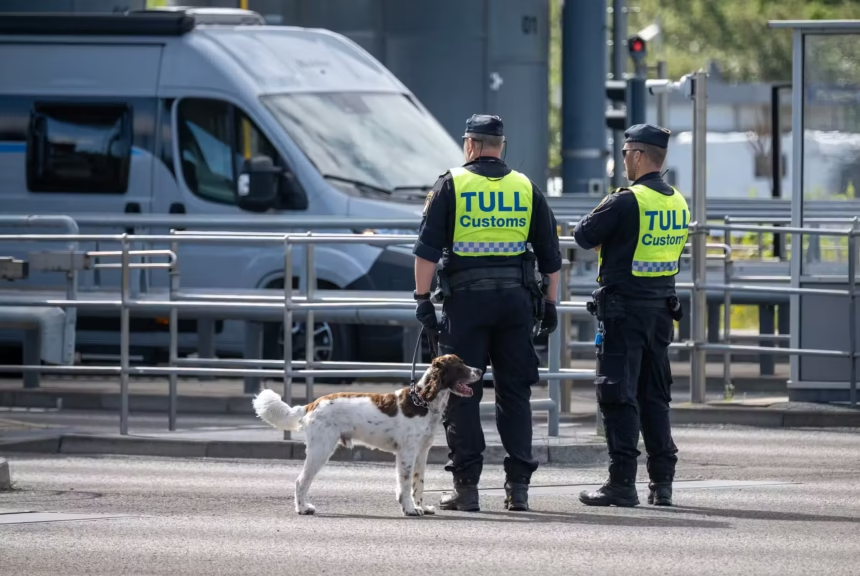
– It has been a wound in the customs heart when we have had to let a car through, even though we know that the person in the car has debts, says Gürsu Öncü from the Customs Agency.
A shiny car rolls into the customs gates. The driver is known in criminal circles and has high debts, including to crime victims. The customs officials’ check does not show that any crime has been committed or any opportunity to confiscate property from suspected criminal activity. However, they see that the person has debts and that there is property that can cover them.
At the moment must Customs in such cases, call the police so that an attachment can be made. The police have so far been the only authority that has been allowed to assist the Crown Enforcement Officer when an attachment has to be made remotely.
– We have had to release the car when the Bailiff or the police could not come, says Gürsu Öncü, national coordinator for criminal finance at the Swedish Customs Administration.
New control
That changes on July 1, when the Swedish Customs Service, the Ecocrime Authority and the Coast Guard may start acting as assistants in remote enforcement. The Swedish Customs Service therefore adds another item to its list for checks in or out of Sweden.
The change means that the Swedish Customs Service, without the presence of the Crown Enforcement Officer, can take seized property into custody if the property is found in the authority’s operations. In addition to this, customs officers must notify the Bailiff when they come across property that they assume may be subject to seizure. It is then the Crown Bailiff who makes the decision on the seizure itself.
Redress for victims of crime
– It is easy to believe that the Swedish Customs Service will start chasing people in debt, but that is not our mission. Primarily, we stop a car for smuggling, says Gürsu Öncü.
Customs will be guided by the previous work of the police. Gürsu Öncü says that remote enforcement is one of several ways to access organized crime in Sweden. But it is also about victims of crime getting redress.
– We want to work so that the crime victims who are awarded compensation receive their money, says Gürsu Öncü.
This is how the work will be done at the Customs Office
On July 1, several changes to the law come into force, including new rules on remote foreclosure.
The Swedish Customs Service is one of the law enforcement agencies that will be allowed to act as an assistant to the Crown Bailiff in the case of remote enforcement.
The goal is that it will help the Crown Enforcement Officer to secure assets in an efficient way, so that more people pay their debts to, among other things, victims of crime.
The customs authority’s powers are expanded and a check will have the following order:
1. The car is taken out for a check regarding smuggling. If no restricted goods are found, for example narcotics or weapons, the check continues.
2. Customs checks whether there is reason to draw up a notification for “independent confiscation”. It is about property that is acquired with funds that are suspected to come from criminal activity.
3. If independent confiscation is not relevant, it is investigated whether the person has debts to the state. If the person has debts, the Swedish Customs Administration contacts the Kronofogden, in order to be able to collect the debt remotely.
Source: Customs