Published on 6/26/2026
|
Last update: 02:20 (Mecca time)
How can the New Right in Latin America govern if its electoral victory does not give it the ability to build political consensus? A question posed by academic Christopher Sabatini, considering that the victory of right-wing movements in a number of countries in the region may be much easier than managing government, in light of severe polarization, the decline of the center forces, and legislative divisions that hinder any government program.
In an article in Foreign Policy magazine, Sabatini, a researcher in Latin American affairs at the British Chatham House Institute, believes that the recent presidential elections in Colombia represent a model of this new scene, after the conservative businessman Abelardo de la Esparía narrowly defeated left-wing candidate Ivan Cepeda.
Read also
list of 2 itemsend of list
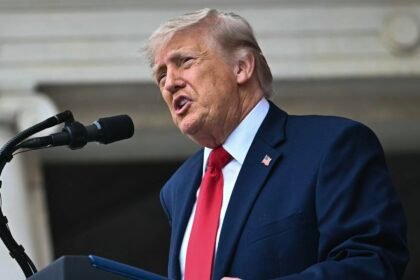
With this electoral achievement, de la Espria joins a political wave that the writer describes as close to US President Donald Trump, and which includes Argentina, Chile, Ecuador, El Salvador, Honduras, and perhaps Peru as well.
The author warns that the danger lies not only in the possibility that some of these leaders may seek to strengthen their executive powers at the expense of democratic institutions, as happened in El Salvador and Ecuador, but rather in the disappearance of the centrist movement that used to constitute a space for consensus between the right and the left.
He says that De Laspria’s victory by 49.7% compared to 48.7% for his competitor reveals the fragility of the popular mandate he obtained, stressing that “his inability to even obtain a clear majority highlights the bumpy road that awaits him, not only as president, but also before governance in Colombia.”
Politically orphaned
According to the article, elections in Latin America are no longer between moderate right and left, but rather have become a confrontation between extremist parties, while centrist parties have retreated to the margins, which makes the winners “political orphans” who lack allies capable of passing their policies.
The writer points out that conservative Chilean President José Antonio Cast is already facing difficulties due to the dispersion of parties and the decline of his popularity, and he expects that the next president in Peru will face the same obstacles, while the mission of the elected Colombian president seems more complicated, which may fuel his authoritarian tendencies.
Sabatini attributes this shift to voters’ increasing frustration with previous governments, their inability to improve public services, contain crime, and achieve social mobility, as well as the spread of corruption issues, which prompted large sectors to abandon traditional parties.
In Colombia, de la Espria benefited from growing security concerns after the failure of outgoing President Gustavo Petro’s policy of negotiating with armed groups, pledging to pursue a strict security policy that includes building new prisons and directing military strikes against criminal groups. He even pledged to eliminate criminals “just as cockroaches and rats are eliminated,” as he put it.
But the writer points out that the elected president lacks a parliamentary base that would enable him to implement his promises, as the party supporting him received only one seat in the House of Representatives and only four seats in the Senate, which portends ongoing clashes with Parliament, similar to what Petro faced during his term.
Sharp polarization
This scene is not limited to Colombia, as the article points out that Peru is also experiencing a state of sharp polarization between the right and the left, with very close election results, and repeated accusations of fraud from the losing party, while the country is already suffering from political instability that has led to the succession of nine presidents in ten years.
Sabatini concludes that the most dangerous thing facing democracies in Latin America is not the rise of the right or the left per se, but rather the absence of a political center capable of producing long-term consensual solutions. He believes that the continuation of this polarization will make economic and security reforms more difficult, raise the possibility of political violence, and complicate the formulation of stable foreign policies.
The writer concludes that the best scenario for the region is to restore the middle space and build a common agenda to address the social, economic, and security crises, but he adds that Trump’s intervention to support his allies makes achieving this consensus unlikely at the present time, and it is likely that waves of popular discontent in the future will lead to the downfall of these leaders as well, in a new cycle of rejection of existing governments.