Published on 6/24/2026
|
Last update: 20:55 (Mecca time)
During the past few days, France and large areas of Western Europe were exposed to a severe heat wave, during which temperatures reached more than 44 degrees Celsius in some areas. This was accompanied by disruptions in schools, transportation, and electricity, and with a significant increase in demand for energy due to the operation of air conditioners and fans.
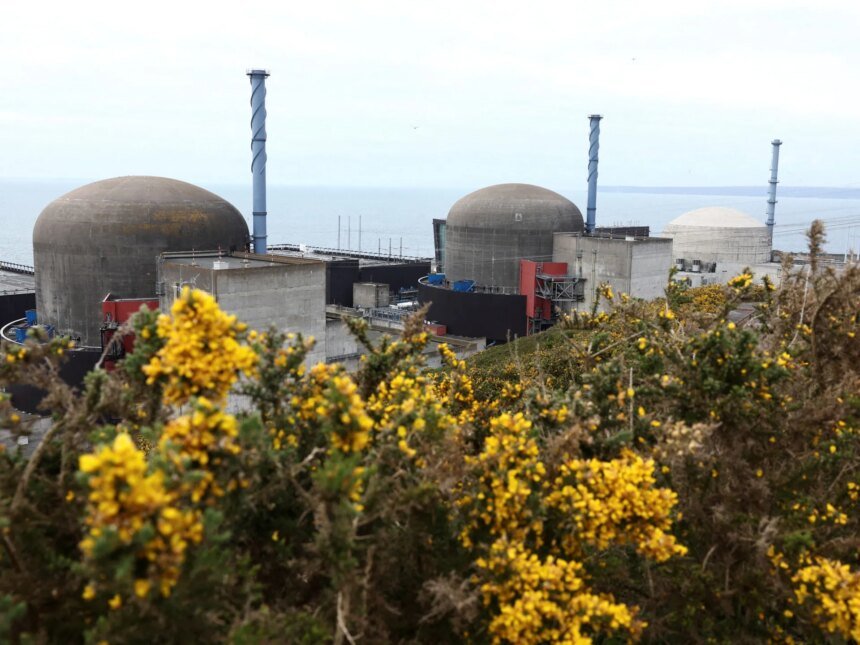
At the heart of this scene, nuclear power plants faced a problem, as the Electricité de France company stopped the second reactor at the Gulfech station, located on the Garonne River in southwestern France, after the temperature of the river’s water rose.
At the same time, it reduced the production of the second reactor at the Nogent-sur-Seine plant in north-central France, and planned to reduce the production of a reactor at the Puget plant on the Rhone River.
According to French reports, these measures affected about 4.6% of the nuclear capacity installed in France, and the company also warned that the Blaye and Saint-Alban stations might be affected if the high temperatures continued.

Climate fragile system
The scientific reason is simple in essence, but it reveals a fragility that was not seen in the energy system. The nuclear reactor does not convert nuclear fission into electricity directly, but what happens is that the heat resulting from the fission of uranium atoms heats the water, producing high-pressure steam that drives huge turbines, thus generating electricity.
After that, the steam must be cooled to return to water, and the cycle continues. This is why nuclear plants need a permanent cooling source, represented by a river, sea, lake, or cooling towers.
Under normal circumstances, the station draws water from the river, uses it for cooling, and then returns part of it to the river at a slightly higher temperature. But during a heat wave, the river becomes already hot, and its level may be low if the heat is accompanied by drought.
In this case, the environment surrounding the reactor is no longer able to receive more heat without harm, and as the water temperature increases, the dissolved oxygen in it decreases, and fish and aquatic organisms are exposed to thermal stress.
If a power station returns hotter water to a river that already suffers from heat and lack of flow, the environmental risks may increase, so the authorities impose limits on the temperature of the water at the drainage point or at the bottom of the station, and when these limits are close to being exceeded, the station reduces its production, or stops the reactor temporarily, but this is not related to a radiation risk, but rather because continuing to operate at full capacity may harm the environmental system.
In the case of Gulffish, EDF said that the shutdown is not related to a nuclear safety risk, but rather is a measure related to environmental rules, and the company that operates the French electricity grid also confirmed that France has sufficient production capacity to meet demand, even with the possibility of stopping some units in the following days.

Climate change affects everyone
But these measures open the door to a broader discussion, as thermal power plants, whether nuclear, coal- or gas-fired, depend to varying degrees on water for cooling.
As temperatures rise, electrical networks face a double pressure: demand rises because people turn on air conditioning, and at the same time the efficiency of some generating stations may decrease or their capacity may be restricted due to water temperature or low river levels.
What is worse is that widespread heat waves narrow the margin for maneuver. If neighboring countries suffer from the same problem, the ability to easily import electricity from abroad decreases. In France specifically, each additional degree Celsius during heat waves increases the national demand for electricity by about 0.7 to 1 gigawatt, often due to the use of air conditioning devices.