
Gray left Northern Ireland after being overlooked for the top job in the civil service in 2020.
Gray left Northern Ireland after being overlooked for the top job in the civil service in 2020.
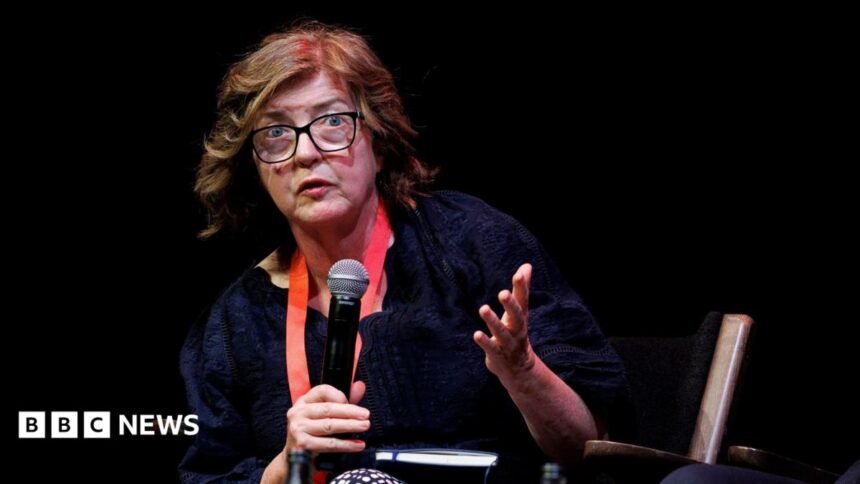
Baroness Sue Gray, former chief of staff to Sir Keir Starmer and one-time civil servant in Northern Ireland, has said she “fears for Stormont”.
She said people in Northern Ireland “deserve action and decisions”, which she accused of being too slow at times, due to bureaucracy within the power-sharing institutions.
Baroness Gray left Northern Ireland after being overlooked for the top job in the civil service in 2020.
She went on to become Boris Johnson’s principal advisor on the union and was in Sir Keir’s government after Labour won the 2024 general election, but quit just months later due to rows over her salary as chief of staff.
Baroness Gray was speaking at a panel event organised by the Social Democratic and Labour Party exploring constitutional change, coinciding with the 10-year anniversary of Brexit.
The former civil servant said as a result of slow decision-making, she believed that Northern Ireland should have a number of metro mayors, like in England, with more authority to take regional decisions.
Pressed on how many she would want to see, she suggested at least two – Belfast and Londonderry.
Asked about the prospect of Andy Burnham becoming the next PM if he secures the Labour leadership, Baroness Gray said Burnham had a lot of skills to bring to the role.
“I think we’ve got time to the next election,” she said.
“People will see… actions speak louder than words.
“If Andy is the successor his experience, not just in working in Manchester and Whitehall, he can bring a lot of experience to it.”

Baroness Sue Gray was talking at a panel event exploring constitutional change
Baroness Sue Gray was talking at a panel event exploring constitutional change
PSNI could stay in event of Irish unity, minister says
Also speaking at the event, Irish justice minister Jim O’Callaghan said he would have “no issue” with the Police Service of Northern Ireland (PSNI) being retained in the event of a united Ireland.
O’Callaghan had previously raised the prospect of keeping the PSNI five years ago, when he was a backbench Fianna Fáil TD.
On Thursday, the minister said he still saw benefits in keeping two police forces on the island of Ireland in the event of people voting for unification.

Jim O’Callaghan speaking at panel discussion
Jim O’Callaghan speaking at panel discussion
Pressed on whether an Irish unity referendum could happen before the end of the decade, he said it could occur if political structures in Great Britain changed by then.
“If Reform came to power, if they decided they want to get out of the European Convention on Human Rights and dispense with Northern Ireland,” he said.
“We can’t predict the future but it’s worth having conversations like this.”
The conference also heard from former First Minister of Wales Mark Drakeford, who said he hoped if Burnham became the next prime minister that he would “abolish” the roles of secretaries of state for Northern Ireland, Scotland and Wales.
He described the positions as “territorial” and that he felt Burnham, if successful, would be a “radical” leader in changing how devolution is structured.