Published on 6/23/2026
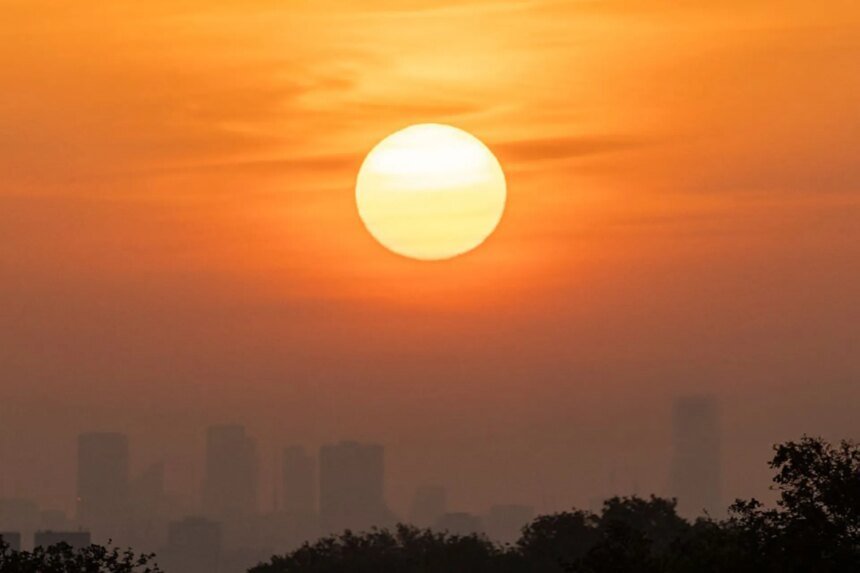
During the past few days, the continent of Europe entered one of the major heat waves, after a very hot air mass expanded from the south and west of the continent towards France, Spain, Italy and Germany, all the way to Britain.
The matter went beyond using air conditioners or traveling to beaches. Schools were closed in some countries, maximum health warnings were issued, and some public activities and transportation declined in more than one country, while the temperature touched or exceeded the 40 degree Celsius barrier in large areas.
In France, which seemed to be at the heart of the event, the wave turned into an early health and humanitarian crisis. By the evening of June 22, press reports spoke of the death of at least 18 people in heat-related incidents, including two children who were found inside a car in the southeast of the country, while the authorities recorded separate drowning cases of people who tried to escape the heat into rivers and canals.
In Spain, Italy, Germany, and Britain, the authorities took similar measures, issuing maximum warnings, opening cooling centers, and canceling several external events.

What causes the wave?
The first cause of this wave is a strong air pressure over the continent, or what is sometimes called in the media a “heat dome.” In this case, the air descends from top to bottom, compresses near the ground and heats up, preventing the formation of clouds and prolonging the hours of sunshine.
This creates a feedback loop, where the sun hits harder, with drier soil, less evaporation, and a ground surface that heats up more quickly, raising temperatures more strongly.
The second reason is the rush of very hot air from North Africa and the Sahara towards western Europe. A Reuters report described this pattern as close to an “omega block,” a form of jet stream that makes the hot mass slow-moving and difficult to dislodge.
The third reason is the earlyness of the season, as it had already witnessed an early heat wave in May 2026, and the Copernicus Authority reported that western Europe experienced an unusual and early heat wave between May 21 and 30, with daily anomalies exceeding 10 degrees above average in western France, England and Wales, which opened the door to more severe waves.
How does it affect health?
Heat waves clearly affect health, because they put pressure on the body’s natural cooling mechanism. When the temperature rises, especially with humidity or poor air movement, the body tries to get rid of the heat through sweating and dilating blood vessels, but this process consumes water and salts and places an additional burden on the heart and kidneys.
Therefore, symptoms often begin with fatigue, headache, dizziness, nausea, muscle cramps, dry mouth and decreased urination, and may develop into heat exhaustion if the person does not get adequate cooling and fluids.
The greatest danger is heat stroke, an emergency that occurs when the body is unable to regulate its internal temperature. Here signs such as confusion, disturbance of consciousness, fainting, convulsions, or severe body temperature may appear, and they may become fatal if intervention is delayed.
The problem is not limited to those working under the sun; Hot nights are also dangerous, because they prevent the body from recovering after a long day of heat stress, and increase the burden on the heart, breathing, and sleep.
The most vulnerable groups are the elderly, children, pregnant women, patients with heart, kidney, respiratory system, and diabetes, and those who take medications that affect fluids, pressure, or sweating, in addition to outdoor workers and residents of poor cities or poorly ventilated homes.
In cities in particular, the “heat island” phenomenon doubles the danger, as concrete and asphalt retain heat until nighttime. That’s why the danger of heat waves is measured not by extreme temperatures alone, but by their duration, humidity, nighttime temperature, and people’s ability to access shade, water, and cooling.
What is the role of climate change?
Climate change does not mean that every weather spike is directly caused by global warming. High temperatures and heat masses have always occurred, but global warming makes the peaks of heat waves higher, the nights warmer, and the possibility of breaking records greater.
Europe is a special case, as it is the fastest warming continent in the world, as the World Meteorological Organization says that temperatures in Europe have risen by more than twice the global average in recent decades.
The European State of the Climate report also indicated that during the year 2025 Europe witnessed record heat waves, and that 95% of Europe experienced annual temperatures above average.