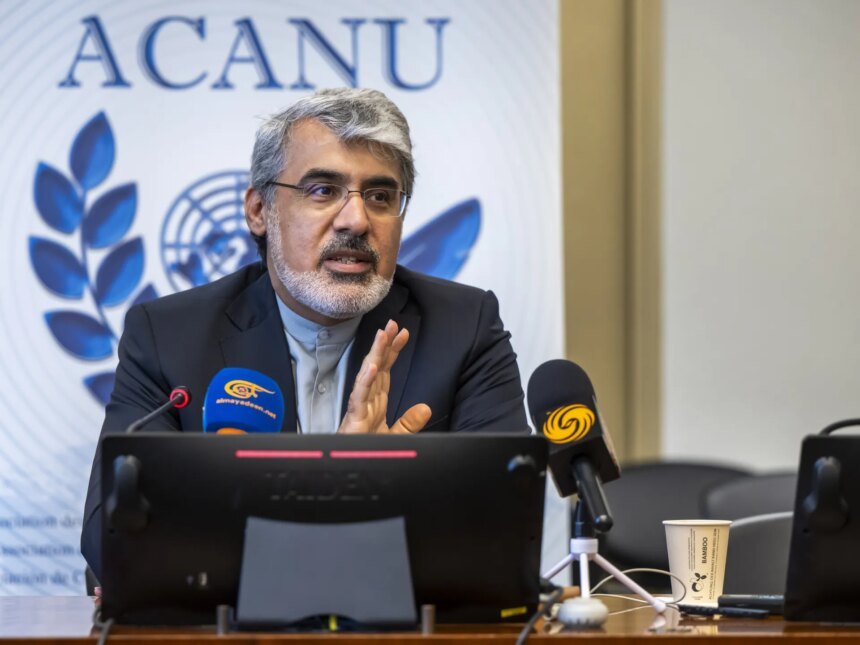
Iran’s permanent representative to the United Nations, Ali Bahraini, identified 5 items that the United States must adhere to and activate immediately before proceeding with negotiations, during the 60-day period, on the remaining controversial issues, the first of which is the Iranian nuclear file and the return of International Atomic Energy Agency inspectors.
Observers say that implementing the terms demanded by Tehran would give Iranian negotiators actual gains on the ground and strong guarantees before conducting talks on its nuclear file with the Americans. These items include in particular:
1. Release frozen Iranian assets
The United States agreed to release Iranian assets worth about $12 billion under the initial agreement, but President Donald Trump proposed that those assets be placed in an escrow account and used to purchase food and medical supplies from the United States, including corn, wheat and soybeans from American farmers.
But a Bahraini denied reaching any agreement of this kind, and told reporters, “Iran is the only country that decides what it will do with its assets that will be released, and therefore I reject any claim that there is any role for any other country in influencing these decisions or these procedures.”
The frozen Iranian assets include oil revenues and central bank reserves held abroad due to sanctions imposed many years ago.
It is expected that the release of these assets will provide a boost to the Iranian economy, which is suffering from the consequences of the blockade, war, and Western sanctions.
2. Lifting sanctions on Iran
This clause relates to Articles 10 and 11 of the Memorandum of Understanding, which stipulate the lifting of restrictions on Iranian oil and petrochemicals and related services.
In the first step to provide economic support to Iran, the US Treasury Department announced a sanctions waiver until August 21, allowing Tehran to sell and receive payments for oil and related products.
Bahraini said that lifting sanctions on the sale of Iranian oil and chemical products is a test that can be expanded to include other items, adding that Iran seeks the complete lifting of sanctions, as two working groups will be formed in the coming days to focus on this file in addition to Iranian nuclear activities.
3. Ceasefire in Lebanon
Iran wants an immediate commitment to a ceasefire in Lebanon and the withdrawal of the Israeli army from southern Lebanon, the stronghold of the Hezbollah group, as part of the initial agreement with the United States.
The ceasefire has largely held in southern Lebanon since Friday, but Lebanese Civil Defense and state media said Israeli fire killed two people there on Tuesday. Hezbollah said the attack represented a violation of the ceasefire.
Israeli media, citing sources, said that Trump exerted pressure to impose restrictions on the movement of the Israeli army in Lebanon. But Israel said that it would maintain a security zone in the south and would continue to move in order to “neutralize” the threats directed against Israeli soldiers and citizens. Israel and Lebanon began a new round of talks in Washington today.
Iran’s Permanent Representative to the United Nations Office, Ali Bahraini, stated that Iran considered the implementation of this clause a prerequisite for moving to the next stage of the negotiations, noting that progress in the negotiating track did not become possible until a “fragile ceasefire” was reached in Lebanon.
Bahraini said that the Israeli attacks on Lebanon led to a delay in the start of the next round of negotiations with the United States.
Outside of American pressure, it is not clear how long the Israeli commitment not to violate the ceasefire agreement, which has remained intermittent in southern Lebanon, can last.

4. Lifting the blockade on Iranian ports
Tehran demands that the US naval blockade on Iranian ports be gradually lifted in implementation of Articles Four and Five in exchange for opening the Strait of Hormuz to international shipping traffic and for Iran to make arrangements to ensure safe transit through the Strait.
This clause actually began to be implemented with the US President’s pledge to keep the strait open and without imposing an additional naval blockade.
The United Nations International Maritime Organization said today that it has begun implementing an evacuation plan for hundreds of ships carrying 11,000 sailors stranded in the Gulf to cross the Strait of Hormuz in close cooperation with Iran, Oman and all other coastal countries in the region, the United States and the maritime transport sector, after obtaining “the necessary security guarantees and carefully verifying the availability of safe navigation conditions to support these operations.”
But on the other hand, President Trump also stated that the United States would keep ships in the strait in anticipation of the need to re-impose the blockade on Iranian ports, something he described as “very unlikely at this stage.”
5. Administration of the Strait of Hormuz
Iran demands respect for its sovereignty in the Strait, which means sharing it exclusively with Oman in managing the vital corridor for energy supplies to global markets.
Oil tanker traffic through the Strait of Hormuz began to increase yesterday, Monday, but Iran and the Sultanate of Oman hinted – in a joint statement – at the possibility of imposing fees on the use of the Strait, despite emphasizing a commitment to international law and ensuring safe passage without traffic fees through the Strait, the closure of which led to a rise in oil prices and global inflation.
Oman and Iran said that a joint working group will seek to reach an agreement on the management of navigation in the strait, the services provided and the costs associated with it. They added that any arrangement must respect “their sovereignty and sovereign rights.”
In practice, the smooth implementation of this arrangement towards international navigation so far depends on the extent of commitment to implementing the remaining immediate provisions demanded by Tehran.
Between understanding and blurring
Despite the understandings that characterized the implementation of some points in the initial agreement, such as lifting Iranian oil sanctions and gradually restoring international shipping traffic in the Strait of Hormuz, conflicting statements on other points, such as the fate of frozen Iranian assets and the ceasefire in Lebanon, shed light on the state of uncertainty surrounding the negotiations aimed at stopping a war that has turned the situation in the Middle East upside down.
The course of the negotiations is becoming more ambiguous in light of the mutual linking between Tehran and Washington of the controversial points on the nuclear issue, as the United States is pressing for Iranian concessions on the nuclear file in exchange for an economic package, while Tehran stipulates the immediate implementation of key points in the initial agreement before moving on to the nuclear file negotiations. This situation puts the fate of the negotiations on a tightrope.
However, the Pakistani and Qatari mediators stated that the two sides agreed during the talks that took place in the Swiss resort of Bürgenstock on a road map to reach a final agreement within 60 days, in an attempt to build on the interim agreement they signed last week after a war that lasted more than 3 months.