The artificial intelligence boom has a big problem. Technology companies say they need to quickly build lots of new power-hungry data centers to develop A.I., but the energy industry typically needs years to construct power plants, solar farms and battery installations.
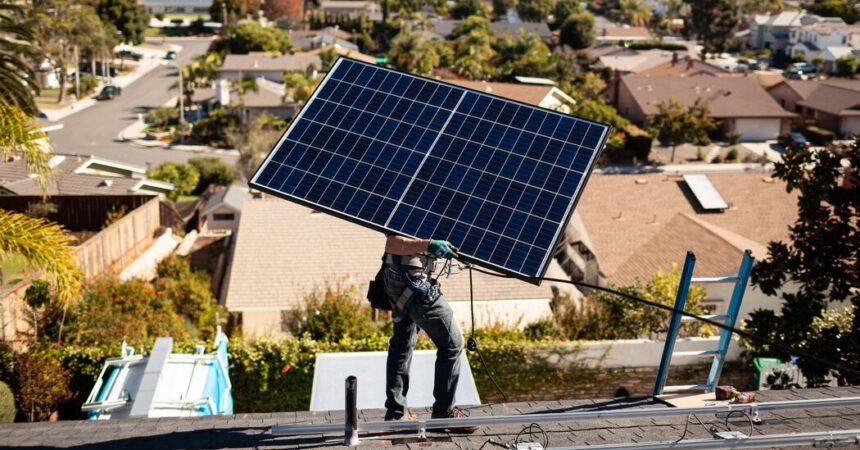
Three companies involved in installing and managing rooftop solar panels, home batteries, smart thermostats and other devices say they can solve the problem by tapping into devices — largely those that control, produce or store energy — in millions of American houses and apartments.
The companies are Tesla, the electric vehicle and battery maker; Sunrun, the country’s largest rooftop solar and battery installer; and Renew Home, a Google spin off that manages home thermostats and other devices. On Wednesday, they plan to announce that they are working together to free up enough electrical capacity to meet the needs of 17 large data centers during periods of high demand.
For example, after getting individuals to opt in, the companies could use software to direct thousands of the consumers’ home batteries to charge when there is an abundance of solar energy and then release that power after the sun has set. Making more energy available in the evening, when demand rises, would reduce or eliminate the need to add large power plants alongside new data centers.
“It takes a lot of time to build utility scale solutions,” said Mary Powell, chief executive of Sunrun, who once ran an electric utility in Vermont. “We’re sitting on top of solutions right now.”
Utilities generally have enough spare capacity to serve new data centers most of the time but not when demand for electricity is very high, including during heat waves and cold spells. Energy and technology executives have been struggling for years to figure out how to to power data centers when grids are under strain.
Building new power lines and energy generators, including natural gas power plants or solar farms, can take years and cost billions of dollars. And under current federal and state rules, those costs are typically passed on to everybody who uses electricity, including individuals, on monthly electricity bills.
Sunrun, Tesla and Renew Home assert that at least some of that new spending is not needed or can be put off for years. Home energy devices can effectively be knitted together to serve as a virtual power plant, in industry jargon. But unlike actual power plants, such systems can also store or use energy. Thousands of thermostats can be adjusted by a degree or two to reduce or increase energy use, depending on what is best for the grid.
Some states, like California, have programs that already operate along the lines of what the three companies are proposing. But the companies would need to persuade electric utilities, grid managers and state regulators across the country to work with them to hit the goals they have outlined.
“It’s really a paradigm shift with the way we operate the electricity system,” said Leah Stokes, an associate professor of political science at the University of California, Santa Barbara, who specializes in energy and environmental policy. “Maximizing these smart devices is a huge way to unlock value across the grid.”
Dr. Stokes said the California program provided the equivalent of a nuclear power plant’s capacity, or enough to run a large data center. Sunrun, Tesla and Renew Home said their private partnership could provide 16 times as much electrical capacity as California’s program across the United States during periods of high demand and be up and running in months.
“We have eight million devices enrolled in six million homes,” said Ben Brown, chief executive of Renew Home, which manages thermostats, water heaters and other devices. “That itself is such a large scale. It helps the challenge.”
An added benefit: When the companies tap residential devices, individuals receive cash payments or credits on their electric bills. Last year, Sunrun and Renew Home paid individuals $67 million.
Last June, when electricity demand was high, Sunrun directed about half the capacity from the 130,000 rooftop solar and home battery systems enrolled in its distributed power plant program to help grids in California, New York, Massachusetts, Rhode Island and Puerto Rico.
Enlisting individuals to help the grid and paying them for it may also help defuse some of the public anger directed at data centers and large power projects. In some parts of the country, governments have banned or imposed strict limits on new data centers, solar farms and large battery installations.
Data centers can consume as much electricity as a midsize city. And some estimates project exponential growth in energy demand from these centers as the United States competes with China to dominate A.I.
Last week, a federal energy regulator established guidelines that would allow data centers to connect to grids faster if they reduced their use of electricity when the grids were under strain. The guidelines also aim to protect individuals from rising energy bills by requiring better disclosure about the costs of new grid investments.