Published on 6/20/2026
Foreign Policy magazine shed light on what it considered a dilemma facing the new Syria in the post-fall period of the ousted President Bashar al-Assad’s regime. Will it respond to popular demands to execute those involved in war crimes and grave violations, or will it adhere to international standards that allow it to obtain the external support and cooperation necessary to uncover the fate of the missing and achieve transitional justice?
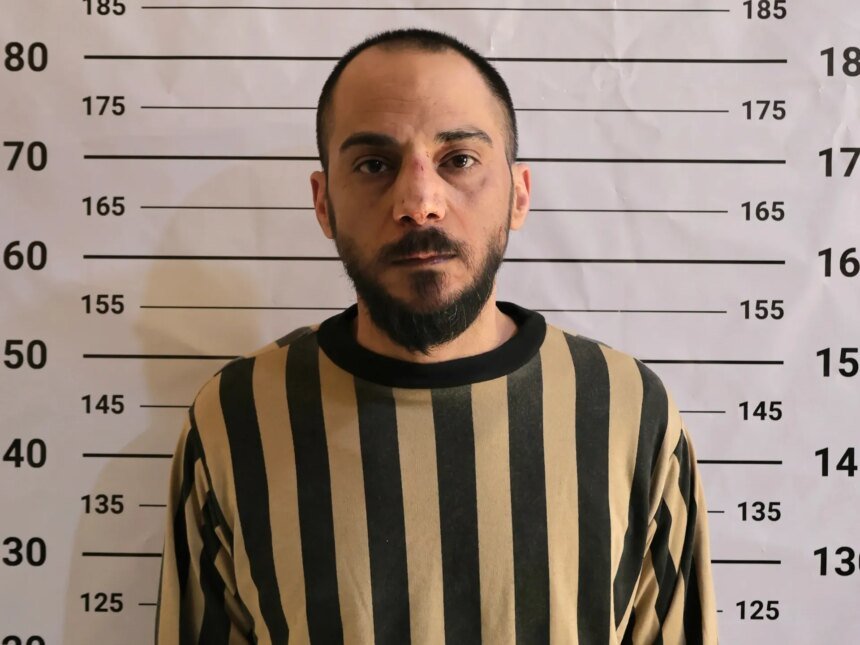
The magazine started – in an article written by American journalist Deborah Amos – from the case of Amjad Youssef, known as the “Butcher of Solidarity,” who was arrested after video clips documented his participation in mass executions against civilians in the Tadamon neighborhood in Damascus in 2013.
Read also
list of 2 itemsend of list
The arrest of Amjad Youssef sparked widespread relief among Syrians who had suffered from years of repression and war, and voices calling for his execution rose as a symbol of the crimes of the former regime, especially since many victims and their families believe that maximum punishment is the only acceptable form of justice after long years of killing, torture and enforced disappearance.
However, the Syrian government headed by Ahmed al-Sharaa faces a very complex challenge, because rebuilding the state and achieving stability require close cooperation with the United Nations and international organizations specialized in searching for missing persons and identifying the remains of victims scattered in dozens of mass graves.

Early testing
The article points out that some of these international institutions, most notably the United Nations Independent Institution for Missing Persons in Syria, are unable to fully cooperate with countries that apply the death penalty, which means that implementing death sentences against convicts may lead to the loss of vital sources of information, evidence, and technical expertise.
The importance of this cooperation is highlighted in light of the presence of tens of thousands of Syrians who disappeared inside prisons and detention centers during Assad’s rule, noting that many families still do not know the fate of their children, and rely on international investigations and DNA techniques to reveal their burial places and identities.
Human rights experts warn that executing the accused quickly may deprive the authorities of the opportunity to obtain additional information about the mass graves, chains of command, and those truly responsible for issuing the orders.
The article also reviewed the first attempts at transitional justice in Syria through the trial of Atef Najib, Bashar al-Assad’s cousin and the former security official in Daraa. He is accused of supervising the arrest and torture of children who wrote anti-regime slogans in 2011. His case is seen as an early test of the new state’s ability to hold symbols of the former regime accountable through the judiciary instead of direct revenge.

Execution is an additional obstacle
The writer stopped at the story of Hamza Al-Khatib, the child who became one of the most famous symbols of the Syrian revolution after his death under torture in 2011, as the fate of his brother Omar is still unknown despite his death in Sednaya prison being proven.
This family embodies the contradiction that the article talks about, as it demands that those responsible be punished with the harshest penalties, but at the same time it needs international cooperation to find out the fate of its missing children.
The report indicates that trials for war crimes linked to Syria have not begun today, as European courts in Germany, France, Sweden, and the Netherlands have previously convicted a number of those involved who arrived in their territories. However, the Syrian authorities are seeking to hold trials inside the country and before Syrian judges, allowing the victims and their families to participate directly in the course of justice.
However, applying the death penalty represents an additional obstacle, because many European countries refuse to extradite defendants to countries that might execute them.

Structural difficulties
The article also addresses the structural difficulties facing the Syrian judiciary after the fall of the regime, because many judges left the country or were removed from their positions, and current legislation does not include clear texts related to crimes against humanity, war crimes, and the responsibility of senior leadership.
At the conclusion of the article, human rights activists present a different vision of justice, according to which figures like Amjad Yousef may be more useful alive inside courtrooms than on the gallows.
They believe that interrogating people like Amjad Youssef could reveal broader networks of officials, help determine the locations of mass graves, and prove the relationship between crimes and the security and military system that ordered them or covered them up.
From this perspective – as the author says – the goal is not limited to punishing the direct perpetrators, but rather extends to revealing the full truth and achieving comprehensive accountability that includes all levels of leadership.
The article concluded that Syria stands at a sensitive crossroads between a legitimate popular demand for retribution against the perpetrators of atrocities, and a strategic need to maintain the international support necessary to uncover the truth and achieve comprehensive transitional justice, which means that the way to deal with the issue of the death penalty may determine the shape of Syrian justice and the future of national reconciliation in the coming years.