Published on 6/17/2026
|
Last update: 06:47 (Mecca time)
American expert Stephen Cook believes that the war launched by the United States against Iran revealed the limits of American influence in the Middle East, and revived increasing calls within Washington to end the American presence in the region, considering that the time has come for Washington to withdraw from the role of “security guarantor” that it has played for many decades.
In an article in Foreign Policy magazine, Cook, a senior researcher on Middle East affairs at the Council on Foreign Relations, says that the military operation launched by US President Donald Trump against Iran under the name “Epic Rage” did not achieve any real strategic gain, despite his declaration of victory in his usual way.
Read also
list of 2 itemsend of list
The writer points out that the terms of the memorandum of understanding announced between Washington and Tehran reflect a different reality, as the parties will return to negotiating the Iranian nuclear program, and Iran will also be allowed to export its oil for a period of 60 days under a special exemption, while the future of navigation in the Strait of Hormuz remains shrouded in mystery.
He adds that Iranian officials confirm that ensuring freedom of navigation does not exceed the duration of the temporary agreement, and that Tehran may later impose fees on the passage of ships, which raises fundamental questions about the feasibility of the war waged by the United States.
Cook wonders about the real goal of the war, considering that the Americans, Washington’s allies in the region, and even the Iranians themselves were in a better position before the outbreak of the military confrontation that began on February 28.
Accelerate withdrawal
He believes that Trump’s failure in Iran may lead to a completely different result than what he announced, which is an acceleration of the American withdrawal from the Middle East, explaining that an increasing number of members of Congress and current and potential officials are no longer willing to allocate huge political, military and financial resources to maintain the American presence in the region.
The writer recalls the experience of the British withdrawal from the Gulf in the early 1970s, when London announced the end of its military presence “east of Suez” due to the burdens of the declining empire, after which the United States gradually began building its military presence, which expanded significantly following the Iraqi invasion of Kuwait in 1990.
But the outcome of the past five decades, according to Cook, was not encouraging, as Washington failed to achieve its major declared goals, whether by establishing a Palestinian state, restructuring Iraqi society, or transforming the countries of the region into stable democracies.
He adds that the war against Iran joined a series of previous American failures, which made the Middle East a politically lost cause within Washington, in light of a growing consensus between the Democratic and Republican parties on the necessity of reducing American engagement with the region.
The writer also points out that transformations in energy markets have also contributed to changing American calculations. Democrats are pushing to accelerate the transition to clean energy, while Republicans are questioning the feasibility of the United States continuing to bear the burdens of protecting the Gulf.
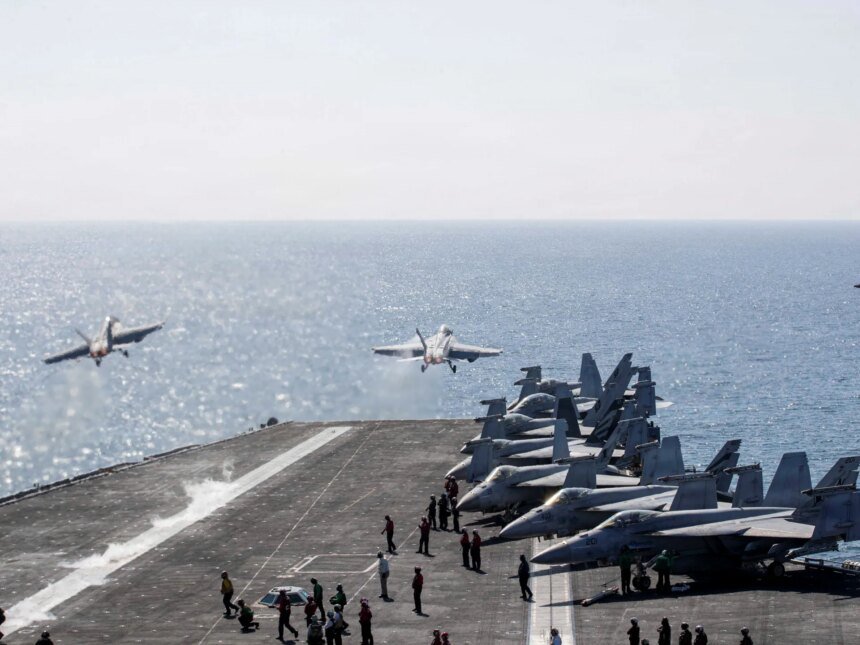
Stephen Cook expects the American presence to decline to a limited level limited to a naval presence in Bahrain, an aircraft carrier that rotates in the region, and perhaps an air wing in Jordan.
The end of the “Carter Doctrine”
Cook expects that the American presence will decline to a limited level limited to a naval presence in Bahrain, an aircraft carrier that takes turns operating in the region, and perhaps an air wing in Jordan, considering that this shift practically means the end of the “Carter Doctrine,” which pledged to protect the flow of oil from the Gulf, and the end of the American era in the Middle East.
As for Washington’s allies, the writer believes that they will be forced to rearrange their security priorities, in the absence of a clear international alternative, especially since China does not seem willing to inherit the American role after having learned the lessons of the costly American interventions in the region.
Cook concludes that Trump committed a strategic mistake that all previous American presidents rejected, but he now has the opportunity to make an unprecedented decision to withdraw the United States from the Middle East, leaving its regional allies to rely on themselves in managing their security and future.