Published on 6/17/2026
|
Last update: 07:00 (Mecca time)
Yesterday, Tuesday, the French Parliament agreed to extend the period of administrative detention for irregular migrants classified as dangerous, in light of a division between the left and right blocs over this law.
After the Senate voted on Monday, the National Assembly finally approved the law by a vote of 345 to 177.
Corrective step?
The controversial law, which was proposed by Representative Charles Rodwell of the Ennahda Party and was supported by the government and the centre, right and far-right blocs, aims to prevent dangerous immigrants concerned about deportation decisions from the possibility of disappearing and not complying with those decisions, which leads to their possible involvement in crimes.
The proposal came against the backdrop of the murder of a Filipino student dating back to 2024, which a Moroccan immigrant was accused of committing, who was subject to a decision to leave French territory, and who had just been released from detention.

Representative Rodwell said that passing the law represents a tribute to the memory of the victim student, while Interior Minister Laurent Nunez praised the law and indicated that it is a correction of “objective deficiencies.”
The far-right bloc representing the National Rally Party also defended the law, stressing that the country is in dire need of this legislation.
Former Interior Minister and leader of the Republican Party, Bruno Rutayo, has long called for similar amendments. During his tenure in government office, he had adopted a similar draft law last year, before the Constitutional Council canceled many of its provisions.

Maximum duration 210 days
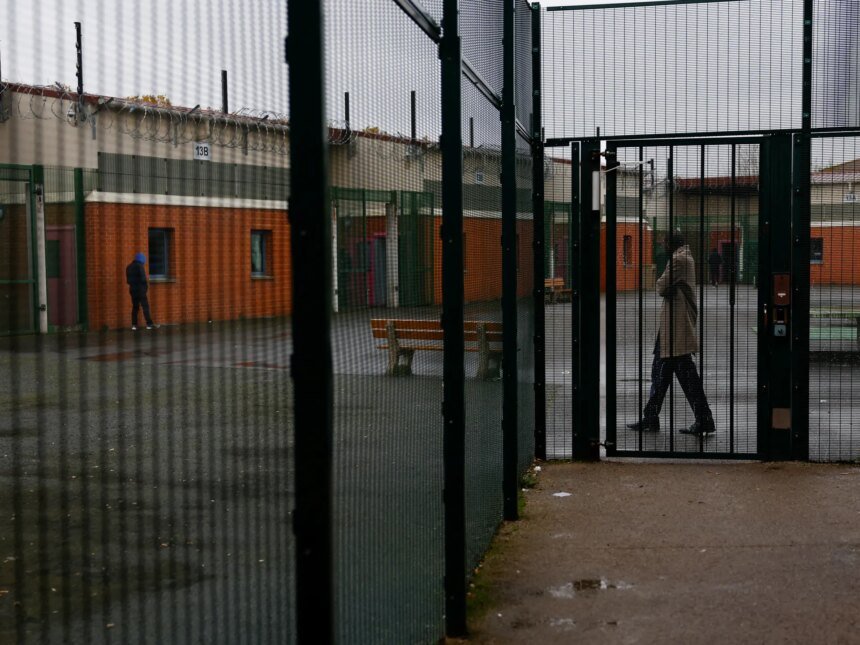
Laws allow irregular migrants to be held in administrative detention pending deportation if there is a risk they will escape. The maximum detention period is currently 90 days, or 180 days for those convicted of terrorism.
The new law extends the maximum period to 210 days in exceptional cases, provided that these immigrants are subject to a deportation order and represent a real and extremely serious threat to public order. This applies to immigrants who are permanently convicted of certain crimes and offenses punishable by imprisonment for a period of not less than 5 years.
The draft law includes other measures aimed at strengthening the fight against terrorism, such as introducing a “psychological assessment” for extremist individuals who display behavioral problems.
Overcrowding in detention centres
Left-wing representatives object to the amendments to the law, as Representative Andy Kerbrat argued that extending the detention period is not expected to lead to real change or reduce the risk of crime, while Socialist Representative Roman Eskenazi denounced the law and described it as a “propaganda strike” and a text that “confuses matters.”
During Senate debates, the left also argued that prolonged administrative detention risked overcrowding in detention centers without ensuring an increased number of forced deportations.
In practice, deportations can only be carried out after a consular pass is issued by the authorities of the country of origin.
According to organizations working in administrative detention centers, more than 40,000 people were detained in 2024, amid substandard conditions inside detention centers.