Published on 6/16/2026
In late 2023 and early 2024, the Silicon Valley tech scene looked as if the generative AI train had completely left the station, leaving Apple alone on the platform, as Microsoft, Google, Meta, and OpenAI were announcing massive language models (LLMs) and billions of parameters on a weekly basis. Apple remained silent, which worried investors and pushed its shares to significant declines amid accusations of technological delay.
However, the first half of this year revealed that Apple’s delay was not a deficiency, but rather a strategic choice driven by the philosophy that has always distinguished the company, which is, “Do not be the first, but rather be the best and most complete.”
Read also
list of 2 itemsend of list
Today, the technical business sector is wondering: Has Apple regained its position in this race? The answer does not lie in its classification as an “inventor” of the most powerful models, but rather in its success in imposing its ecosystem as an indispensable launching pad for global artificial intelligence.

The “Personal Intelligence” model and mobile devices
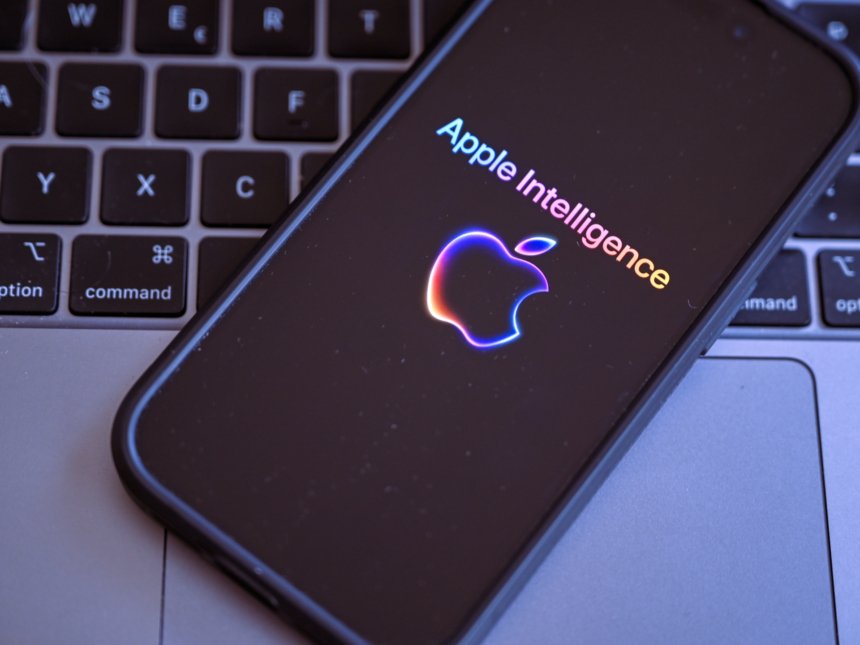
While rival companies focused on building “know-it-all” models that answer travel and cooking questions, Apple has turned the tide toward what it calls “Apple Intelligence.” According to technical review reports issued by Bloomberg and the American website The Verge following Apple’s recent developer conference, the company did not attempt to build a general chatbot, but rather focused on “personal context awareness.”
Apple’s artificial intelligence lives within the iOS and macOS operating systems, and is able to read and understand the user’s vital data saved on his device, such as emails, calendar appointments, photos, and notifications, without compromising his privacy.
This approach transformed the digital assistant Siri from a simple tool for executing voice commands into a personal business manager who understands, for example, that the flight mentioned in your email is delayed, and automatically suggests that you adjust the time of your meeting in the calendar.
Bridging the cloud gap across Google and OpenAI
Tim Cook’s management realized that building a giant cloud infrastructure to run huge language models would require burning hundreds of billions of dollars in purchasing Nvidia chips and building giant data centers, which could threaten the company’s cash flows and expose it to the risks of an “artificial intelligence bubble.” Instead, Apple took a smart diplomatic and technical strategic path.
According to reports from the American Wall Street Journal and the American TechCrunch website, Apple has concluded historic strategic agreements to integrate leading external models into its system. The most prominent deal was with Google to integrate the Gemini model, to be the primary cloud engine for complex tasks that exceed the local processing capacity of the device, in addition to flexible partnerships with Open AI.
This strategy achieved a double blow for Apple: First, it provided its users with the best findings of generative artificial intelligence immediately, without waiting for years of self-development. Second, it transferred the burden of the enormous operational cost and maintenance of cloud servers to its partners Google and OpenAI, while retaining the user interface and control of the final customer experience.

The standard for privacy and private cloud computing
The biggest barrier to AI adoption in businesses and individual users is “privacy concerns” and data leakage to the cloud to train models. Here, Apple raised the banner of privacy as its most important competitive advantage.
The company has introduced a technical architecture known as Private Cloud Compute, and according to Apple’s published technical documentation, which was analyzed by cybersecurity experts at the American Electronic Frontier Foundation (EFF), the data that goes out from an iPhone to Apple’s cloud to process a complex matter is never stored, and Apple itself cannot view it, and is encrypted using Apple’s own silicon chips in its data centers.
This strict commitment to privacy has made Apple the preferred choice for wary organizations and users concerned about their personal data, something that competitors who rely on open cloud models lack.
1.5 billion windows ready
AI developers like OpenAI and Anthropic have superior software brains, but they lack the “body” (hardware) that the user interacts with on a daily basis. Attempts to launch independent artificial intelligence devices such as Humane AI Pin or Rabbit R1 have failed miserably, as documented in technical reports for the years 2024 and 2025, due to poor performance and the absence of an integrated system.
Here lies Apple’s absolute superiority, as the company has an active user base exceeding 1.5 billion iPhones around the world. Apple’s A-series processors for phones and M-series for computers are equipped with ultra-powerful Neural Engines designed specifically to process artificial intelligence locally and at amazing speed.
In a report issued by market research firm Gartner, it was found that the hardware upgrade cycle led by exclusive artificial intelligence features on the iPhone 15 Pro and later versions, such as the iPhone 16 and 17, represents the biggest sales jump for Apple in years. Apple does not need to search for users, as users are already present on its devices and are just waiting for the system to be updated to activate the features.

Has Apple regained its position?
Based on all of the above, and if measuring “prestige” depends on who has the largest model or who publishes more complex software research papers, then Apple is not in first place, and Google and Microsoft are superior to it technically.
However, if the measurement depends on “sustainable and safe consumer artificial intelligence,” that is, whoever succeeds in making artificial intelligence a natural and useful part of the daily lives of billions without complexity and with the utmost safety, then it can be said that Apple has re-engineered the game, is at an advanced stage, and left its competitors in the battle of developing models.