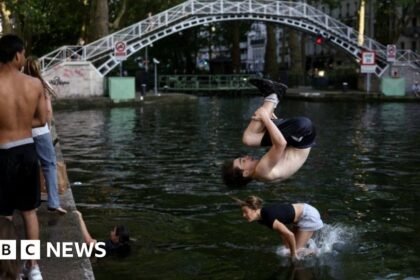
The 2026 World Cup is expected to witness a huge crowd influx, as the number of tickets allocated by the International Federation of Association Football (FIFA) indicates an attendance that may reach 7 million fans, moving between 16 cities in 3 countries: the United States, Mexico and Canada, over a period of 39 days, during the period from June 11 to July 19, to follow 104 matches with the participation of 48 teams.
But this global sporting event is not limited to the pleasure of watching football and its big stars, as large human gatherings pose important health questions regarding the possibilities of transmission of infection and the spread of some diseases, especially with the intensity of travel and movement and crowding in airports, stadiums, means of transportation and hotels.
Read also
list of 2 itemsend of list
Al Jazeera Net spoke with Professor Dr. Abdullah Sami, Assistant Professor at the Faculty of Medicine Research Center at Ain Shams University, about the most prominent health risks during the World Cup and ways to prevent them.

When do the risks of transmission among World Cup fans begin?
Epidemiologists confirm that the infection journey does not begin at the stadium gate, but much before that. From the moment a fan leaves his country’s airport, he enters a continuous series of contact points that researchers describe as an “interconnected network of transmission opportunities.”
These points start from crowded airport lounges, immigration and customs queues, and shared toilets, and then extend to the plane, where passengers share limited air for long hours.
After arrival, risks continue in transportation, hotels, elevators, restaurants, and public spaces, all the way to stadiums, including their terraces, corridors, food sales areas, and restrooms.
What are the most dangerous diseases that may be transmitted among the masses?
Priority diseases at large mass gatherings can be divided into three main categories:
First: respiratory diseases
Respiratory diseases, according to reports from the World Health Organization and the Centers for Disease Control and Prevention, represent the most prominent threat in large gatherings, because they are easily transmitted with crowding and close proximity between people.
Measles is at the forefront of concerns, as it is one of the most widespread infectious diseases. According to data from the Centers for Disease Control and Prevention, the number of measles cases in the United States alone exceeded 2,000 cases as of early June 2026.
Seasonal influenza also stands out, with the 2025-2026 season witnessing a record rise in infection rates, reaching levels not recorded in 30 years. Covid-19 also remains on the list of diseases of concern, as it still causes between 290,000 and 450,000 hospital admissions in the United States alone annually.
The list also includes respiratory syncytial virus, which particularly targets young children, the elderly, and those with weak immune systems, in addition to whooping cough and active pulmonary tuberculosis. Although their prevalence rates are lower, the presence of fans from countries with higher infection rates may raise the level of risk.
Second: digestive diseases
With the increasing demand for prepared foods and drinks at major events, digestive diseases become a real threat, especially if hygiene and food safety standards are not in place.
Norovirus is among the most prominent risks, because it spreads quickly in closed and crowded environments, and is transmitted through contaminated hands and surfaces. Hepatitis A also occurs, which is transmitted through contaminated food and water, and its incubation period may reach 50 days.
Risks also include salmonella, shigella, and pathogenic E. coli bacteria, and these infections are often associated with foods that are undercooked or that have been exposed to contamination during preparation or storage.
Third: Insect-borne diseases
With the tournament being held in June and July, insect-borne diseases become increasingly important, especially with rising temperatures and mosquito activity in the summer.
The most prominent of these diseases is the West Nile virus, which is endemic in several areas within the United States, and its activity usually increases during the summer months. There are also fears of dengue fever and chikungunya, especially with millions of travelers coming from areas where these viruses are widespread, which may turn local mosquitoes into vectors of infection.
In addition to this, the Zika virus, as the experience of the 2016 Brazilian Olympics is still present in global health memory, raising the level of vigilance towards any large international gathering in hot climates.
With global fears of the Hanta and Ebola viruses, will the level of risk increase during the World Cup?
The weeks leading up to the tournament witnessed a wave of concern about the Ebola and Hanta viruses, but experts put these fears in their correct scientific context.
The Ebola virus is not transmitted through the air, nor by simply sitting in the stands or being in a crowded place. Rather, it requires direct contact with the bodily fluids of an infected person who shows clear symptoms. Therefore, the probability of a large Ebola outbreak occurring during the tournament remains very low, because it is not transmitted through the usual respiratory routes.
As for the Hanta virus, it is mainly associated with contact with rodent droppings and secretions, and therefore it is not considered a major danger in stadium environments and organized mass gatherings.

Does holding the tournament in June and July increase the risk of disease and infection?
Holding the tournament in a hot summer climate raises the level of health attention, not only because of infection, but also because of the risks associated with the heat. According to Dr. Caitlin Gitellina, an epidemiologist and former advisor to the Centers for Disease Control and Prevention, heat stress may be the “most reliable risk” during the tournament.
The dangers of heat are not limited to heat exhaustion and heat stroke, but also include dehydration, which may weaken immunity and increase the body’s susceptibility to infection, in addition to rapid food spoilage, which raises the possibility of food poisoning.
Hot climates also contribute to increased activity of mosquitoes and other disease vectors, and may exacerbate chronic diseases such as diabetes, heart disease, and high blood pressure.
For prevention, it is recommended to drink plenty of water, wear loose, light-colored clothes, avoid direct exposure to the sun, especially between the hours of 11 a.m. and 3 p.m., and use sunscreen as much as possible.
Are there audiences more vulnerable to health risks?
Yes. The risks of mass gatherings are not equal for everyone, as there are groups that need additional preparations, greater caution, and faster care when needed.
People with chronic diseases are at the forefront of these groups, such as patients with diabetes, high blood pressure, and heart disease. They face a double challenge: The underlying illness on the one hand, and the crowded tournament environment, including heat, effort and psychological stress on the other hand.
They are advised to consult a doctor at least two weeks before traveling, and to prepare a reserve of medications sufficient for an additional week, measure blood sugar regularly for diabetics, and avoid extreme exertion, extreme heat, and excessive salt for patients with heart and blood pressure.
Oncology patients also need special caution, because they are more vulnerable to infection due to weakened immunity resulting from disease, chemotherapy, or radiation. They should consult in advance with the treating physician regarding the feasibility of attending, and it is preferable to follow the matches in less crowded places or via large screens, while adhering to the mask and avoiding crowded areas.
As for pregnant women, they have a special situation, because health risks may affect both the mother and the fetus. Therefore, pregnant women are advised, especially in the first months, to avoid attending matches in large crowds, and to be content with watching the tournament from safer and more comfortable places.

Are masks still useful in the 2026 World Cup?
The clear scientific answer: yes, but in specific contexts. The mask still provides an additional layer of protection in closed and highly crowded spaces, such as airplanes, tunnels, subways, airports at peak times, public transportation, closed halls and shopping malls.
The importance of the mask increases for people with chronic diseases, weak immune systems, pregnant women, and children. As for open spaces and well-ventilated outdoor terraces, their benefit is relatively reduced, although wearing them does not cause harm to those who prefer more protection.
Are there vaccinations recommended before traveling to attend the tournament?
Vaccinations are the cornerstone of infectious disease prevention, and the Pan American Health Organization and the Centers for Disease Control and Prevention have recommended that travelers to the World Cup be sure to complete basic vaccinations.
These vaccinations include the measles, mumps, and rubella vaccine, the seasonal influenza vaccine, the COVID-19 vaccine, the pertussis, diphtheria, and tetanus vaccine, and the hepatitis A and B vaccine.
The Pan American Health Organization also launched an awareness campaign under the slogan “With Health, We All Win,” as a reminder of preventive measures before World Cup events and during the tournament.
What are the most important health measures before traveling to the host countries?
The fan should begin health preparation before traveling, not upon arrival. One of the most important steps is visiting a doctor to review your health condition and update the necessary vaccinations, especially for those with chronic diseases or those who take regular medications.
It is also recommended to obtain health insurance that covers emergencies and medical transportation, and to search in advance for the nearest hospitals and emergency care centers in the cities that the fan will visit.
It is best to prepare a basic medicine bag that includes an antipyretic, antidiarrheal, allergy medications, bandages, and hand sanitizer, while ensuring the validity of the health insurance policy in the three host countries, and reviewing health recommendations for travel on the websites of the two aforementioned organizations.

What are the preventive measures while attending matches?
During the tournament, which lasts 39 days, the fan needs to adhere to simple but effective behaviors that reduce the possibility of infection.
The most prominent of these measures is washing hands regularly with soap and water for at least 20 seconds, especially before eating and after using the bathroom. In the absence of soap and water, it is recommended to use an alcohol-based sanitizer with an alcohol content of no less than 60%.
You should also avoid sharing cups, eating and drinking utensils with others, eat food from reliable sources, stay away from undercooked foods, drink bottled or sterile water, and avoid ice of unknown origin.
People who show clear symptoms of illness should also be avoided, and contact the nearest medical official on the field when worrying symptoms such as high fever, difficulty breathing, severe diarrhea, dizziness or heat exhaustion appear.
What does a fan do after returning to his country?
After returning from the tournament, it is recommended to monitor your health condition for at least two weeks, because some diseases may not show symptoms immediately during travel or while attending matches.
If any symptoms of illness appear, you must immediately consult a doctor and inform him of your travel history and the countries and cities visited. Contact with vulnerable groups such as the elderly, the sick, and young children should also be avoided if symptoms of infection appear.
If infection with a contagious disease is confirmed, one must adhere to home isolation and follow the instructions of health authorities, to protect the family and society.