Published on 6/15/2026
In their commentary on the agreement between Washington and Tehran, the major American newspapers focused on what they called the outstanding issues in this temporary settlement, which includes – according to the news circulating so far – an immediate and permanent cessation of military operations on all fronts, the reopening of the Strait of Hormuz to international navigation, and the lifting of the naval blockade on Iran, in addition to understandings related to the Iranian nuclear program.
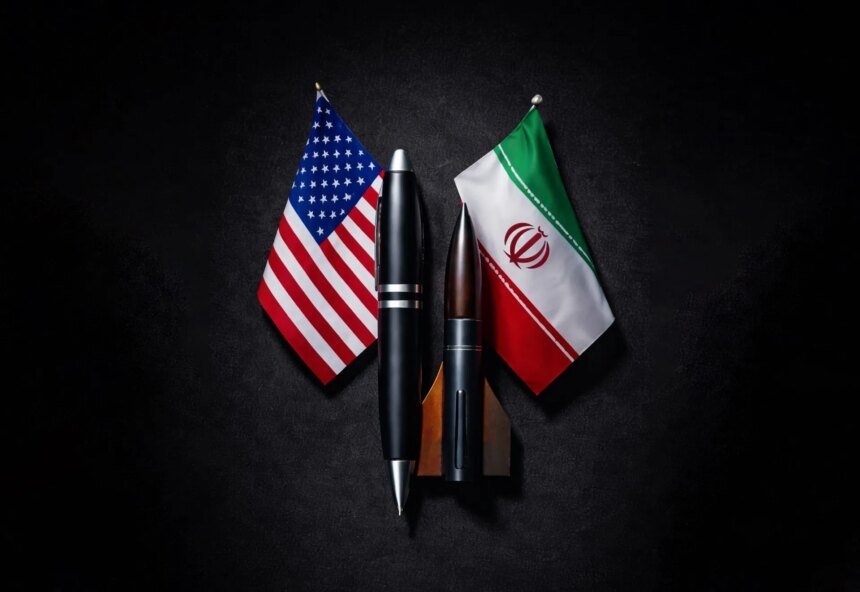
Reports published by the New York Times, the Washington Post, the Wall Street Journal, and Axios reveal that the agreement announced by US President Donald Trump with Iran does not represent a final settlement of the conflict as much as it constitutes a temporary truce that allows time to address thorny issues that remain unresolved, most notably the Iranian nuclear program, US sanctions, and the future of regional tensions.
Read also
list of 2 itemsend of list
According to the New York Times, Trump sought to present the agreement as a strategic achievement that reshapes the balance of power in the Middle East in favor of the United States, stressing that the understanding will ensure that the Strait of Hormuz remains “permanently open and without transit fees.”
But the newspaper points out that this description seems exaggerated, because the announced memorandum of understanding stipulates only the suspension of restrictions for a period of 60 days and the launch of a regional dialogue on the future of the Strait, noting that Iran was not imposing fees on navigation before the outbreak of the war in the first place, which means that the agreement restores the situation to what it was before the crisis more than it achieves new permanent arrangements.
The nuclear file
The main knot is the future of the Iranian nuclear program, as the two parties have not reached a final settlement on uranium enrichment, long-term control mechanisms, or the future of Iran’s stock of highly enriched uranium.
Trump said that technical negotiations would begin on Friday in Switzerland, explaining that Iran might agree to suspend enrichment operations for 20 years, but he hinted at the possibility of accepting a shorter period of up to 15 years.
He added that Iran would be permanently restricted to low levels of enrichment that “cannot be used for military purposes.”
However, the New York Times points out that these conditions are not new, as the 2015 agreement concluded by the administration of former President Barack Obama included similar restrictions, before those arrangements collapsed after Trump withdrew from them in 2018.
The issue of disposal of sensitive nuclear materials also remains unresolved. The Wall Street Journal quoted Trump as saying that he is in no rush to remove Iranian nuclear materials, adding: “We will deal with the nuclear fallout later when we are ready for that, within the next month or two, there is no rush.”
He described these materials as “harmless”, a statement that may raise questions about the extent of the US administration’s urgency in addressing the most dangerous aspects of the nuclear file.
Economic sanctions
As for the economic sanctions file, it is also still pending. The Washington Post reported that Tehran expects to negotiate within the next sixty days a complete lifting of US sanctions imposed on it.
In the same context, Axios reported that any easing of sanctions or release of frozen Iranian funds would be conditional on Iran’s commitment to progress in the nuclear negotiations.
The mechanism of the inspections that Trump spoke about is not yet clear, as he stressed that the oversight would be “strict,” but he did not provide details about the entities that would implement them or the tools that would be used to ensure Iranian compliance.
The Lebanese file represents an additional point of contention that may threaten the stability of the agreement. The Washington Post indicated that any settlement related to Lebanon would require Washington’s ability to pressure Israel to reduce its military operations, in exchange for Iranian cooperation in dealing with Lebanese Hezbollah.
From the truce to the final settlement
On the other hand, in his statement to the Wall Street Journal, President Trump downplayed the importance of changing the Iranian regime, saying that this goal was not among his priorities.
The newspaper pointed out that opponents of the agreement within the United States and Israel fear that the current truce will turn into an end to the war without reaching a final agreement that addresses the roots of the nuclear crisis.
In conclusion, these media platforms agree that the next sixty days will be a decisive test for both parties because the most important fundamental issues are still postponed, making the future of the understanding dependent on the ability of Washington and Tehran to overcome their differences regarding the most sensitive files.