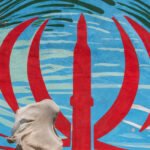
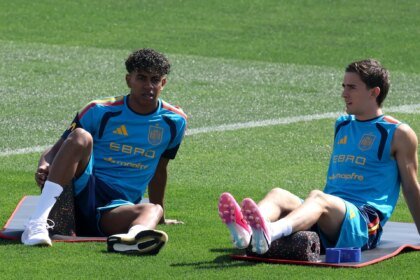
Tehran- The atmosphere of the World Cup in Tehran does not resemble what Iranians have become accustomed to in previous participations. There are no extensive decorations in the streets, no huge rush to stores that sell sports shirts, and no football conversations that overshadow the news of war, bombing, and visas. However, as the Iranian national team’s first matches approached, football returned to impose its presence in homes, cafes, and groups of friends, as if it was a collective attempt to extract a moment of joy from a difficult time.
In a café in the center of the capital, Tehran, the owner is hanging a large screen in preparation for the national team’s matches, but he says that the atmosphere is “not entirely festive.” He added to Al Jazeera Net, “People come to watch the match because they want to breathe a little, and no one can forget the war, but when the national team plays, everyone tries to leave the news aside, even for two hours.”
The Iranian national team enters the World Cup this time in an unprecedented context, as the tournament hosted by the United States, Canada and Mexico comes while Tehran and Washington have been experiencing an open confrontation for months, which has made Iranian participation loaded with political and psychological dimensions that go beyond the confines of the stadium. Iran is not only playing against New Zealand, Belgium and Egypt in Group Seven, but is also playing its matches on the soil of a country that is a direct party to the war with Tehran.
On the Iranian street, this paradox seems present in every talk about the national team. Ali, a young man in his late twenties, says that this World Cup “is unlike any previous World Cup.” He added, “Usually we would talk about the lineup, the result, and the players, but now everything is mixed with war. We want the team to win, not just for the sake of football, but because people need news that makes them happy.”
Maryam, a university student, does not hide her feeling that the players enter the tournament under double pressure. She says, “The players know that people are following them from a country that is living in difficult circumstances. Even if they do not achieve a big result, we want to feel that they are fighting for Iran’s image before the world.”

Football in times of war
The war directly affected sports life inside Iran. The local league stopped, and the accounts of clubs, players, and the national team’s technical staff changed. Although football was usually a space for escaping politics, this time it seemed to be besieged by it from more than one direction: postponed matches, troubled preparations, an external camp that changed its location, and a visa file that turned into a political issue.
In a small shop that sells sports shirts, its owner, Hussein, says that the turnout is less than in previous World Cups, but “it has not stopped.” He explains, “People are tired. There are those who are thinking about security, there are those who are thinking about prices, and there are those who do not want to celebrate in this circumstance, but when the Iran match approaches, the same question returns: Where will we watch it? And who will play?”
This hesitating mood between the desire for joy and the weight of war is also observed by Mirshad Majidi, the former international player and former head of the Iranian Football Federation. In a statement to Al Jazeera Net, Majidi says that the Iranians are following their country’s participation in the World Cup “with a different view,” because they want to see how the team will deal with “the pressures placed on the players,” and with what he described as “American obstacles.”
Majidi adds that if the Iranians were asked about football in the middle of the war, “many would say that the game no longer occupies a place in their lives,” but he believes that the picture has changed now, despite the continuing war conditions and the disruption of the local league, as “everyone is following the team’s results and waiting for what it will present.”

Visas and psychological pressure
Iranian preparations were not normal, as the national team’s camp was moved from the United States to Tijuana, Mexico, in light of the visa crisis and political and security tensions. In the Iranian sports media, this issue was mentioned as one of the most prominent psychological pressures on players before the start of their matches.
Majidi says that from a training and tactical standpoint, the team “is not lacking much,” but he believes that the main problem lies in the psychological aspect. He adds that the United States is “playing on this aspect through the visa issue and the timing of their issuance,” as he put it, noting that this may disturb the players and affect their focus.
Majidi continues that the players realize that they are entering a country that “attacked Iran a while ago,” and therefore “it may do everything it can to obstruct their presence and concentration.” With these pressures, he believes that the team overcoming this atmosphere may give it additional motivation on the field.
Although the Iranian Football Federation denied some accounts that spoke of “visas for only hours,” the controversy over the delegation’s entry into American territory remained present in the public debate. The decision to withdraw the official quota of tickets for Iranian fans also increased fans’ feelings that the national team was facing unusual circumstances.
Reda, an employee who follows the national team news on his phone, says, “Playing in a tournament hosted by America has a special meaning now.” He added, “I don’t think it’s just a sporting matter. There is visa pressure, media pressure, and psychological pressure. So any good result will be very important.”

Elected by more than one team
In recent days, the Iranian national team has seemed burdened with a function that goes beyond winning and losing. Followers are not only waiting for a football performance, but rather they are looking in the matches for a moral impact within a country exhausted by war. In various statements by the players, talk was repeated about “making people happy” and “playing for the people,” which are phrases that resonate on the street, even among those who do not usually follow football.
Maryam says that the result of the first match may be decisive in changing the public mood. “If the national team wins, people will come out of their state of silence. There may not be big celebrations because of the war, but you will feel that something has changed in the homes, the street, and the phones.”
Majidi agrees with this meaning, as he told Al Jazeera Net, “If the team performs well in the World Cup, I am confident that it will return a degree of enthusiasm and activity to society.” For him, the value of participation is not measured by the result only, but rather by the team’s ability to revive a collective feeling that has been weakened by war, fear, and daily pressures.
As for Nazanin, a cheerleader in her thirties, she says that Iranians may differ on politics, but the national team gives them a “common space.” She added, “We may disagree about everything, but when the match starts, most people want the Iranian flag to look good. This is a rare moment, when we feel that we are looking in the same direction.”

Incomplete joy
While the Iranian Federation and the technical staff are trying to isolate the players from the political tension, it is difficult for the Iranian street to separate the match from the war, as every talk about the lineup is accompanied by a question about visas, and every discussion about the team’s chances is met with an urgent alert on the phone, and every desire to celebrate collides with the fact that the country is still living under bombing and the pressure of reality.
In Tehran, people do not have high football expectations as much as they cling to moral hope. They want to see the team standing strong, and to feel that Iran is present on the field despite the war, and that football has not lost its ability to bring them together for a single moment.
The café owner summarizes the scene by saying, “We are not in an atmosphere of complete celebration, but people need a reason to smile. In times of war, even a football match may become a psychological event, not just a sporting event.”
This is how the Iranian national team enters the World Cup: a team with football dreams, and a country that expects more than one ball from it into the net. For many in Iran, the match is no longer just a ninety-minute match, but rather a test of the ability of a tired society to capture postponed joy in the midst of a war that does not leave screens or homes.