Published on 12/6/2026
The United States and Iran are moving towards signing a preliminary understanding to stop the war and contain the escalation, as a draft agreement – seen by diplomatic and American sources – reveals a deal based on the immediate reopening of the Strait of Hormuz and without transit fees, in exchange for a gradual and conditional easing of the sanctions imposed on Tehran.
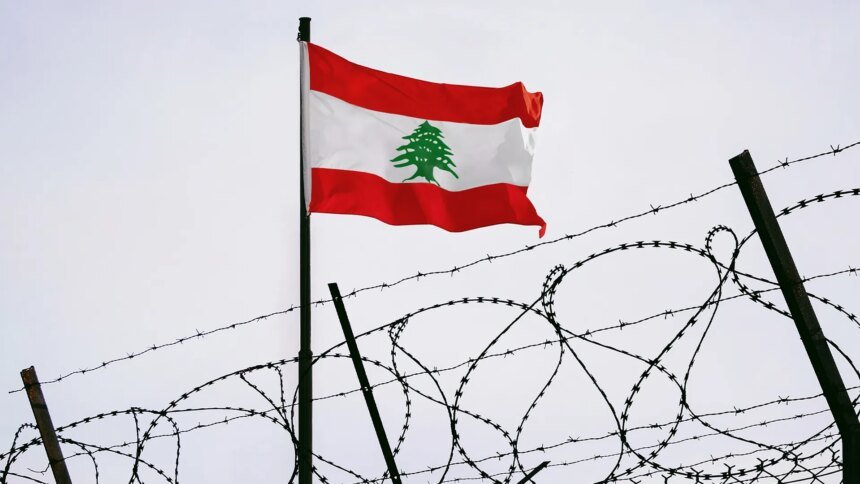
According to a diplomat from a mediating country and an American official, the understanding stipulates extending the ceasefire for a period of 60 days, including the Lebanese front, to allow for in-depth negotiations regarding the Iranian nuclear program, while postponing any substantive executive steps until a second, more detailed agreement is reached.
Writer and political analyst Tariq Tarshishi expected that the upcoming agreement would have a positive impact on Lebanon and lead to a ceasefire and an end to the “destructive” war on its south, villages and cities.
Tarshishi added – during an intervention on Al Jazeera – that there is currently Lebanese preparations underway, as President Joseph Aoun met with the military and diplomatic negotiating delegation in the presence of Army Commander Rudolph Heikal, in preparation for the next round of negotiations scheduled for the 22nd of this month.
But the political analyst shed light on what was issued by the office of Israeli Prime Minister Benjamin Netanyahu – who is wanted by the International Criminal Court – as Tarshishi raised major question marks about the extent of Israel’s willingness to adhere to a ceasefire and stop the war, for fear of repeating the experience of the previous truce to which Netanyahu responded the morning after it was signed to announce that Israel was not included in it.
The spokesman warned that Netanyahu’s statements indicate that he obtained what “gives him continued freedom of movement,” as if the guarantees given to him still exist, wondering about the extent of the United States’ ability to oblige Tel Aviv to the terms of the agreement.
Ceasefire in Lebanon
In agreement with this proposal, Al Jazeera’s correspondent in Tehran, Adnan Al-Bourini, explained that unofficial information from Iranian sources talks about basic items that are being focused on, one of which is the ceasefire in Lebanon as part of stopping the war in general.
According to Al-Bourini, the additional detail at this point talks about arrangements related to the Strait of Hormuz, the frozen Iranian assets, and the nuclear file, but with regard to Lebanon, the talk is about a ceasefire agreement.
But he indicated that the issue of the Israeli army’s withdrawal from southern Lebanon has been postponed to the second stage, provided that it is outside the negotiating space between Iran and Washington, which raises questions about the fate of the occupied Lebanese territories.
On the other hand, Al Jazeera’s correspondent in Ramallah, Muhammad Khairi, said that Israel was completely surprised by US President Donald Trump’s announcement, which came during security meetings that Netanyahu was holding regarding Iran, and all Israeli statements prior to the announcement indicated that a US-Iranian escalation was imminent.
Khairy added that the Yedioth Ahronoth newspaper reported this morning that Israel had been in contact with the American administration and was aware of the existence of negotiations, but was surprised by Trump’s announcement, and was still hopeful that the agreement would not be signed and the war would return again.
American position
From the American side, Al Jazeera’s correspondent in Washington, Murad Hashem, quoted from the Axios website and a knowledgeable American official, explained that the United States and Iran have reached a final version of the memorandum of understanding, and that the signing may take place during the weekend or the beginning of next week in Geneva.
The memorandum includes:
- Extending the ceasefire for 60 days.
- Open the Strait of Hormuz immediately without fees.
- US permission for Iran to sell oil shipments.
- Lift sanctions gradually.
- Iranian commitment not to possess a nuclear weapon.
In the same context, Hashem said that Trump expressed great satisfaction with what was reached, stressing that the formula of the agreement is very strong and is in the interest of the United States, Iran, and the entire region.
As for Tarshishi, he concluded that Lebanon expects better from signing the memorandum, especially since the Iranian side requires an end to the state of war and not just a ceasefire, with the presence of a movement of Arab movements sponsored by the Gulf to support this approach. However, he warned that all of this will appear during the military reality on the ground, knowing that the reality is currently explosive, as today witnessed violent raids and Israeli advances towards the cities of Tire and Nabatieh.
He stressed that Netanyahu does not seem ready to end the war in Lebanon, because he believes that stopping it tomorrow will put his head on the guillotine of political execution, after he entered Lebanon under the title of achieving security for Israel and eliminating Hezbollah.