In June 1986, Sun Ra, the eccentric, experimental jazz bandleader, set up in Central Park with his Omniverse Jet Set Arkestra, becoming the first performer at an ambitious but scrappy — and, most important, free — arts series called SummerStage.
In the 40 years since, SummerStage has become one of the premiere performing arts venues in New York, with a legacy of hundreds of top musicians, among them stars like David Byrne, Patti Smith, Sonny Rollins and M.I.A., and a history of presenting artists from around the world. It has also since expanded from its flagship venue in Manhattan to stages throughout the city, and added paid benefit shows to subsidize the free ones.
The series’ 40th anniversary season opens on Wednesday with the singer Ledisi, who looked forward to it as a special gig. “New Yorkers are a listening audience,” Ledisi said in an interview. “They give and receive.” The New York Times spoke to more than 20 artists, producers and supporters about the history of SummerStage, its most memorable gigs and its significance to the city. These are edited excerpts from the conversations.
‘A Crucial Doorway’
Inspired in part by Shakespeare in the Park, a young producer named Joe Killian persuaded city officials to greenlight a free performance series at the Naumburg Bandshell in Central Park. Key early shows included the New Orleans songwriter Allen Toussaint in 1987 and the Senegalese singer Youssou N’Dour in 1988.
JOE KILLIAN (SummerStage founder) My vision was, let’s bring these various communities of the city to Central Park. I believe New Yorkers are curious, inquisitive. Intellectual, small “i.”
Every artist around the world wants to play Central Park. So I had a pitch that was good. I didn’t tell them it was in a different place than where Simon and Garfunkel played.
ADRIAN BENEPE (former parks commissioner) People forget that Central Park had a thousand felonies a year in those days. We understood that to make the park safe, and to displace negative uses of the public space, you had to fill the park with positive uses.
KILLIAN In the first seasons, the shows were at 3 o’clock on a Saturday and a Sunday. The police would not allow anything there at night because they couldn’t guarantee the security.
YOUSSOU N’DOUR I had toured with Peter Gabriel, and always hoped that I would have another opportunity to play for audiences in New York. Our SummerStage concert was the fulfillment of that hope. It was a crucial doorway for our music — an opportunity to have it heard.
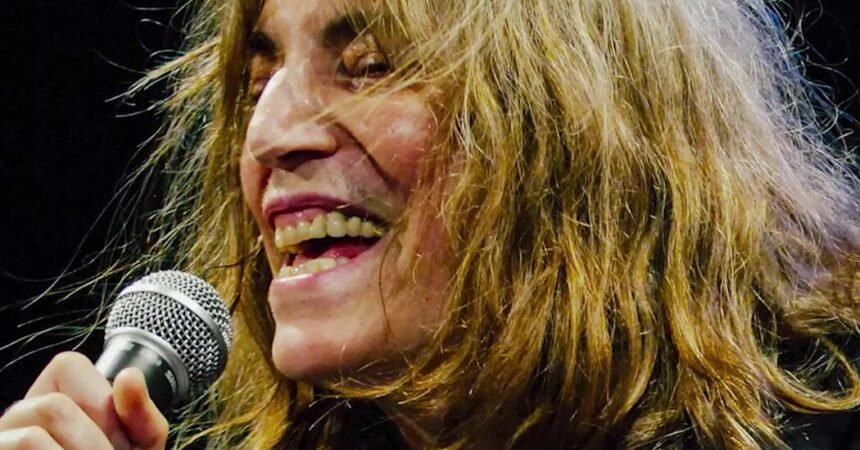
In 1990, SummerStage moved to Rumsey Playfield. One-of-a-kind events followed, like a double bill of Sun Ra and Sonic Youth in 1992 and a spoken-word performance by Patti Smith in 1993 that heralded her return to the stage after more than a decade away.
PATTI SMITH It was the first public performance I had done since ’79. And I just didn’t know what people would think; I really didn’t know what my status was. At one point I just froze. And I looked over to my right and there was my brother, Todd, and my husband, Fred, standing together. Toddy, who was the head of my crew in the ’70s — my loyal knight — was spurring me on. And Fred, I could feel the empathy from him. The two of them were wordlessly sending me strength. I never dreamed that the two of them would be dead in a little more than a year.
In my mind, it seemed like there was a sea of people. Actually it might have been a few thousand. But it just seemed like all of New York was there. The people were there for me. And what a great place to be welcomed back but Central Park.
THURSTON MOORE (Sonic Youth) The idea of putting an experimental rock band with an experimental jazz group, that was really special. For me it reflected what you would read about happening at the Grande Ballroom in Detroit in the ’60s, where people like Pharoah Sanders and Archie Shepp would be playing on the same stage with the Stooges and the MC5. By the ’90s, things had become so culturally factionalized, you know? So to come together with a jazz group and a rock group, it’s not entirely radical, but it was a perfect pairing in a way.
KILLIAN In 1991, I used the old promoter scam to get Lou Reed and Oscar Hijuelos to do a joint reading. Lou didn’t want to do it. But I knew he liked Oscar, who had won the Pulitzer Prize for “The Mambo Kings Play Songs of Love.”
So I told Lou, “If I get Oscar Hijuelos, will you do a reading?” And Lou said, “Well, you’re never going to get Oscar. But if you do, sure.” Then I went to Oscar’s apartment uptown. “Listen, Lou Reed wants to read with you.” He said, “I don’t believe you have Lou Reed. But if you do have Lou Reed, I’ll do it.”
Years later I learned they developed a friendship as a result of that show.
The Breakout Era
As SummerStage evolved, it began to draw younger, emerging artists, whom producers often booked just as they were breaking through. In 2005, that meant M.I.A. and Arcade Fire, who brought David Bowie on for a surprise encore; in 2008, the new class included Vampire Weekend and Santigold.
WIN BUTLER (Arcade Fire) Bowie had come to our first big show in New York, at the Bowery Ballroom. He felt some kinship, which we obviously felt ourselves. So I reached out to him when we were doing the show, and it turned out to be one of his last performances.
There was this stickler stage manager. During soundcheck, he was telling us we were going over time. And then when Bowie came backstage and we were about to go on for the encore, the stage manager said, “I’m pulling the plug.” And I’m like, “What are you talking about?!” I lost my goddamn mind, and there was this big blowup. I remember looking over at Bowie and he was just completely unflapped.
We were super amped, the heart rate was like a million. We played “Queen Bitch,” one of my favorite Bowie songs, fast and punk. This was the “Funeral” tour, and we were all in our black funeral clothes. And Bowie comes out wearing a white suit and white fedora, sort of like an angelic figure. It was very dramatic.
EZRA KOENIG (Vampire Weekend) That was the biggest show we’d ever played at the time. There was something about playing SummerStage that felt like our first show as a real band with a real career. It felt like the culmination of all the work and all the things that had happened by that point: the album coming out, playing “S.N.L.” In a way, I think the Bowery Ballroom was kind of where I’d always hoped to play as a musician. And SummerStage was probably a step beyond my wildest dreams.
SANTIGOLD At that point in my career, I was still noticing who was coming to the shows. I had tried so hard not to get pigeonholed into like, “This is the Black version of anything else,” and just to allow my music and myself to exist outside of any of the boxes that people tried to put you in. This was the beginning of the era of no genres, and the diversity of the Central Park crowd was really exciting to me. That was one of the main shows where I was like, “Oh wow, everybody’s out there.”
‘Fine With the Dark’ (and the Rain)
For all the serendipity of SummerStage, its open-air location has added an element of unpredictability to shows over the years.
DAVID BYRNE I remember our “Rei Momo” show in 1990, with Margareth Menezes as both opening act and background singer. During her set it started to rain, and we watched as the canopy over the stage started to collect water in a huge negative bulge. As soon as Margareth left, it burst, and a massive weight of water came crashing down center stage. It was obvious I wasn’t going to be able to do my own show. But it got rescheduled and everything had been fixed by then.
MOORE When we got there, you could see the dark sky in the distance creeping toward Manhattan. Sun Ra Arkestra played before us, and a quarter of the way through their set the black sky separated and the sun started peeping through. Sun Ra was in a wheelchair, at this point not really speaking, and I remember kneeling next to him and looking at his orange beard. Like, how cool is this guy? And I said, “Thank you for bringing the sun out.” All he could do was smile.
KOENIG I remember feeling a bit nervous, and there was a question of whether the show was going to go on. But in the end, the rain made the show just so much more memorable. We had a party that night, which I’m pretty sure was at Santos Party House, rest in peace. And I remember feeling a little cold and wet, standing in some air conditioning, but just thinking, this is perfect.
GERALD CASALE (Devo) The weather was erratic all day [before the band’s performance in July 2004], but the rain held off — it started raining right as we finished our encore. All hell broke loose when we got off stage. I remember having to walk to the Essex House. There were no provisions from the promoter for vehicles taking us off site. It was total chaos. And I just walked in that torrential rain to the Essex House. But once you give up, it was kind of fun in a way, because it was a warm rain.
On Aug. 14, 2003, the Indigo Girls had just completed a soundcheck when, shortly after 4 p.m., the city lost power in a sweeping blackout. They went on with the show.
EMILY SALIERS (Indigo Girls) It wasn’t that far after 9/11 in our collective memories. And so when the power went out there was a moment of, What does this mean?
AMY RAY (Indigo Girls) The promoter was scrambling backstage, and we were like, is there a way we can play anyway? Everybody’s already here, we have this much generator power and we can play this long of a set. It just seemed like a moment to seize.
And in SummerStage fashion, they were completely down for whatever. Since we had only so much generator power, we sacrificed having a lot of lights to have more sound. We played for like 45 minutes and the crowd was super enthusiastic and super fun. And then everybody filed out of the park quietly. I wrote a song about it, “Fine With the Dark.”
SALIERS I’m writing a song about it now!
Noise complaints have been a hazard of SummerStage since its beginning. Over the years producers have committed to gradually reducing the venue’s noise output but avoided calls to shut down or move.
HEATHER LUBOV (executive director, City Parks Foundation) Our artists are never allowed to go beyond 95 decibels. Once we put in our new sound system in 2019, the sound complaints disappeared.
MOORE We were warned that there were sound limitations, which we were very resistant to. Volume is very elemental to what we do. So I started yelling into the microphone: “Park Avenue, wake the [expletive] up!”
BENEPE We are a bit more than a hundred yards from Fifth Avenue. It’s amazing to me that the wealthiest people in the world, who might have been inconvenienced by the occasionally loud concerts, did not prevail.
JON BATISTE The joy of music and the connection of gathering outdoors in song is one of the oldest traditions in humanity. [In 2025] it felt like we were playing in an era defined by persecution and division globally. I wanted to present a show that spoke to the oneness of all people and our collective struggle.
GRAHAM NASH Playing outdoors to a lot of people was thrilling for us when we played in 2008, because we wanted to spread the word that Crosby, Stills and Nash was a kind of music that would make you think and make you shake your ass at the same time.
Music of the World, Music of the City
From the start, SummerStage prioritized music from around the world, inviting African musicians like Ladysmith Black Mambazo and Baaba Maal, as well as artists from Brazil and the Caribbean. By 1996, DJ Rekha, a New Yorker of Punjabi descent, was putting on regular dance nights.
N’DOUR I was super excited coming onstage. It was a vibe! We were wearing our traditional stage outfits, including special boots made in Senegal, and Fulani tengaade hats like on the cover of my album “Immigrés.” I think it was perhaps this concert where I really began to see that our music could be heard by a wider audience outside Africa. At the time, music from countries like ours had perhaps never before been showcased in just this way.
FEMI KUTI If the crowd loves you, it’s a big steppingstone to going to other states in America. And if you have a great concert, you’ll be back there like me. [Laughs.] Central Park, one cannot erase the fact that this was one of the platforms that gave African music exposure.
I’ve had a couple of instances where my musicians ran away into America. It happened on my last tour. I mean, are you going to run from Houston to New York? It ended up being a great tour because I got an American bassist, an American saxophonist, an American trumpeter and an American percussionist. But I will never replace those positions with Nigerians anymore.
BYRNE I saw lots of shows there — pop artists, Mexicans, Colombians, Peruvians, Brazilians. I’d come to realize that New York is truly an international city. And even if some of my friends hadn’t heard of, for example, Elza Soares, the no-nonsense queen of Brazilian music, the local Brazilian community would get word and show up. The place would be packed. It was a great show, by the way.
BILL BRAGIN (former SummerStage artistic director) One of the key global moments for SummerStage was in 1995, when Gilberto Gil headlined, with Chico Science and his band Nação Zumbi. When Gil called Chico onstage for a duet, it felt like he was anointing Chico and his mangue-beat scene as the successors to the Tropicália movement. It transformed a regional cult band into national icons.
ERIKA ELLIOTT (SummerStage executive artistic director) I want to support artists and have people early in their career, because it also makes them alumni, part of our story. When M.I.A. came in 2005, we had her at this pinnacle moment of her career.
DJ REKHA When I first pitched M.I.A., around December, people hadn’t really heard her so much; in fact, I thought she was a little obscure. But by the summer, she just blew up. Salman Rushdie and Padma Lakshmi came to the show, and everyone was just losing their mind.
PADMA LAKSHMI I’ve seen DJ Rekha play bhangra there several times. Rekha brings out a great facet of our community. It’s nice to experience that music in a daytime setting and an outdoor setting. And I think it’s one of the most beautiful resources the city has.