Published On 4/6/2026
|
Last update: 21:02 (Mecca time)
Experts and analysts varied in their readings of the American announcement regarding a ceasefire between Israel and Hezbollah, and the party’s response, but they agreed on the difficulty of establishing a real truce, and that the next stage is fraught with great risks.
Hezbollah Secretary General Sheikh Naim Qassem affirmed the “complete rejection” of the American announcement regarding the situation in southern Lebanon, and stressed that the party will not stop its operations except when an actual ceasefire is achieved and an Israeli withdrawal is scheduled within a specific period of time.
While Lebanese Prime Minister Nawaf Salam announced that the army would begin deployment in “trial areas” in the south, The President of the Republic saw Joseph Aoun The American declaration represents the “last opportunity” that must be seized, holding those who reject it fully responsible.
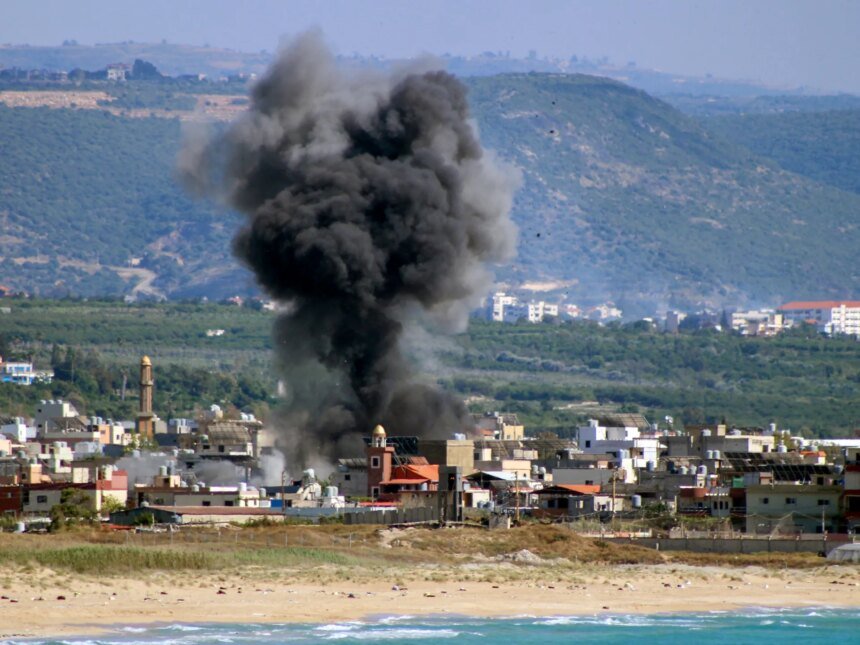
The United States announced today that Israel and Lebanon have agreed to implement a ceasefire that includes the establishment of “experimental zones” following the conclusion of the sessions of the second and final day of a fourth round of negotiations between them in Washington, amid internal Israeli controversy regarding the agreement, and the continued Israeli field escalation in southern Lebanon, leaving dozens of victims dead and wounded.
The US State Department stated that the two parties agreed – under the guidance of Washington – to accelerate the establishment of experimental areas, in which the Lebanese Armed Forces would exclusively control the land, excluding all non-governmental parties.
A truce is almost impossible
Professor of Political Science and International Law, Dr. Ali Fadlallah, believes that the 420-word American declaration does not include any reference to Lebanon’s interests, but rather contradicts the atmosphere that prevailed prior to its issuance regarding the possibility of a ceasefire.
He points out that President Donald Trump himself resorted 5 days ago to communicating with Hezbollah through intermediaries and not with the Lebanese state, considering that this proves that “he who negotiates is the one who fights.”
For his part, academic and political researcher Dr. Charbel Maroun explains that the positions of the two parties concerned with any settlement, that is, Hezbollah and Israel, indicate that a ceasefire at the current stage has become almost impossible, pointing out that the Lebanese negotiating delegation is sitting at the negotiating table “defenceless from any real pressure cards,” in light of an equation in which there is no correspondence between those who fight and those who negotiate.
Maroun warns of “difficult days” ahead, describing what is happening in the south as a “Lebanese catastrophe” after 68 villages were razed to the ground, more than 120,000 were displaced, and more than 3,500 were killed and 10,000 wounded.
On the other hand, Fadlallah refuses to characterize the crisis as the result of a Lebanese decision to go to war, based on the fact that Israel did not adhere to the previous truce agreement, and that the Lebanese army’s data south of the Litani River counted the destruction of more than 11,000 homes and the fall of 500 martyrs after the announcement of the truce on November 27, 2024. He pointed out that most of the displaced people he meets refuse to return to what existed before last March 2.
Regarding the Iranian role, Maroun points to a striking pattern in Iranian behavior, as Tehran did not intervene over the past months to stop the destruction of the south, but it moved at the moment when escalation began to threaten the Beirut region and the southern suburbs, after it realized that the American president gives priority to reaching the “grand deal” and not war.
Dr. Charbel Maroun points out that what is striking is that Trump explicitly excluded Iran from any role in determining the future of Lebanon and its south, which the Lebanese researcher sees as a fundamental obstacle to any settlement, as Tehran insists on being a party to any understandings related to its area of influence.