Published On 4/29/2026
The East Asian region is witnessing an unprecedented military and diplomatic escalation, which puts China and Japan on a collision course that may lead to a near armed confrontation.
In an in-depth analysis published by the American magazine Foreign Policy, Chinese writer and researcher Ding Yuwen believes that the two countries are “dangerously close to the brink of conflict,” driven by historical tensions and a sharp strategic repositioning towards the Taiwan issue.
Read also
list of 2 itemsend of list
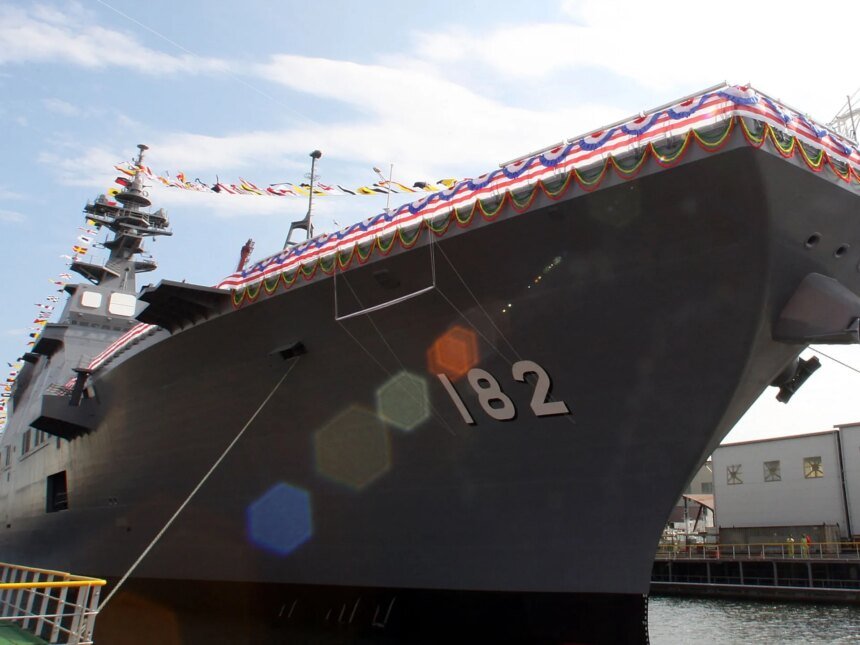
The researcher said that the spark of the latest crisis began after the Japanese destroyer “Ikazuchi” crossed the Taiwan Strait on April 17, a time that the writer described as sensitive because it coincided with the anniversary of the “Shimonoseki” Treaty, which symbolizes national humiliation in the Chinese conscience, because it ended the First Sino-Japanese War with a crushing defeat of the Chinese Qing dynasty against Japan.

However, the most influential factor – according to Ding Yuwen’s analysis – is the shift in Japan’s position towards Taiwan, especially after Prime Minister Sanae Takaichi’s statements, which considered that any Chinese attack on the island might justify Japanese military intervention.
The writer confirms that Beijing views this change as not a coincidence, but rather part of a broader trend that includes enhancing Japanese military capabilities and strengthening its regional alliances, especially with the United States and the Philippines.
Yuwen warns that the geopolitical environment in East Asia makes the potential for escalation more dangerous compared to the Sino-American relationship, explaining that geographical proximity and the heavy historical legacy between China and Japan raise the possibility of miscalculation.
The researcher says that neither side “desires war, but they are approaching it,” as Tokyo sees it as strengthening deterrence, while Beijing considers it a preparation for intervention in Taiwan.
The risk of a limited confrontation erupting, whether at sea or air, during the next two years cannot be ruled out, especially in light of the multiple points of friction and the possibility of field errors or miscalculations that may push the two sides into a clash they do not want.
The article also suggests that China may be more willing to test the limits of confrontation with Japan than with the United States, given its belief in having “closer and more usable advantages” in disputed areas such as the East China Sea.
The author concludes that the risk of a limited confrontation, whether at sea or air, during the next two years cannot be ruled out, especially in light of the multiple points of friction and the possibility of field errors or miscalculations that may push the two sides into a clash they do not want.
The researcher asserts that the continuation of the current Japanese leadership in its “hard nationalist approach towards China” may deepen the strategic confrontation, and make it difficult to avoid a possible clash in sensitive areas such as the Diaoyu (Senkaku) Islands or the vicinity of Okinawa.