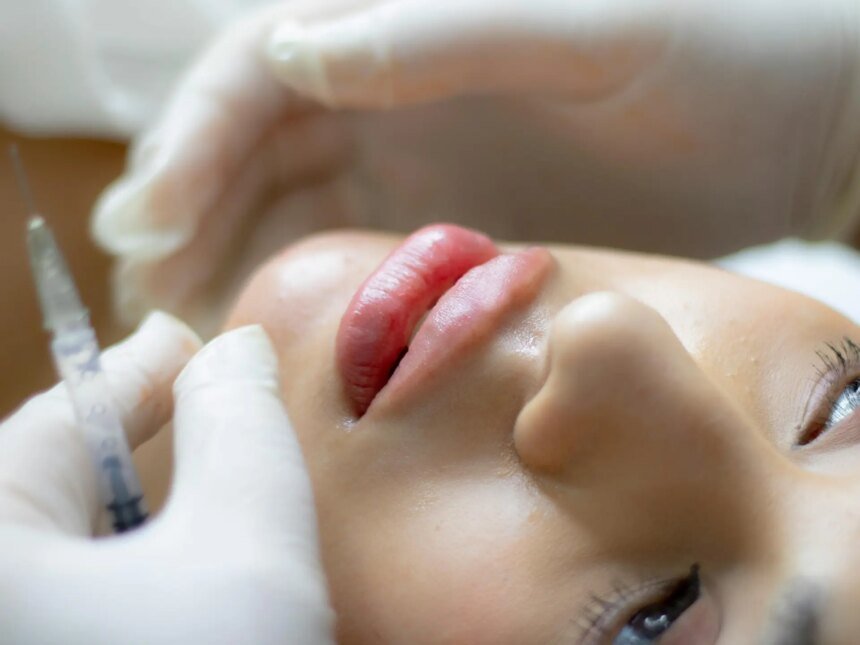
Non-surgical cosmetic procedures are still achieving huge sales that are increasing day after day, as they jumped between 2018 and 2022 by approximately 39% globally, and hyaluronic acid injections accounted for 4.3 million out of a total of 13 million non-surgical cosmetic procedures.
Global market analyzes have recently indicated that the value of the filler injection sector using hyaluronic acid will rise to reach $4 billion in 2023, and it is expected to continue growing until approximately $10 billion in 2034.
Thanks to its ability to achieve noticeable cosmetic results with minimal surgical intervention, hyaluronic injections gained the admiration of the medical community, especially after the amazing results in eye surgeries during the 1970s and 1980s, and it stormed the world of dermatology as one of the innovative cosmetic solutions.
These injections aim to hide the signs of aging that appear on the face, tighten the skin and enhance its elasticity and freshness, and go beyond that to contribute to changing some facial features by obtaining a rounder face or fuller lips.
After the boom in social media, which promoted “ideal” standards of beauty, many people began to view hyaluronic injections as enhancing self-confidence, raising the rate of satisfaction with the external appearance, and making the person more attractive and beautiful!

Harmful effects of hyaluronic acid injection for the face
Like any medical procedure, hyaluronic acid injection may be accompanied by some side effects, some of which are common and some of which are less common, and according to what the US Food and Drug Administration listed in its document issued on August 13, 2025 prepared for the meeting of the Advisory Committee for General and Plastic Surgery, the most common side effects of subcutaneous hyaluronic filler injections, which were reported in clinical studies:
- Swelling at the injection siteIt appears shortly after the injection and disappears within a few days. It may last weeks, and perhaps months or a year in some cases.
- Feeling pain: Especially when touching the injected area.
- Feeling of skin hardening in the injected area.
- Bruising.
- Skin redness: Or discoloration, itching, and rash.
But the most severe and dangerous thing that accompanies these injections is the possibility of the injection reaching one of the arteries located under the skin at the site of the injection, causing a blockage of the blood vessel and leading to skin necrosis, or causing a blood clot, and the matter may even affect eyesight and lead to blindness.
Make a hyaluronic acid injection in the face
The skin consists of three main layers: the epidermis (the outer layer), the dermis (the inner layer), and then fatty layers directly beneath it. The dermis layer consists of connective tissue, which includes collagen, which represents the largest percentage of it in the early stages of life. Hyaluronic acid also constitutes the largest percentage of the extracellular cellular material, and it is one of the glycosaminoglycans found in abundance in the dermis layer, and its function is to retain moisture that gives the skin a youthful appearance.
Hyaluronic acid participates in several vital processes, most notably cell regeneration, wound healing, and enhancing communication between cells. With advancing age, it begins to decay and its percentage in the skin decreases, losing its elasticity and decreasing its moisture content, until fine threads and wrinkles appear, drawing the contours of the face and announcing a new age stage in which these lines reflect the months and years in which the skin has destroyed its cells.

Hyaluronic acid has properties that make it the most prominent substance in cosmetic injections. It is highly viscous. It is located in the areas of the skin that have lost their ability to produce hyaluronic acid and collagen, fills them and forms tight internal bonds between cells in the dermis layer. It improves the structure of the skin by stimulating the production of collagen and elastin indirectly by making changes in the shape and behavior of the fibroblast cells responsible for producing collagen, so they appear plump and youthful again.
The hyaluronic acid filler remains after being injected under the skin for a period ranging between 4 to 6 months, depending on the manufacturer, injection site, and method used.
Are hyaluronic acid injections effective?
Hyaluronic acid injections have been subjected to research and analysis in order to confirm their effectiveness amid conflicting results, including the findings of researchers Rong Ying Zhu and Mi Yu from the Department of Dermatology at Sichuan Huamei Zixin Medical Aesthetic Hospital in China. They conducted a systematic review and analysis of 12 studies with the aim of comparing the effectiveness of hyaluronic acid injections in reducing the appearance of wrinkles, improving skin elasticity, moisturizing it, and enhancing its freshness.
The results published in the Journal of Cosmetic Dermatology in 2025 indicated the noticeable effect that hyaluronic injections had on the level of hydration and freshness when used by the right person, taking into account the appropriate timing and optimal dose, but their effect on skin elasticity was not noticeable.
However, the study showed a number of limitations, including the lack of included studies due to the stringency of the criteria followed by the researchers. They were also unable to evaluate the long-term effect due to the scarcity of studies that indicated this aspect.
Another systematic review of 15 clinical studies conducted by researchers from the Department of Dermatology and Radiology of medical authorities in India with the aim of evaluating the ability of hyaluronic acid injections to improve the appearance of the skin, the results of which were published in 2023 in the “Journal of Investigative Clinical and Aesthetic Dermatology”, and was based on comparing the effectiveness of hyaluronic acid when injected alone or with other substances.
The results, after being analyzed, showed the effectiveness of all types of hyaluronic acid in moisturizing and tightening the skin and giving it a fresh and radiant appearance that rids it of signs of fatigue and exhaustion. They indicated that it is safe and satisfied with patients. The results also revealed that the effectiveness of hyaluronic acid alone exceeded its effectiveness combined with other substances by a large percentage.
However, the researchers confirmed that there are a number of limitations that may hinder the generalization of the results, with the need to support them with future long-term studies, as the samples included in the studies were relatively small, so the strength of the statistical indicator decreased, with the possibility of bias and lack of data in some of the studies included in the review, in addition to that, the long-term results were not monitored in any of the studies.

A group of researchers also tried to fill some of the gaps by directing their compass towards providing an accurate evaluation that highlights the real changes resulting from hyaluronic injections, in addition to documenting the personal experience of patients during a follow-up period that lasted 3 months due to the lack of studies documenting both. The study was conducted by researchers from universities in Pennsylvania in America and was published in October 2025.
During the experiment, 101 women aged between 40 and 65 years were injected with hyaluronic acid in different areas of the face to increase fullness and get rid of signs of aging, such as the folds between the upper lip and cheek, and the fold extending from the corner of the lower lip towards the chin, lips, and cheeks, by experimenting with 3 types of non-animal hyaluronic acid injection products licensed by the Food and Drug Administration, produced by Galderma, which partially funded the study, and then monitoring the changes. It was recorded in 4 stages, first immediately after the injection, after two weeks, then after 4 weeks, and finally after 12 weeks.
The researchers monitored the appearance of the skin after injecting it with various types of hyaluronic acid to evaluate the amount of volume that these materials could give to the injected tissues and how long this effect lasted. It was found that it maintained 85% of its volume in all areas of the face 4 weeks after the injection. After 12 weeks, the cheeks and mid-face area recorded the highest percentage of volume retention of the injected hyaluronic filler, approximately 79.2%, while the lips had the least volume retention of approximately 37%. This is attributed to To constant muscle movement while speaking and eating.
The researchers also monitored the level of psychological and social satisfaction of the participants after injecting the filler, which was directly linked to the length of time the filler remained in the face. They found that the results of hyaluronic injections do not depend on the product alone, but rather depend on other factors combined. The response of the tissues to the hyaluronic substance played a role, in addition to the nature of the injected area and the characteristics of the injection itself. Therefore, they recommended the necessity of studying these factors and educating patients about them before the injection in order to provide more accurate expectations that include short- and long-term results.
But on the other hand, the researchers explained that the results may be inaccurate for several reasons, most notably the lack of diversity in the sample by including people of different genders or other ethnicities, and the costs of hyaluronic injections were free, which means the possibility of patients being biased towards giving positive results.
On the other hand, the Corona pandemic (Covid-19) prevented the participants from being followed up by the 12th week due to the global restrictions imposed at that time, in addition to the funding of the manufacturer of the hyaluronic materials used in the experiment.
It is worth noting that many studies that dealt with evaluating the effectiveness of hyaluronic injections and the extent of their retention in tissues recommended the necessity of conducting further studies and experiments to investigate the effectiveness and long-term effects of hyaluronic injections, which means that the picture is still incomplete and caution must be exercised and carefulness should be taken to consult an experienced and highly skilled specialist in this regard in order to avoid any complications and health damage that may turn the journey of searching for beauty into suffering that deprives the owner of looking at his face in the mirror for fear of disappointment.