Published on 5/31/2026
|
Last update: 15:09 (Mecca time)
If you wash your hair every day for fear of oil, or postpone washing it for days for fear of dryness, you may be doing both things wrongly, as science today draws a much simpler map for washing hair than what advertisements promote.
A recent report in the American “Time” magazine points out that the most important question is not “Which shampoo should I buy?” Rather, “How do I wash my hair, and how often?”, based on the opinions of dermatologists and the recommendations of the American Academy of Dermatology, with practical advice from the Mayo Clinic and Cleveland Clinic.
How often should you wash your hair?
Dermatologists who spoke to TIME say that the number of times you should wash your hair is not based on a ready-made recipe, but is mainly determined by:
- How oily the scalp is.
- Hair type: smooth, thick or curly.
- Lifestyle, sweating, exercise or work environment.
in general:
- Oily scalp: You may need to wash every day or every other day, because the accumulation of oil causes heavy hair, itching and dandruff.
- Dry or frizzy hair and non-oily scalp: It can be sufficient to wash once a week, and perhaps more frequently.
- Most people: An average of two to three times a week is adequate, unless there is a very oily scalp or a special skin problem.
The American Academy of Dermatology points out a simple rule: wash your hair “whenever it looks greasy or dirty,” noting that over-washing may dry out the hair and make it lose its shine, while under-washing leaves the scalp full of oil, sweat, and germs, and increases the chances of itching and an unpleasant odor.
Doctors from the Mayo Clinic add another angle: someone who exercises intensely or lives in a hot and humid climate may need to wash more than someone who works in an air-conditioned place and does not sweat much, even if the hair type is the same.

How do I choose shampoo? Listen to your scalp, not the promises of the box
Doctors mention in the “Time” report that the scalp is the “ground” on which hair grows, so the choice of shampoo should be directed to it more than to the shape of the strands. These are general guidelines to help you:
- If your scalp is oily: Look for a shampoo labeled as “cleansing” or “clarifying” to help reduce excess oil.
- If your scalp is dry or sensitive: Choose a gentle, moisturizing shampoo that contains ingredients such as glycerin and ceramides, preferably free of strong fragrances that may increase irritation.
- If you experience persistent dandruff, redness or inflammation: You may need a medicated dandruff shampoo with ingredients such as ketoconazole, zinc pyrithione, or selenium sulfide, and the dermatologist often determines its type and frequency of use.
- For curly or very dry hair: Many dermatologists, including doctors at the Cleveland Clinic, recommend trying sulfate-free shampoos, because they are usually less harsh on the hair’s natural oils.
The golden rule here: If you notice that the shampoo leaves your scalp tight, itchy, red, or full of small pimples, it is probably not right for you, no matter what its advertising promises.
As for conditioner, experts recommend using it after almost every wash:
- For fine or oily hair: Apply to the ends only.
- For dry or frizzy hair: It can be distributed throughout the length of the hair, avoiding the scalp if it is not dry.

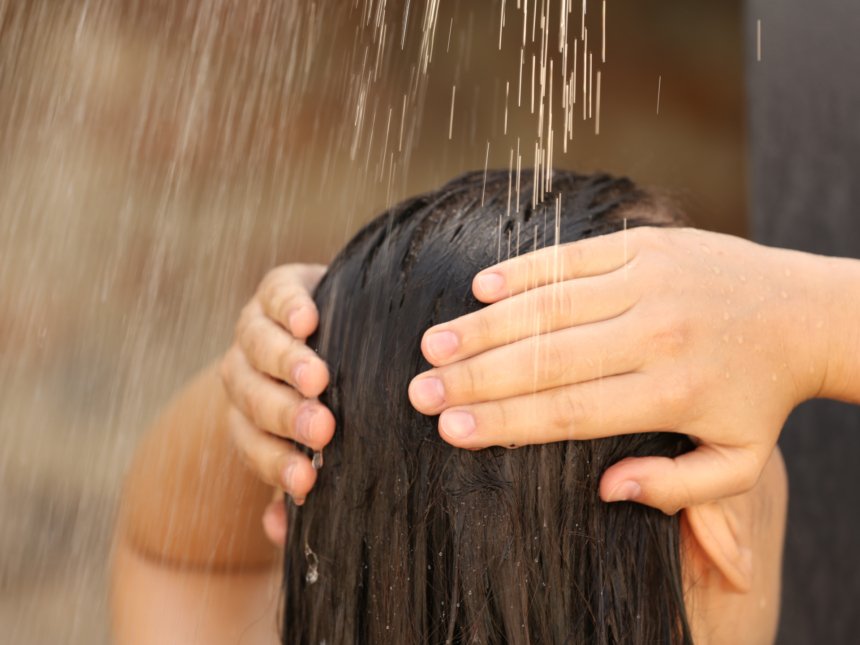
How do you wash your hair? Small details make the difference
“Time” collects the advice of a number of dermatologists in simple steps:
1- A little shampoo is enough
An amount equivalent to a large coin is usually sufficient for the scalp, especially if the hair is short or medium length.
2- Focus on the scalp, not the ends of the hair
- Apply the shampoo to the roots and massage gently with your fingertips, not your nails.
- You do not need to scrub the ends vigorously, as the gentle foam and rinse are sufficient to clean them.
3- Choose lukewarm water, not too hot
Very hot water strips the scalp of its natural oils, and may worsen dryness, itching, and dandruff.
4- Condition the ends first
- For fine or oily hair, apply the conditioner only to the ends of the hair, so as not to weigh down the scalp.
- For dry or curly hair, the conditioner can be distributed along the length of the hair, avoiding the scalp unless the doctor advises otherwise.
5- Rinse well
Shampoo or conditioner residue on the scalp may contribute to itching, dandruff, and breakouts.
The American Academy of Dermatology confirms these details, and clearly recommends that the shampoo be concentrated on the scalp, that the rinse be good, and that the conditioner be used in a way that suits the hair type.

When do you need a dermatologist?
Although washing your hair seems like a simple daily thing, dermatologists warn against ignoring some signs:
- Persistent severe itching that does not improve by changing the shampoo.
- Thick flakes or visible redness of the scalp.
- Painful bumps or boils on the scalp.
- Noticeable and sudden loss or the appearance of hairless patches.
In these cases, it is not recommended to continue changing shampoos randomly, but rather to consult a dermatologist who may conduct simple tests – such as vitamin D, iron, and thyroid function – or prescribe special topical treatments.
Practical summary
- There is no standard rule for the number of times to wash hair, but many settle on 2-3 times a week, increasing it for an oily scalp or a lifestyle full of sweating, and reducing it for dry or frizzy hair.
- Focus on your scalp: If it’s calm, not irritated, or itchy, there’s a good chance your hair is in good shape.
- Choose shampoo based on your scalp’s tolerance, not on advertising promises of instant shine.
- Do not exaggerate the temperature of the water, the amount of shampoo, or the force of rubbing. Gentleness here is more effective than “attack.”
In this sense, medical recommendations remind us that the path to healthy hair is through a simple and realistic routine, not through a new magic product in a shiny box.