Published On 5/22/2026
American reports revealed that the war with Iran has exhausted a large part of American defensive and offensive capabilities in the region, especially in defending Israel, amid reports that Iran destroyed American drones worth a billion dollars during the war.
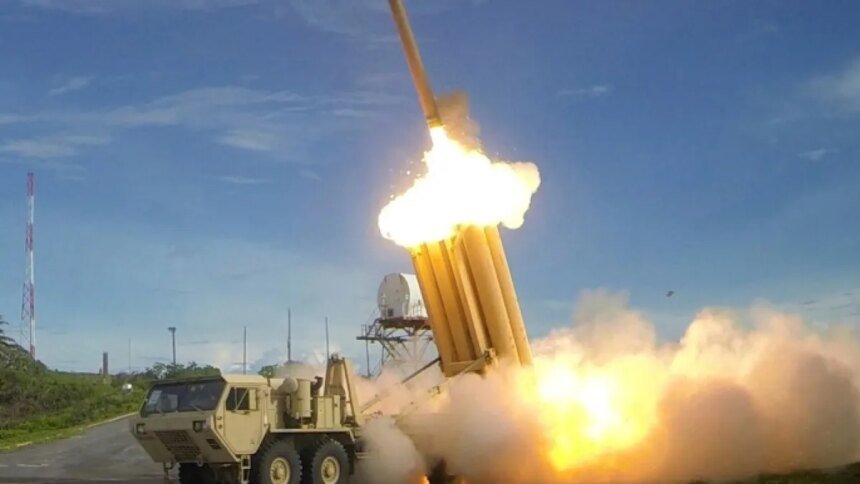
The Washington Post reported – yesterday, Thursday, citing assessments by the Pentagon and American officials – that during the war on Iran, the US army launched more than 200 THAAD interceptor missiles in defense of Israel, equivalent to approximately half of the Pentagon’s total stock of this type.
According to the Washington Post, the volume of advanced munitions used by the United States to intercept Iranian missiles far exceeded what Israel itself used, which raised questions within Washington about the readiness of the American army and its security obligations in other regions of the world.
Greater burden
The newspaper quoted three American officials as saying that this defect highlights the extent to which Washington bears the greatest burden in confronting Iranian ballistic missile attacks, during the operation that the United States called “Epic Rage.”
The officials explained that the United States also launched more than 100 Standard Missile-3 and Standard Missile-6 interceptor missiles from naval ships in the eastern Mediterranean.
On the other hand, the Washington Post said that Israel fired less than 100 missiles from the “Arrow” system, and about 90 missiles from the “David’s Sling” system, some of which were used against less advanced projectiles launched by the Ansar Allah group in Yemen and Hezbollah in Lebanon.
The newspaper quoted a US administration official as saying that the United States in total fired about 120 more interceptor missiles than Israel, and engaged almost twice the number of Iranian missiles.

American fears
According to American officials, Washington is increasingly concerned about the possibility of the imbalance widening if the war with Iran resumes.
The Washington Post quoted a US administration official as saying that the US military would likely consume a larger share of interceptor missiles if the confrontations returned.
He explained that this is due to the Israeli army’s decision to remove some of its missile defense batteries from service for maintenance purposes, while maintaining its stock of advanced interception missiles.
The Washington Post indicated that these data raised concerns among the United States’ allies in Asia, especially Japan and South Korea, which rely on the American umbrella to confront the threats of North Korea and China.
The Wall Street Journal confirmed – last April – that replacing the US arms stockpile may take 6 years.
It was reported at the time that the United States launched more than 1,000 long-range Tomahawk missiles in the war against Iran, in addition to between 1,500 and 2,000 vital air defense missiles, including THAAD and Patriot missiles.

The Pentagon and Israel respond
On the other hand, the Pentagon defended the distribution of burdens between Washington and Tel Aviv, and its spokesman, Sean Parnell, told the Washington Post that ballistic interceptor missiles are only one tool within a wide and integrated network of air defense systems.
He added that the United States and Israel bore the defense burden “fairly,” using fighters, anti-drone systems, and other advanced defense capabilities.
The Israeli embassy in Washington also defended the level of coordination between the two sides, telling the newspaper that military operations were coordinated “at the highest levels,” and that the United States does not have another partner that possesses the readiness, capabilities, and common interests that Israel possesses.
American losses amounted to one billion dollars
In a related development, Bloomberg reported on Thursday that Iran had destroyed more than 24 American MQ-9 Reaper drones that had been operated by American forces since the outbreak of the war.
The agency quoted an informed source as saying that a number of these drones were shot down while flying by Iranian fire, while other aircraft were destroyed while on the ground as a result of missile strikes or accidents.
According to Bloomberg, the value of these losses is estimated at about one billion dollars, which adds a new burden to the American military cost in the war, in addition to depleting the stock of advanced interceptor missiles.
The US Department of War is accelerating to increase military production, as it is pressuring companies such as Lockheed Martin and RTX to accelerate the pace of manufacturing missiles and ammunition, as part of a broader plan to rebuild the US military arsenal.
These reports come at a time when US President Donald Trump is hinting at the possibility of resuming strikes against Iran if negotiations fail to reach an agreement.