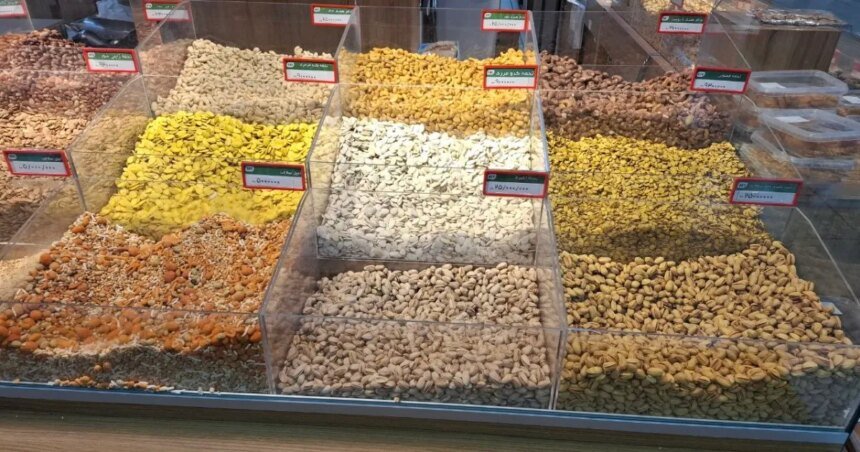
At a time when pistachio prices are on fire globally, reaching their highest levels in 8 years due to the US-Israeli war on Iran, Iranian producers are facing a double dilemma, which is an abundance of supply with an almost complete interruption of sea export arteries as a result of the US blockade on the main ports in southern Iran.
The price of pistachios reached $4.57 per pound (453.6 grams) last March, which is the highest level for this agricultural product since May 2018.
Read also
list of 4 itemsend of list
Those in charge of the pistachio sector in Tehran agree that the war has exposed export chains to unprecedented pressure as a result of shipping bottlenecks in Gulf waters, while global demand for this product used in various foods, such as sweets, ice cream and chocolate, is accelerating.
Iran is the second exporter of pistachios in the world, behind the United States, and the third producer, behind America and Turkey.
Export stopped
The head of the Iranian Pistachio Association, Mohammad Salehi, revealed in an interview with Al Jazeera Net that most of his country’s pistachio exports practically stopped after the outbreak of the war.
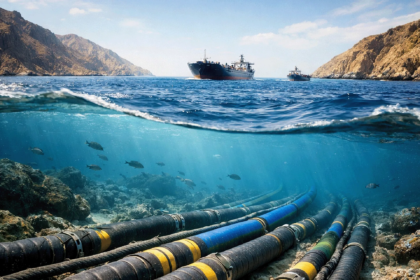
Salehi explained, “More than 65% of Iranian pistachio exports were carried out by sea, but with the lack of security in the southern waterways and the subsequent blockade of the country’s ports, the quantities offered in global markets decreased significantly, causing prices abroad to rise.”
Salehi added, in his interview with Al Jazeera Net, that about 34% of exports of this product were already taking land routes even before the war period, while air exports do not exceed 1% and are limited to luxury products or urgent orders.
Salehi continued, “After the complete cessation of exports from southern ports, only small quantities are now exported through Caspian Sea ports, as well as via land routes towards Turkey,” noting that land transportation is “expensive, takes a long time, and faces many challenges.”

Low prices inside Iran
In contrast to global markets, the pistachio market is witnessing a remarkable phenomenon within Iran. Prices fell by between 10% and 15% after the war, according to Alireza Arzani Mamghani, head of the Walnuts and Nuts Federation in the Iran Varieties Chamber.
Arzani Mamqani explained, in an interview with Al Jazeera Net, that when pistachio exports stop, the local supply of pistachios increases, and thus prices decrease, according to the law of supply and demand.
The head of the Walnuts and Nuts Union added that the decline in prices at home concerns wholesale prices and farmers only, and not consumers, revealing an internal “consumption shock” that doubled the pressure on the local market, as Nowruz coincided with Eid al-Fitr this year in an atmosphere of war, public mourning, and large numbers of casualties.
The result, according to Arzani Mamqani, was “a widespread popular reluctance to celebrate the two occasions, so consumption declined sharply even though we had prepared large stocks in anticipation of the season.”

Alternative paths to pistachios
Arzani stressed that “the pistachio sector inside Iran was not damaged by the war. Farms, agricultural lands, and processing plants in the provinces of Kerman (south), Khorasan Razavi (northeast), South Khorasan (east), and Semnan (central) were almost not affected by the attacks.”
To confront the continued naval blockade of southern ports, Arzani Mamqani revealed that Iranian exporters are looking for alternative paths, including “exporting directly to Russia via the Caspian Sea, and to Europe via Turkey using its ports, as well as via Eurasian corridors to other regions in East Asia,” adding, “We have just begun, but we hope for a jump in exports in the future.”
He pointed out that the first shipments are currently being directed to Kyrgyzstan and Afghanistan with the aim of reaching China and India, in addition to attempts to return to Arab markets via Iraq.

Arzani Mamqani explained that the abundance of local production and the efficiency of alternative routes may gradually mitigate the global price shock, but the continued disruption of the main maritime supply line keeps international markets in a state of suspense as the war and its repercussions continue.
The search for alternatives was not limited to exporting Iranian pistachios only, but also included importing, as Arzani Mamqani explained that the war forced merchants to change the methods of importing agricultural pesticides from China.
He continued, saying, “We used to import pesticides from China via sea freight to the Emirates and then to Iran on a journey that took 45 days. Today, our new land route (China – Kyrgyzstan – Uzbekistan – Tajikistan – Turkmenistan – Iran), and via railway, the goods arrive in only 10 days and at a lower cost.”

“Exceptional” production of pistachios
After years of stability at the level of approximately 200,000 tons, Iran succeeded last year in breaking the production barrier by reaching 250,000 tons of pistachios, in a crop that a member of the Iranian Chamber of Industry and Commerce, Zain al-Abidin Hashemi, described as “exceptional after a long stagnation.”
In statements to Al Jazeera Net, Hashemi believes that this productivity jump is an indication of the ability of Iranian orchards to regain their health, supported by improved climatic conditions and high fruition rates in the main producing provinces.
In the context of presenting a comprehensive picture of the size of the sector, Hashemi confirmed in his speech to Al Jazeera Net that “about five-sixths of Iranian production (about 83%) is directed to export, while only one-sixth of it is consumed locally,” adding that the American-Israeli strikes changed this equation immediately, as exports from the southern ports, which constitute the main artery for the flow of Iranian pistachios towards China, the European Union, India and the Arab countries, practically stopped.
Despite the logistical shock, there are positive signs looming on the horizon for next season. A member of the Chamber of Industry and Commerce in Iran expects that the country will once again exceed the record production ceiling thanks to the abundance of rain this year, which puts producers before a difficult equation represented by an expected abundance of supply, with continued export bottlenecks.

Naval blockade
In Hashemi’s opinion, the naval blockade of southern ports will remain the “biggest challenge” to converting this surplus into export revenues, unless alternative paths succeed in absorbing the expected quantities. But at the same time, he confirms that the anticipation of global markets will not last long, as he believes that Iranian merchants are able to keep the flow of pistachios continuing even in times of war and siege.
What Hashemi said comes in line with Mohammad Salehi, head of the Iranian Pistachio Association, confirming the ability of pistachio merchants to overcome current obstacles.
Salehi bases his optimism on the sector’s experience in overcoming previous crises, saying, “We faced the most severe economic sanctions before, and we succeeded in preserving our markets and solving the problems of returning export revenues. I do not think that the continuation of the war or the blockade will cause existential challenges for the pistachio sector.”
Salehi expected that the continuation of the war or the naval blockade “will not affect pistachio production inside Iran,” expressing his hope that post-war developments will lead to an easing of restrictions and the lifting of sanctions.
Salehi asserts, “If sanctions and restrictions on financial transfers are removed, we may see an increase in exports and greater revenues.”
With expectations of a new record harvest season this year, the biggest bet for Iranian pistachios – according to Iranian observers – remains on the ability of the private sector to weave alternative networks to traditional trade routes, in a race against time to ease the burden of maritime isolation and meet the appetite of global markets thirsty for this Iranian product.