Published on 4/25/2026
The American media attributed the failure of the second round of talks, and the decision of US President Donald Trump to cancel the delegation’s visit to Islamabad, to the lack of consensus between factions within Tehran, which hinders the submission of any clear negotiating proposals.
Al Jazeera Mubasher correspondent in Washington, Amr Hassan, said that the Wall Street Journal and the New York Times focused on what they described as sharp internal divisions in the Iranian decision-making structure, considering that the lack of consensus between the factions within Tehran hinders the submission of any clear negotiating proposals.
The New York Times also reported references to transformations within the centers of power in Iran, between security and economic institutions, with talk about the absence of a decisive role for the Supreme Leader in managing the file during the current period, which – according to the newspaper – has increased the state of political uncertainty.
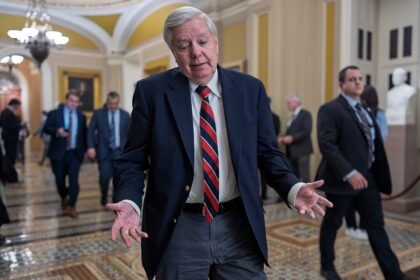
At the political level in Washington, Al Jazeera’s correspondent directly conveyed positions supporting Trump’s decision, noting that Senator Lindsey Graham considered canceling the visit a right step, calling for continued economic pressure and strengthening of the naval blockade, while maintaining the option of military escalation if necessary to ensure a change in Iran’s behavior.
In the same context, US Secretary of War Pete Hegseth indicated that previous military operations achieved specific goals, while the American focus has shifted towards what officials described as the “economic and naval blockade” as a main pressure tool, rather than direct intervention.
Limited chances of success
On the other hand, Carnegie Center expert Aaron David Miller considered that the chances of success of any agreement between Washington and Tehran appear to be very limited, in light of the lack of trust and the differences in goals, and it is likely that the next stage will remain confined to what he described as “negotiations about negotiations,” without fundamental progress.
On the American internal level, Al Jazeera Mubasher’s correspondent pointed out that Trump’s decision comes in light of a noticeable decline in his popularity rates, as opinion polls showed that the dissatisfaction rate reached about 57.7% compared to 39.2% of supporters, which is the lowest level since the beginning of his current term, which adds – according to estimates – an internal political dimension to his external decisions, especially with the approaching electoral elections.
The American President had previously announced the cancellation of the visit of a high-ranking American delegation that was scheduled to include Steve Witkoff and Jared Kushner to Islamabad, as part of efforts to meet with the Iranian side.
According to what Trump reported on his “Truth Social” platform, the decision to cancel the visit came on the grounds that the trip would consume a great deal of time and effort, in light of what he described as the absence of clarity of leadership within Iran, pointing to internal conflicts and confusion in who has the decision to negotiate.