Published on 4/25/2026
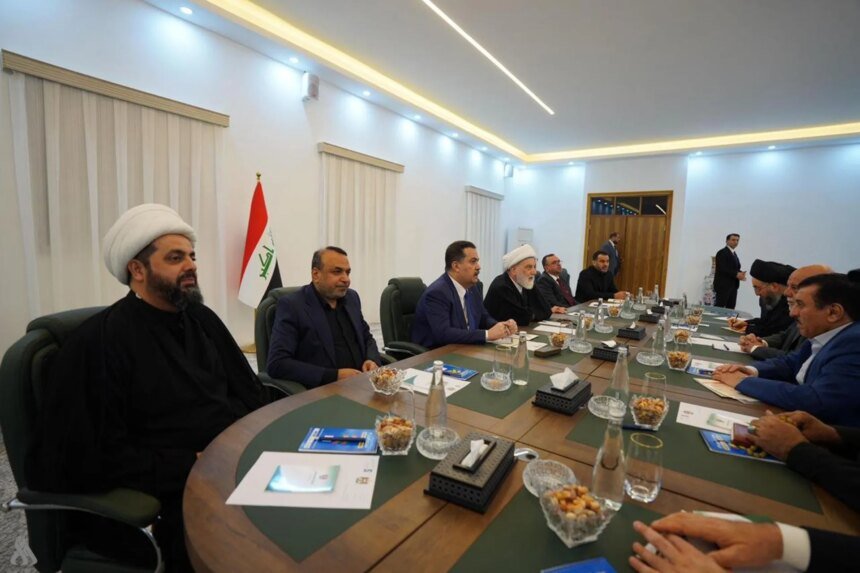
Iraq is about to fall into a political vacuum as the end of the constitutional deadline for choosing a new prime minister approaches, as the “coordinating framework” – the bloc with the largest number of seats in Parliament – failed to decide on choosing its candidate for this position, for the third time in a row this week.
The Iraqi News Agency said that the coordination framework – a coalition formed by Shiite forces with the aim of forming a consensual quota government – did not decide on Friday the selection of the prime ministerial candidate, and postponed the selection meeting until today, Saturday, that is, one day before the end of the deadline.
The spiral of postponements
The division in the coordination framework led to the repeated postponement of the meeting to decide the candidate for prime minister, the first time last Monday, the second time Wednesday, and the third time yesterday, Friday, which raised fears of a lack of consensus.
Article 76 of the Iraqi Constitution stipulates that the President of the Republic – within 15 days from the date of his election – assigns the candidate of the largest parliamentary bloc to form the government, which means that the constitutional deadline officially ends tomorrow, Sunday, and in that case the country may enter into a crisis.
Iraq had previously entered a state of political vacuum in 2021, before the Iraqi Parliament granted confidence to the government of Muhammad Shiaa al-Sudani on October 27, 2022.
Trump veto
The dispute erupted over the selection of a person to assume the position of Prime Minister who enjoys consensus within the coordination framework, after US President Donald Trump reshuffled the cards by declaring his “veto” on the appointment of Nouri al-Maliki to the position, threatening to stop American support for Iraq.
The Coordination Framework forces agreed – on January 24 last year – to appoint Al-Maliki as prime minister, but Trump demanded that he refrain from appointing him after threatening to withdraw financial support from Iraq, which prompted the leaders of the Coordination Framework to discuss alternative names.
Alternative names
A group of names are being circulated, including Nouri al-Maliki, Muhammad Shiaa al-Sudani, Bassem al-Badri, Rasim al-Awadi, Muhammad al-Daraji, Adnan al-Zarfi, and Haider al-Abadi, and two other people whose names have not been announced.
The Iraqis are awaiting developments regarding the announcement of the name of the candidate to form the new Iraqi government, after the parliament elected Nizar Amidi as president of the country on April 11.
The crisis in choosing the prime minister within the coordination framework appears to be more than just a dispute over names, as it has turned into a real test of the ability of the political forces to produce a balanced settlement that combines internal consensus with the requirements of the regional stage.