
Published On 4/20/2026
|
Last update: 01:50 (Mecca time)
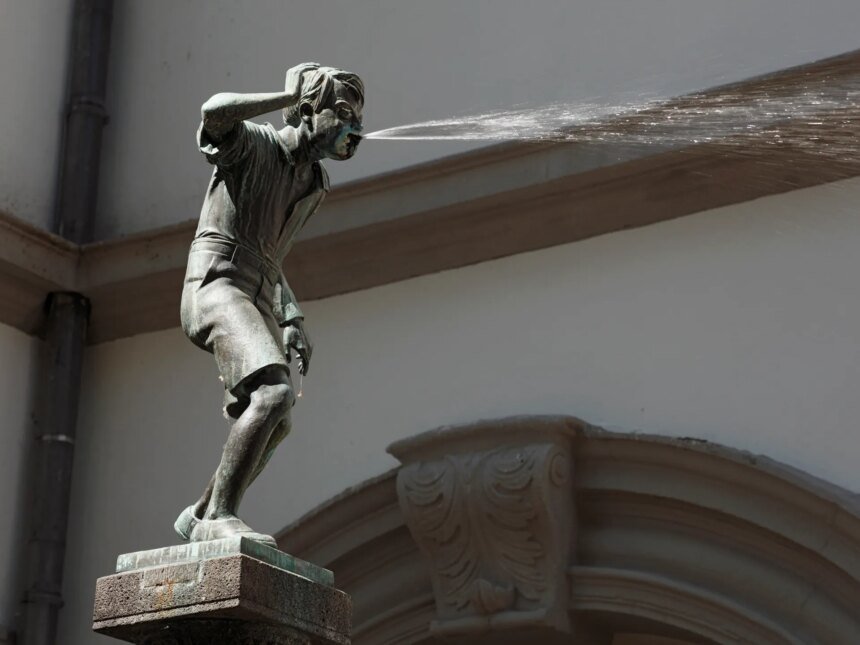
Koblenz- As soon as you approach him at the entrance to the old town to greet him, he surprises you with a shower of water coming out of his mouth, telling you this “bad boy” about the story of the humorous spirit with which that city resisted the French colonizer, and even contributed to its integration.
It is the story of the “Schängel”, which was transformed from a local nickname for the people of the German city of Koblenz into a philosophy of survival and identity, shaped by the volatile winds of history in this city centered at the confluence of the Rhine and Moselle rivers.
Read also
list of 2 itemsend of list
The seeds of this identity go back to the end of the 18th century, specifically in 1794, when Koblenz fell under the control of French revolutionary forces.
The French presence there continued for 20 years, a period that was not just a military occupation, but rather a comprehensive cultural and social “Frenchization” process. During those decades, relationships developed between French soldiers and city girls, resulting in a generation of children with mixed characteristics.
The French name “Jean” was the most common among these children, and because the German tongue of the people of Koblenz found it difficult to pronounce “Jean” with its French delicacy, they changed it in their rough dialect into “Shang”, and over time, to add a touch of pampering or irony, the word “Shangle” was born.
From “stain” to “honor”
In its popular roots, the term was associated primarily with those children who were born as a result of these relations between members of the French army and German girls, and who were often not officially recognized by French parents after the withdrawal of the army or the transfer of military units.
This is the reason why the term initially carried a kind of “stigma” or social disparagement, since the children were half French and half German among a people who greatly glorified their race.

Over the generations, the people of Koblenz – with their innate intelligence – were able to adopt the name and give it a positive connotation. The “shangle” has become a symbol of the intelligent and quick-witted citizen, who faces the vicissitudes of fate, including occupation, wars, and poverty, with an unbreakable sarcastic spirit.
Today, only those born within the historic confines of the old town are considered true “shangels.” This spirit has been immortalized in the “Shangle Fountain” in the middle of City Hall Square.
This bronze statue – of a mischievous child who surprises passersby with a spray of water every few minutes – is in fact a silent political and cultural message that says: “The emperors and soldiers are gone, and all we are left laughing and having fun at the crossroads of the two rivers.” From the womb of wars, Al-Shangal proved that coexistence is the only victor after the guns fall silent.

A contemporary cultural icon
The Shangle has transcended the boundaries of old stories to become a brand; From the “Shangle Anthem” sung at carnivals, to the naming of sports clubs and local products after it, this term remains the secret thread that connects Koblenz’s French past to its unified German present.
The French not only left behind the “Changles”, but they also left a mark that changed the face of Koblenz forever. During their rule, the Napoleonic Civil Code – which brought with it the concepts of equality before the law and civil liberties – was implemented for the first time in the region’s history.
The French also reorganized local administration, and made improvements to infrastructure and river navigation, laying the foundation for Koblenz as a modern trading city.
Even today, visitors notice a subtle French influence in the “Rhine cuisine” with its elegant touches, and in the Koblenz residents’ penchant for an open life that distinguishes them from their neighbors in northern Germany. The French presence has transformed from a memory of an old “enemy” into part of the city’s genetic fabric.