Published On 12/2/2026
|
Last update: 17:59 (Mecca time)
The Lost City (Ciudad Perdida) is one of the most important and famous archaeological sites in Colombia and Latin America, not only because of its charming nature, but also because of the unique historical story behind it. This city remained hidden for centuries in dense forests, before it was discovered in the twentieth century.
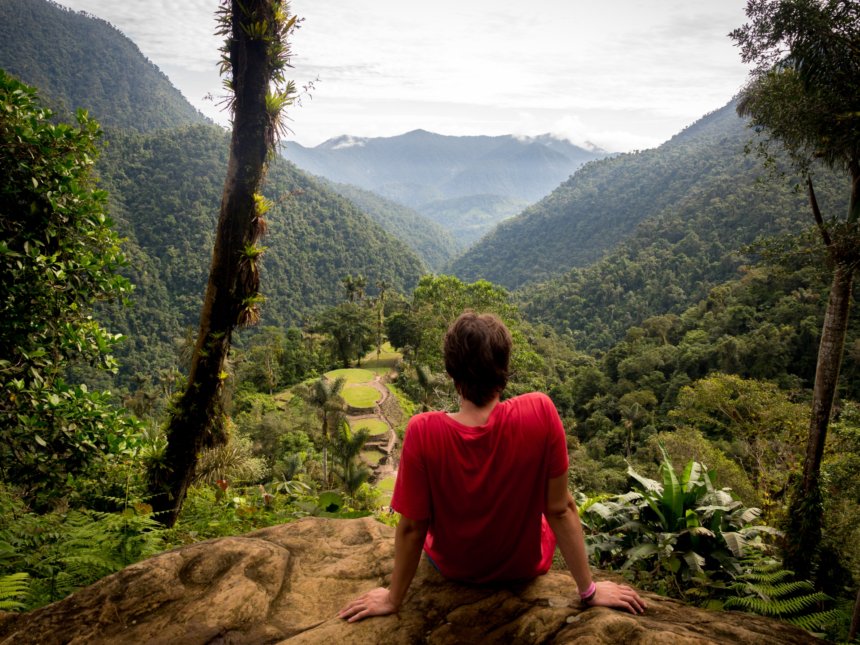
The city is located in the heart of the Sierra Nevada de Santa Marta mountains in northern Colombia, and today it is a unique tourist and cultural destination that combines ancient history, adventure and picturesque nature.
A brief history of the lost city
The lost city was founded around 800 AD, meaning it is about 600-650 years older than the famous city of Machu Picchu in Peru.
It was built by the Tairona civilization, one of the most advanced indigenous civilizations in northern South America before the arrival of the Spanish.
The city was an important political, religious and economic center, and home to thousands of residents. The Tayrona civilization was distinguished by its advanced skills in:
- Stone architecture
- Building terraces and stairs
- Water management and mountain agriculture
- Gold and pottery industry

Why was it called the “lost” city?
The city was not “lost” in the absolute sense, as local indigenous tribes such as the Kogi, Arhuaco, and Wiwa always knew its location and considered it a sacred place.
But to the outside world, the city remained completely unknown due to the sheer density of tropical forests that completely concealed it, and because of its remote location in the mountains and the difficulty of access. In addition to the absence of any roads or signs indicating it. The lack of Spanish colonial interest in the mountainous region compared to the coasts also played a role in marginalizing it, which is why the city remained isolated from the outside world for many centuries.
Discover the city in the modern era
The city was rediscovered in the 1970s, specifically in 1972, when it was found by a group of Guaqueros antiquities thieves while searching for gold and ancient artifacts.
Then unique artifacts began to appear on the black market, attracting the attention of authorities and scholars.
In 1976, Colombian archaeologists officially began work on the site, naming it the Lost City (Ciudad Perdida). Since then, it has happened:
- Cleaning the site of plants
- Documentation of terraces and stone stairs
- Protect the area as a national archaeological site

Architectural description of the city
The lost city consists of:
- Circular stone terraces built on the slopes of the mountains
- Huge stone stairs (the most famous of which is a staircase with about 1,200 steps)
- Stone paths connect residential and religious areas
- Advanced water and rain drainage systems
The city was not built as a cohesive urban unit, but rather consisted of a group of connected spaces, designed in harmony with the nature of the mountains and the surrounding environment.
Geographical location and surrounding nature
The Lost City is located in the Sierra Nevada de Santa Marta, the highest coastal mountain range in the world, an area of amazing environmental diversity (rainforests, rivers, waterfalls). It is also home to hundreds of species of plants and animals. The area is naturally protected and is considered one of the most biologically diverse places in Colombia.
Your guide to visiting the lost city
If you are an adventure lover and want an unconventional tourist trip, the Lost City may be your favorite destination. Here is what you should know:
1 – Access: The Lost City can only be reached via a long trek, usually starting from the city of Santa Marta, passing through the village of El Mamey.
2- Duration of the trip: The journey usually takes 4 to 5 days and includes walking through forests, crossing rivers, and climbing hills
3 – Basic condition: It is not allowed to visit the city except as part of an organized tourist tour and in the presence of certified guides in order to protect the site and respect its sanctity among the indigenous tribes.
4- Accommodation: In simple camps inside the forest, food, water and basic services are included

Cultural and spiritual importance
The Lost City is not just an archaeological site, but a sacred place for the indigenous people, who consider themselves “protectors of the land.”
Because of the city’s antiquity and historical authenticity, visiting it is not just a tourist trip, but rather a cultural experience that shows man’s relationship with nature, the philosophy of environmental balance, and respect for the cultural heritage of indigenous peoples.
Why is the Lost City a unique tourist destination?
- Oldest of the most famous Latin American sites
- An exciting and mysterious story of discovery
- Experience a true adventure amidst nature
- This is a completely non-commercial site
- Direct interaction with living indigenous cultures
The Lost City of Colombia represents a rare combination of history, mystery, nature, and culture. It is a living witness to a great civilization that preceded its time, and an example of nature’s ability to hide human treasures for centuries. Visiting this site is not just a tourist trip, but a trip through time to one of the oldest cities on the American continent.