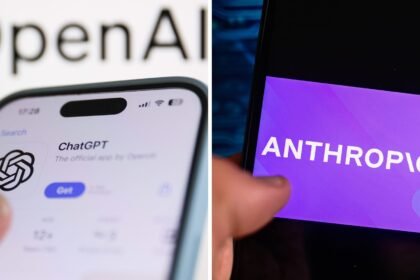
In a new episode of the “Smart Life” program on the Al Jazeera 360 platform, artificial intelligence intersects with politics, security, and economics in a complex scene that reveals profound transformations in global decision centers, from Washington to Silicon Valley.
In a remarkable development, the program revealed a sudden shift in the US administration’s position towards Anthropic, just weeks after it classified it as a “threat to national security.”
On April 13, 6 US ministers received a brief letter entitled “Access to the Mythos Model,” sent by White House Technical Director Michael Kratsios, announcing government coordination with the same company that had been banned.
The message was not an ordinary technical procedure, but rather an indication of a change in the balance of decision-making within Washington, where American institutions seemed to speak with more than one voice. The Ministry of Defense, which had prevented dealing with Anthropic, finds itself facing an initiative from the White House to reintegrate its technologies into state institutions.
The roots of the crisis go back to a sharp dispute between the company and the Pentagon, when Anthropic refused to delete two clauses from a military contract worth $200 million, stipulating that its “Cloud” model would not be used in autonomous weapons or mass surveillance. This refusal led to it being classified as a threat to supply chains, and presidential orders were issued to stop dealing with it.
But the scene became more complicated after the intervention of the judiciary. Judge Rita Lynn considered that what happened represented “classic retaliation” that contravenes the constitution, while the Court of Appeal considered that the requirements of military security took precedence over the harm caused to a single company.
Technical power that recalculates
In the midst of this conflict, Anthropic launched its new model, “Claude Mythos Preview,” which it described as the most dangerous and most advanced, after it was able, within weeks, to discover thousands of security vulnerabilities, including decades-old vulnerabilities in well-known operating systems and software libraries.
This development prompted senior financial officials in the United States to move quickly, with warnings of entering a new era of cyber risks, which explains the sudden shift in the position of the government, which returned to using the same technology despite previous disagreements.
Although the company did not release the model to the public, it made it available for use to a limited number of major companies, such as Apple, Microsoft, and Google, in a move that reflects the transition of the decision from the political sphere to the market.
These developments raise a central question: Who has the real decision regarding artificial intelligence?
The program paints a picture of a polycentric political system, in which the Pentagon closes a door and the White House opens a window, in the absence of clear legislative oversight or an international framework regulating the use of these technologies.
In light of this ambiguity, public opinion remains far from knowing the details of the decisions or even the names of the parties involved, which reinforces fears of non-transparent control over one of the most dangerous tools of the era.
The manager who never sleeps
In another aspect, the episode discussed a new trend in the world of management, as Mark Zuckerberg, CEO of Meta, is working to develop a digital version of it using artificial intelligence.
This version is not just a virtual image, but rather an integrated system that simulates his personality and way of thinking, and is able to interact with employees, answer their inquiries, and even attend meetings.
This project comes in the context of a global race to transform artificial intelligence from an auxiliary tool into a complete “digital human,” capable of making decisions and simulating human behavior.
Economically, this technology may lead to the reduction of administrative functions, while politically it opens the door to the use of digital copies to influence public opinion, which raises ethical questions about who controls these entities and the limits of their representation of their owners.
In response to these developments, the program presented the public’s opinions. In a comment reflecting a positive outlook, one of the followers said, “It may be satisfactory to the employees who feel his personal presence. This makes the employee interested in his work, monitoring his management, and developing his performance.”
While another expressed his concern about the acceleration of technology, saying, “Will the world become one digital platform one day? I think technology is advancing very quickly and makes this possible.”
Published On 4/21/2026