


Published On 7/7/2026
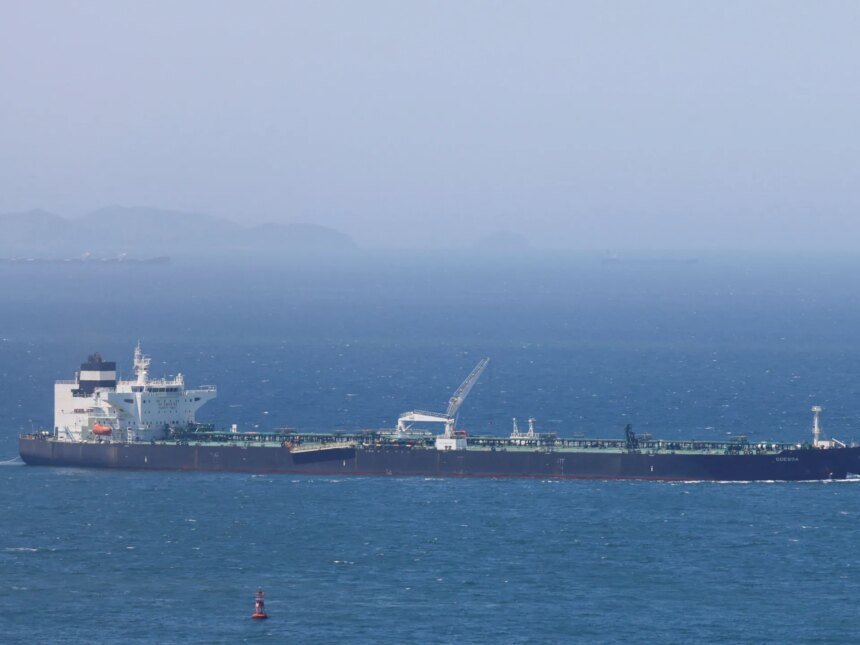
In a new escalation in the Strait of Hormuz, Iran returned to targeting passing ships under the pretext of the United States violating the memorandum of understanding signed between the two parties, but the target this time was an oil tanker belonging to Qatar, which mediates between Tehran and Washington.
The Qatari Foreign Ministry spokesman criticized the targeting of the Qatari tanker while it was crossing the Strait of Hormuz, and described the operation as an unacceptable attack on navigational security, holding Iran legally responsible for this attack and the resulting damages. He added that Qatar calls on Iran to immediately stop practices that affect the security of the region or threaten navigation, and to stop endangering energy supplies to serve narrow interests.
For his part, Secretary-General of the Gulf Cooperation Council, Jassem Al-Budaiwi, said that Iran’s attack on a Qatari tanker and endangering its crew is an escalation that threatens the security of the region.
According to what Axios reported, quoting an American official, “The Iranian Revolutionary Guard targeted a third commercial ship in the Strait of Hormuz.”
Iran bases its justifications for targeting ships crossing the Strait of Hormuz on what it considers to be an American violation of Article Five of the Memorandum of Understanding, which states that “Iran is the one responsible for ensuring the safe passage of ships, not the United States or any party,” as Ali Akbar Darini, a researcher specializing in American studies, explains in an analysis for Al Jazeera.
Darini accuses the Americans of violating Article Five of the Memorandum of Understanding by trying to establish an alternative waterway, noting that “Iran has made it clear to all ships that those who adhere to Article Five are safe, but if they take unauthorized routes they will not be safe.”
Iran has no authority over the Strait
However, Ambassador Joey Hood, US Deputy Assistant Secretary of State, believes that the memorandum is not an international treaty or a legal document, and therefore neither Iran nor the United States has the right to decide what happens in the Strait of Hormuz.
He believes that ships are allowed to pass without any obstruction in accordance with international law and the United Nations Convention on the Law of the Sea, stressing that Article Five does not indicate granting Iran any military authority to use military force in the Strait of Hormuz.
The American spokesman is surprised that Iran is targeting an oil tanker belonging to Qatar, which is acting as a mediator, considering that what Tehran is committing is a “fatal strategic mistake.”
Analysts believe that Iran’s return to targeting ships in the Strait of Hormuz is particularly related to its opposition to the Southern Corridor, which the Sultanate of Oman announced in June 2026 in coordination with the International Maritime Organization, with the aim of ensuring freedom of navigation in the Strait of Hormuz and enhancing the flow of global trade.
The Omani corridor is located in the part of the Strait of Hormuz under the sovereignty of the Sultanate of Oman, and extends along the Musandam Peninsula. It is known as the Southern Corridor, and is seen as a safer alternative path that allows ships to avoid areas where they may face security risks, including routes that are suspected of being exposed to mines or that may be subject to restrictions and fees imposed by Iran.

In the same context, Dr. Salim Zakhour, a researcher specializing in constitutional law and political systems, says that Iran’s problem is not with the United States, but rather with its inability to achieve consensus with the Sultanate of Oman.
For his part, Zakhour raises question marks about why Iran targeted the Qatari mediator again, considering that there is no justification at the strategic level for this Iranian action, and he suggested that this is related to what is reported about the existence of divisions within Iran.
Iran is returning to targeting ships in the Strait of Hormuz, despite reaching an understanding with the United States to end the fighting, and entering into negotiations on many files.
Foreign Minister Abbas Araqchi said that continuing negotiations with Washington is conditional on the immediate cessation of American threats, based on Article 13 of the memorandum of understanding.