


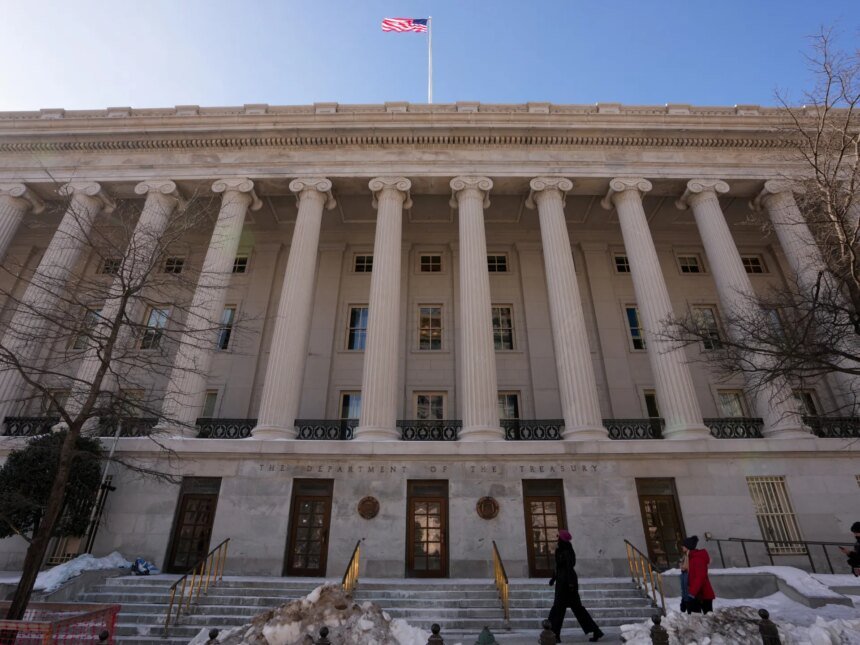
After more than two decades of costly wars, financial crises, tax cuts, and increased social spending, American debt has reached an unprecedented level, exceeding $39 trillion, at a time when the government is no longer borrowing with cheap money as was the case in the past decade, after interest rates raised the cost of servicing debt to record levels. Data indicate that interest payments alone exceeded one trillion dollars annually, becoming one of the largest items of federal spending.
This path was not the result of a single crisis, but rather the result of accumulations that spanned decades, beginning with the end of the stage of financial surpluses at the beginning of the millennium, and then reinforced by wars, the global financial crisis and the Corona pandemic, in addition to the continued growth in health care and retirement programs, while revenues declined due to repeated tax cuts.
Read also
list of 3 itemsend of list
International Monetary Fund data indicate that, in light of these fluctuations, the dollar continued to occupy about 56.9% of global foreign exchange reserves in 2025, despite its historically declining share, which reflects its continued central position, amid expectations that its share will decline to 52% of dollar-denominated assets in 10 years, with the euro’s share at 23%, and the Chinese yuan’s share at 5%, according to a report by the Official Monetary and Financial Institutions Forum (OMFIF), an independent economic research network linking Between central banks and sovereign wealth funds.
Financial transformation
At the turn of the millennium, the United States seemed to be entering a rare financial path, after the budget recorded surpluses in the late era of President Bill Clinton (he served in office from 1993 to 2001), to the extent that some discussions within financial institutions were wondering about the impact of the decline in public debt on the liquidity of the bond market.
But this path was reversed after the collapse of the technology company bubble, then the attacks of September 11, 2001, the wars in Afghanistan and Iraq, and the tax cuts imposed by former President George W. Bush, before the global financial crisis came in 2008 to push the deficit to unprecedented levels at that time.
Since then, American debt has no longer increased only in times of war or recession, but has become part of a permanent financial structure, as federal spending repeatedly exceeds revenues, and the annual gap is added to the existing debt.
Data from the US Department of the Treasury and the Office of Management and Budget clearly reflect this transformation, as the federal debt rose from about $5.6 trillion in 2000 to $13.6 trillion in 2010, then to $26.9 trillion in 2020, before it currently exceeds $39 trillion, which is the fastest debt accumulation in modern American history.
In just six decades, the US federal debt jumped from about $321 billion in the first quarter of 1966 to more than $39 trillion in the first quarter of 2026, an increase of more than 12%, or the equivalent of more than 121 times, according to US Treasury Department data.
Economist Mustafa Youssef believes that the shift from surplus to chronic deficit was not the result of a passing crisis, but rather the result of structural changes in the structure of spending and revenues.
He explains that the recession that followed the dot-com bubble opened the door to broad tax cuts to stimulate growth, while spending continued to rise, which established a structural deficit that is not linked to a temporary economic cycle.
Youssef points out in an interview with Al Jazeera Net that wars played a central role in this path, as the United States financed the Iraq and Afghanistan wars with debt, not by increasing taxes, which made their costs deferred to subsequent generations. Then came the global financial crisis and rescue programs such as the Troubled Assets Rescue Program (TARP), and then the Corona pandemic, adding new trillions in a short period.
He adds that the tax cuts during the eras of George W. Bush and Donald Trump were promoted as being able to stimulate growth in a way that finances their cost, but the practical result was a widening of the revenue and spending gap instead of its contraction.
In addition to the increasing costs of war, the Corona pandemic has increased the financial burdens in the largest economy in the world, especially with the cessation of economic activity, as successive American administrations approved unprecedented support packages that included direct checks to families, expanding unemployment benefits, and programs to protect companies, in addition to a significant decline in tax revenues.
Economic analyst Mohamed Mamdouh Al-Nawaila told Al Jazeera Net that the Corona pandemic represented the largest financial jump in modern American history, as trillions of dollars were added in a very short period, and debt rose to levels that exceeded the gross domestic product, which the United States has not witnessed since World War II.
Data indicate that the debt-to-GDP ratio peaked at about 126% in 2020, while debt has increased by about $13 trillion since the beginning of the pandemic, an increase equivalent to about 45% in less than six years.

Declining revenues
Although wars and crises represent major shocks, a number of economists believe that the most sustainable reason is the decline in government revenues.
The United States witnessed three main waves of tax cuts, which began during the era of Ronald Reagan, then George W. Bush, and finally the tax cuts law approved by President Donald Trump in 2017.
Mustafa Youssef believes that these reductions were based on the assumption that economic growth would compensate for the decline in revenues, but the results showed a widening of the deficit gap, because government spending did not decline by the same amount.
Al-Nawaila points out that most economists disagree about the most influential factor in worsening the debt, as some focus on the inflation of mandatory spending, while others believe that repeated tax cuts were the main reason for the erosion of federal revenues, while a third group believes that the decisive issue is not the size of the debt alone, but rather its ability to grow at a slower pace than output and interest.

Demographic burden
The accumulation of debt does not stop at wars and crises. The slowest but heaviest factor is represented by health care and retirement programs, most notably Social Security and Medicare.
As the baby boom generation (those born between 1946 and 1964) retire and the cost of health care rises, mandatory expenditures automatically expand, while the space available for investment spending narrows.
Congressional Budget Office estimates are consistent with this picture, as public debt held by the public (DHP) is expected to rise from about 100% of GDP in 2025 to 156% in 2055, driven by rising interest rates, slower growth, and an aging population. It is also expected that interest payments will rise to 5.4% of output in 2055, compared to 3.2% in 2025.
Al-Nawaila points out that this type of spending differs from wars or crises, because it does not decline when the crisis ends, but rather increases gradually year after year, which makes the debt expand even in periods when the economy grows.
Religion begets religion
Interest is no longer a figure dependent on debt, but rather it has become a new driver of the deficit and the growth of total debt. As interest rates rose after the inflation wave, the US Treasury began to refinance old debt at a higher cost, which raises debt service even if it does not approve new spending programs, and this led to an exacerbation of interest payments.
Economic analyst Mohamed Mamdouh Al-Nawaila believes that the “rising interest cost” has become a self-reinforcing factor, because the government is borrowing partly to pay the interest on previous debts.
He points out that the problem is no longer a single shock, but rather an overlay of a structural deficit, tax cuts, population aging, wars, financial crises, and the Corona pandemic.
The average interest rate on tradable debt rose to 3.36% by the end of 2025, compared to only 1.55% five years ago.
The data show that interest payments on the public debt (the cost of borrowing) exceeded one trillion dollars annually, accounting for about a quarter of federal tax revenues, at a time when the public debt continues to rise at a pace of approximately $8.03 billion per day, equivalent to about $334.5 million per hour, or approximately $5.6 million per minute, with interest payments exceeding $1.2 trillion on an annual basis in the first quarter of 2026.
In 2025, the US government paid about $261.4 billion in interest to its trust funds, at an average of approximately $21.8 billion per month, while net interest on the debt tripled in five years. The Congressional Budget Office expects it to account for 13.85% of total federal spending in fiscal year 2026, rising to 14.11% in 2027 and 14.52% in 2028.

When does the crisis start?
Despite increasing warnings, there is no economic consensus on the level at which US debt turns into a real financing crisis. But the Penn Wharton Budget Model estimates that the threshold at which public finances become unsustainable is a debt exceeding 210% of GDP.
At this point, the model argues that tax revenues will not be sufficient to finance debt interest at rates acceptable to investors, raising the possibility of default or resorting to high inflation to reduce the real value of the debt.
Although the US debt ratio exceeded 121% of GDP by the end of 2025, the Congressional Budget Office expects it to rise to about 175% by 2056.
The Penn Wharton model warns that the continued rise in health care costs may accelerate the danger point, estimating that the United States may face this scenario within 19 to 25 years, depending on the pace of growth. There is even a 25% possibility of reaching the debt limit in 14 years if health care expenses continue to rise at historical rates.
Does debt threaten the position of the dollar?
In theory, debt inflation should undermine confidence in the currency and bonds, especially if investors feel that the fiscal path is unsustainable. Some indicators have begun to raise concerns, such as the decline in the dollar’s share of global reserves compared to their historical levels, and the increased interest of some central banks in gold and the diversification of reserves.
The dollar is based not only on the strength of the American economy, but also on a vast global network of use in trade, finance, commodity pricing, and reserves.
But reality still gives Washington a wide margin. The dollar is based not only on the strength of the American economy, but also on a vast global network of use in trade, finance, commodity pricing, and reserves. The US Treasury bond market is still the largest, deepest and most liquid, and serves as a reference asset for pricing risks around the world.
This is what Youssef explains, noting that the “exorbitant privilege” enjoyed by the United States has not ended yet, as Washington – in his opinion – still enjoys the largest and deepest financial market in the world, while there is still no alternative capable of competing with the dollar in terms of liquidity, trust and the legal framework.
He adds that the euro still lacks a complete financial union, while the Chinese yuan is still restricted by capital movement restrictions, which gives Washington a longer margin to finance its debts than any other economy.
But Al-Nawaila believes that this preference does not mean the absence of risks, as the continued inflation of debt and the rise in interest rates, in addition to the growing attempts of some countries to diversify their reserves and reduce dependence on the dollar, may gradually lead to the erosion of this historical advantage, even if the scenario of the dollar suddenly losing its position remains unlikely.
Part of the status of the greenback is due to the legacy that Hamilton established more than two centuries ago, as US Treasury bonds have become, over time, the safest and most liquid asset in the world, and are held by central banks and financial institutions in their reserves, and they also constitute the basic reference for global asset pricing.
The US Treasury market currently includes more than $30 trillion in outstanding securities, while the value of daily trading exceeds $1 trillion, making it the deepest and most liquid market in the world.
Part of the status of the greenback is due to the legacy that Hamilton established more than two centuries ago, as US Treasury bonds have become, over time, the safest and most liquid asset in the world.