



Published On 4/7/2026
|
Last update: 18:05 (Mecca time)
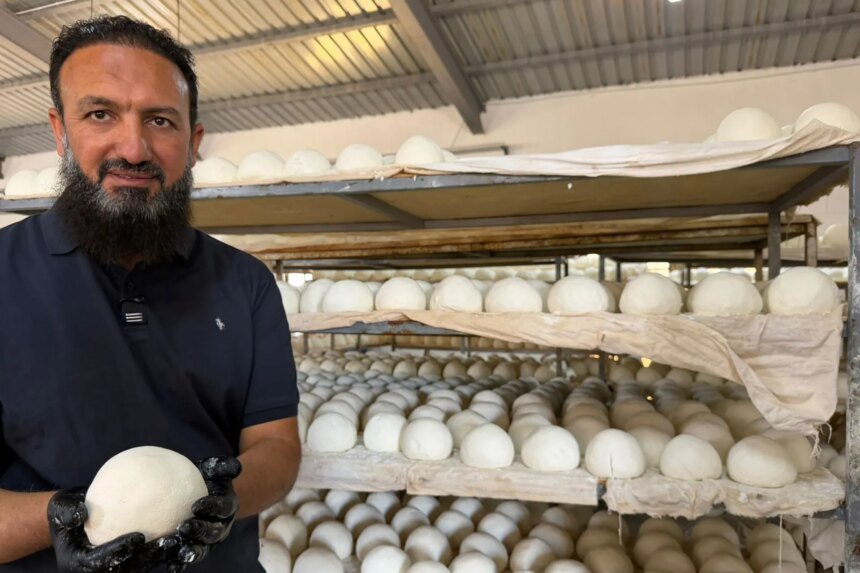
Karak – Before Mansaf became a national symbol for Jordanians, jameed was a solution invented by the people of the desert to confront the harshness of life, when refrigeration or food preservation methods were not known. Over time, these solid white balls turned into one of the most prominent symbols of food identity in the country, to the point that Jordanians began to call them “white gold,” as it is the ingredient without which their most famous and most attended tables at weddings, funerals, and national and social events are incomplete.
In the village of Zahum in Karak Governorate, one of the most famous jameed production areas in the Kingdom, this industry is still passed on from one generation to another, preserving its secrets despite the introduction of technology into production lines.
Read also
list of 4 itemsend of list
The owner of the jameed production factory, Muhammad Musleh Al-Adayleh, said in his interview with Al Jazeera Net that jameed “is not just a food product, but rather part of the Jordanian national identity,” adding: “It is called white gold because it is the foundation of Jordanian mansaf, and mansaf is the symbol of generosity and hospitality in the country, so there is hardly a national or social occasion without its presence.”
He adds that making ice cream in his family “is not only a commercial project, but rather a family heritage passed down through generations. I inherited this profession from my father, and he inherited it from his father. It is a profession that has been inherited for decades, and we preserve it because it is part of our heritage and identity.”

From desert food to a national symbol
The Bedouin environment forced the inhabitants of Jordan in the past to search for a way to preserve dairy products for long periods during travel. The solution was to dry the milk after salting it, thus giving birth to the jameed industry, which has maintained its presence to this day despite the change in lifestyles.
With the development of Jordanian society, jameed was no longer just a way to store food, but rather became the main pillar in preparing mansaf, which in turn turned into a social and cultural symbol that brings together Jordanians in their various governorates, and embodies the values of generosity, solidarity, family ties, and honoring the guest.
This position was strengthened globally after Mansaf was included on the list of intangible cultural heritage in the United Nations Educational, Scientific and Cultural Organization (UNESCO), as one of the most prominent elements of Jordanian heritage.

Sheep milk…the beginning of the story
Inside the factory, the jameed journey begins with fresh milk brought by sheep farmers from the vicinity of the village of Zahoum, where it is received, weighed, and then stored directly in cooling tanks to maintain its quality before manufacturing.
Al-Adayleh explains that milk goes through several precise stages that begin with turning it into “yoghurt”, then cooling it and churning it in the traditional way to separate the butter from the milk, a step that still preserves the essence of the ancient industry despite the use of modern equipment.

After separating the butter, the milk undergoes sterilization and collection processes until the whey separates, then it is packed in special bags and pressed for several days to get rid of excess moisture, before being kneaded and shaped manually into the form of the known jameed discs.
The final stage is drying, as the jameed is placed in designated rooms with controlled temperatures, before being transferred to natural drying until it acquires its usual hardness, a stage that may extend to 20 days in the summer, and more than a month in the winter.
In the final step, the butter is transformed into ghee by cooking it over low heat with the addition of special spices that give it its distinctive flavour. During this process, wheat groats are added, which absorb the remaining milk, moisture, and salts inside the butter, forming a layer known locally as “cream with groats,” which is considered one of the traditional products beloved by the people of the desert due to its rich taste and nutritional value.

Technology in the service of “white gold”
Despite the entry of modern production lines into factories, Al-Adayleh asserts that technology “did not change the essence of the product, but rather helped raise production capacity and maintain quality.”
He says: “Jameed began as a completely manual work, and today machines help in manufacturing, but the taste, flavor and quality have remained the same, because we have not changed the manufacturing method, but only developed the means of production.”
It is considered that preserving the original flavor is what gave Jordanian jameed its status inside and outside the Kingdom, and made the consumer search for it even with the spread of similar products in other markets.

From Karak to the tables of the world
Jordanian jameed is no longer limited to the local market, but has crossed borders with the spread of Jordanian restaurants in various countries.
Al-Adayleh points out that his factory’s products reach Qatar, Saudi Arabia, Kuwait and the Emirates, in addition to markets in Europe and Australia, saying: “The Jordanian mansaf has become known in many countries of the world, and with it the Jordanian jameed has become in demand. Our products have reached distant markets, and we seek to develop production and expand exports.”
This spread reflects the transformation of jameed from a local product associated with desert life into a commodity that carries the Jordanian identity abroad, accompanying members of the Jordanian and Arab communities wherever they are.

More than food… a nation’s memory
Although jameed is made from milk, its value to Jordanians goes beyond the nutritional aspect. He is present at weddings, banquets, tribal reconciliations, and receiving guests, and his presence summarizes a large aspect of the social culture in the Kingdom.
Al-Adayleh believes that preserving the jameed industry means preserving part of the national memory, stressing that new generations “are required to continue this profession and develop it without compromising its authenticity.”
He concludes his speech by saying: “Jemeed is not just an industry, but a message that we carry from our ancestors. We will continue to develop it until white gold remains present on the tables of Jordanians and in various countries of the world.”