

Published On 7/6/2026
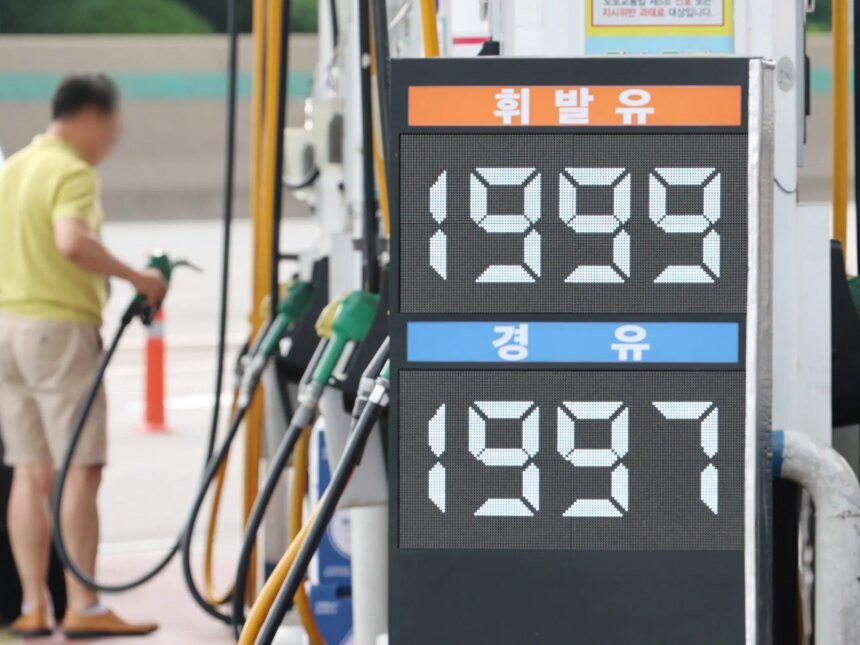
The South Korean public prosecutor charged officials in the country’s four major refining companies with colluding to raise fuel prices, in a case that he said caused damage estimated at 26 trillion won ($17 billion), through anti-competitive practices following the outbreak of the US-Israeli war on Iran.
The Seoul Public Prosecution announced that the charges included officials from HD Hyundai Oilbank, SK Energy, GS Caltex, and S-Oil, on charges of violating the Fair Trade Law by coordinating to raise the prices of petroleum products.
Read also
list of 4 itemsend of list
The lead public prosecutor in the case said, in a press conference, that the pricing managers of HD Hyundai Oilbank and SK Energy discussed the amount and timing of the price increase shortly after the outbreak of the US-Israeli war on Iran, adding that the other two companies “followed their influence in pricing.”
Investigations showed, according to the prosecution, that HD Hyundai Oilbank and SK Energy directly colluded in price increases worth 14.2 trillion won (about $9.28 billion), while GS Caltex and S-Oil were accused of following the same increases, which led to higher prices at the market level and undermined competition.
The Public Prosecutor said that the refining companies exerted pressure on gas station owners through contracts that he described as unfair to oblige them to apply the agreed-upon prices, adding that one of the accused employees “exchanged information about prices with employees in competing companies over a period of years before the war,” and he was arrested.
He added, “We found that the sharp rise in fuel prices following the war on Iran was driven by collusive practices that have long been prevalent in this sector.”
The prosecution also said that refining companies imposed significant price increases despite possessing large stocks of crude oil at the outbreak of the war, stressing that “what happened immediately after the war was not a temporary deviation, but rather chronic collusive practices that took place in light of an international crisis.”
Antitrust
The case comes at a time when the South Korean authorities have tightened antitrust measures, as the Fair Trade Commission raised the minimum penalty for collusion to 10% of sales related to the violation, compared to 0.5% previously.
Following the war on Iran, South Korean President Lee Jae-myung called for strict measures to be taken against collusion in setting fuel prices to reduce inflationary pressures.
South Korea relies heavily on crude oil imports, as it imported about 70% of its oil needs from the Middle East last year, making fuel prices highly sensitive to fluctuations in global energy markets.
As part of the investigations, the authorities raided a number of gas stations to verify the presence of unfair increases in prices after the outbreak of the war.