

Published On 4/7/2026
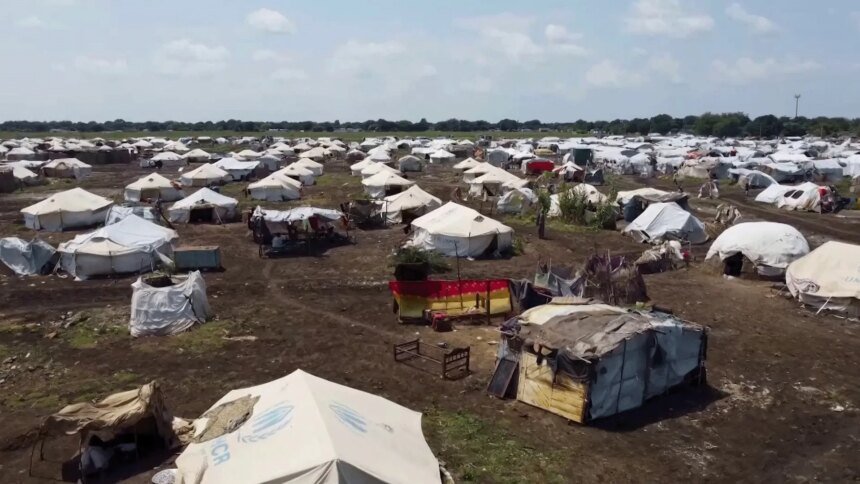
In the camps for the displaced in the city of Damazin, the capital of the Blue Nile region in southeastern Sudan, life seems nothing more than a daily extension of heavy suffering in which war intersects with the cruelty of nature, in a scene that sums up the fragility of stability and the depth of the humanitarian crisis experienced by thousands of people fleeing combat zones.
Inside these camps, there are worn-out and dilapidated tents scattered, hastily erected to shelter families who lost their homes, but did not find refuge from their pain in asylum. The land that was supposed to be a temporary refuge has turned into an open space for rain, stagnant water, and diseases, while the displaced complain of the scarcity of clean water, the scarcity of food, and the absence of the most basic necessities of life.
The displaced woman, Hawa, told Al Jazeera correspondent Waddah Al-Taher as she tried to collect the leaking rainwater inside primitive containers: “There is nothing. Rainwater pours on us at night, and we do not have plastic covers. We try to collect water to eat and drink. These children collect firewood and we try to manage here, and if flour is available, that will help us a lot.”
With the advent of autumn, fears increased in the camps, as rain turned from a seasonal blessing into an additional burden that threatened the lives of thousands of families. Strong winds uprooted parts of tents, and continuous rain showers opened the door to possible diseases, especially among children and infants who live in conditions that do not provide the minimum amount of protection.
The displaced woman, Fatima, who arrived in Damazin from the Kurmuk area, describes her situation and her children with clear concern: “We came here after we were expelled during the war, and we do not have plastic sheets and we do not own anything. We need food and clothes, and we are afraid if it rains. We do not have tents to protect us, and we are very worried about our children.”
Trying to contain the crisis
In the depths of this scene, closely packed tents are visible, trying to withstand weather fluctuations, while official and popular efforts are intensifying to alleviate the suffering through some limited service interventions, such as opening internal roads and delivering medicines and medical supplies, in an attempt to contain a crisis that exceeds the capabilities of the available capabilities.
But the reality, as described by one of the relief workers inside the camp, remains too harsh to be alleviated by temporary solutions: “In (Block 10), people put plastic covers or clothes and sheets on themselves to take shelter, and with rain and hurricanes, insects such as scorpions and others may creep in.”
With each passing day, the gap between increasing needs and limited aid deepens, at a time when rain is turning into a new source of fear, no less severe than the war itself.
Al-Jazeera correspondent Waddah Al-Taher summarizes the scene from inside one of the camps, saying that life there is burdened by the bitterness of displacement and the aid that barely satisfies the need, adding that the rains that were supposed to herald good things have become an additional harbinger of misery, making thousands of displaced people double victims of war and weather fluctuations at the same time.