

Published On 4/7/2026
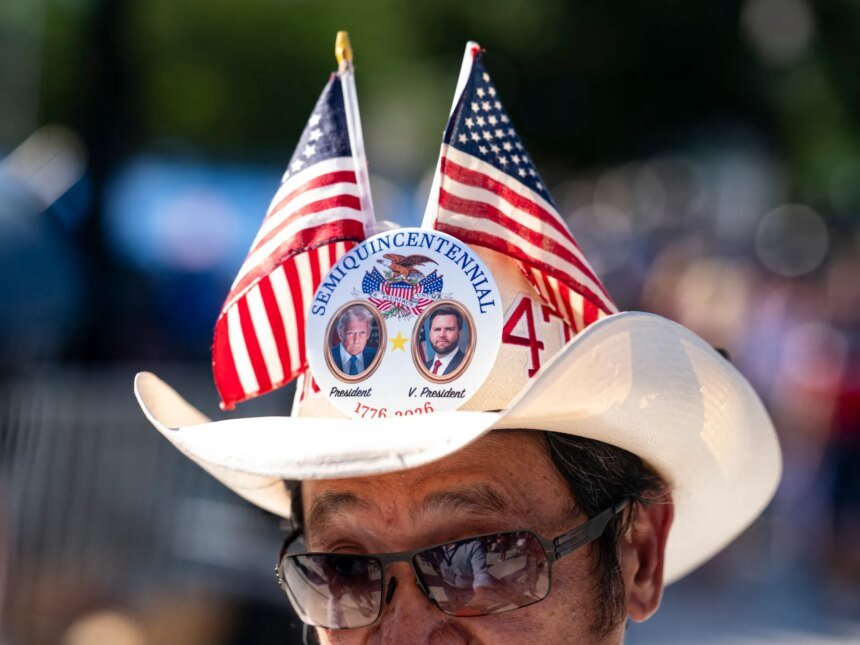
Two American newspapers saw that important transformations occurred in the celebrations of the 250th anniversary of the founding of the United States, making it move from a broad national project led by civil and parliamentary institutions to an event of a political and personal nature centered around President Donald Trump.
An article on the Politico website discussed these transformations, revealing an indirect conflict between the official planners of the celebration, represented by the Congress-backed “America 250” Committee, and a competing initiative linked to the administration of President Donald Trump under the name “Freedom 250,” which has become more present and influential in the festive scene.
Read also
list of 2 itemsend of list
According to Sophia Kay, the author of the article, “America 250” had developed, over nearly a decade, an ambitious plan for a large-scale national celebration focusing on American history, public service, and community participation, with the vision of huge events extending across the country, in addition to central celebrations in Washington, D.C.
However, these plans were not implemented as hoped because the committee received only a limited portion of the federal funding allocated to it, as it has so far received about $25 million out of the $150 million that Congress had allocated for the event, which led to a significant reduction in the scope of the planned projects.

A narrative that reflects a conservative perspective
The article highlighted that the White House adopted a special initiative called “Freedom 250,” in addition to the official joint initiative between the two parties, “America 250,” but it redirected a large portion of activities toward events attended by the president personally, in partnership with conservative institutions to present a historical narrative that reflects a conservative perspective on the state and its founding.
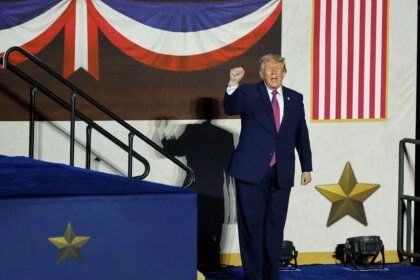
The role of “Freedom 250” was clearly highlighted in the opening of the Theodore Roosevelt Presidential Library in North Dakota – according to Politico – as the event took place in the presence of President Trump and away from the supervision of “America 250”, even though it was a key partner in the initial plans for the project.
The chair of the “America 250” committee confirmed that the nature of the programs has not changed, but their size has clearly decreased due to limited funding, stressing the committee’s commitment to the principle of “no policy, but a goal” and to the plan that was drawn up before Trump returned to power.
Despite these challenges, “America 250” continues to implement a number of symbolic and patriotic programs, such as sending students to historical sites throughout the country, organizing charitable initiatives on a national level on Independence Day, in addition to symbolic events such as burying “America’s Time” in Philadelphia, and launching multi-city cultural and musical celebrations.
However, the general image of the celebrations – according to the article – has become more closely linked to the “Freedom 250” initiative, which offers more prominent events on the visual and media levels.

An arena of conflict
The article concluded by referring to the most prominent event organized by Freedom 250, a fireworks display described as the largest in the history of the United States, which includes hundreds of thousands of fireworks and is held in multiple locations within Washington, D.C.
This display is seen – according to the report – as the most clear embodiment of the transformation of the celebration of the 250th anniversary from a long-term institutional national project into an arena for political and media competition, which reflects the amount of influence that the Trump administration has come to exercise over the symbolism of this historical event.
The Los Angeles Times explained that the void resulting from the decline in official funding was filled by directing government resources to an event organizing company linked to the previous Trump campaign, which led to the celebrations being concentrated in Washington, D.C., and giving them a clear political character.
As a result, the events – according to historians – became closer to a display highlighting Trump’s presidency than a collective celebration of the history of the founding of the state and its revolution against monarchy.
The Los Angeles Times concluded that the 250th anniversary celebrations have become an arena of conflict over the “narrative of American history,” between those who believe that the state must present a unified narrative led by political authority, and those who believe that history must be narrated through academic and cultural institutions away from direct political employment, in light of a growing controversy over who has the right to shape the national memory of the United States.