Published on 6/29/2026
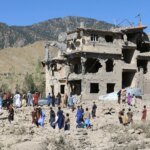
Since the escalation of fighting in Mali in April 2026, the Malian armed forces, their allies, and armed Islamist groups have committed serious violations against civilians, including unlawful attacks, killings, suspected drone bombings, looting, and destruction of property, Human Rights Watch said.
The organization explained that the Al-Qaeda-linked group to support Islam and Muslims, allied with Tuareg fighters from the Front for the Liberation of Azawad, launched coordinated attacks across Mali on April 25, targeting cities including Kidal, Gao and Mopti. The clashes in Kidal and Gao resulted in the killing of 13 civilians and the injury of at least 25 others.
She added that on April 28, the group announced a “comprehensive siege” of the capital, Bamako, and between May 6 and May 21, burned more than 40 civilian vehicles heading to the capital, and accused their passengers of violating the siege. It also carried out a public execution in the town of Tonka in the north of the country.
According to the report, the Malian armed forces, supported by Russian fighters from the “Africa Corps” (formerly Wagner), responded with operations that appeared to be of a retaliatory nature against the Fulani communities in the center of the country.
Human Rights Watch indicated that army operations between May 14 and 17 led to the killing of 38 civilians, including 23 children. The armed forces also carried out two air strikes believed to be with drones, one in the village of Gembe on April 25, killing 12 children and boys, and the other in the town of Tiny on May 17, killing 10 men and women during a wedding party.
The organization said that it conducted remote interviews with 34 people, including witnesses to the violations, and analyzed video materials and satellite footage, and that it wrote to the Minister of Financial Justice on June 11 without receiving a response.
Human Rights Watch called on all parties to respect international humanitarian law and take all possible steps to avoid harming civilians, calling on the United Nations and the African Union to support independent accountability mechanisms, including a fact-finding mission in preparation for criminal investigations and prosecutions.