Published on 6/30/2026
|
Last update: 23:44 (Mecca time)
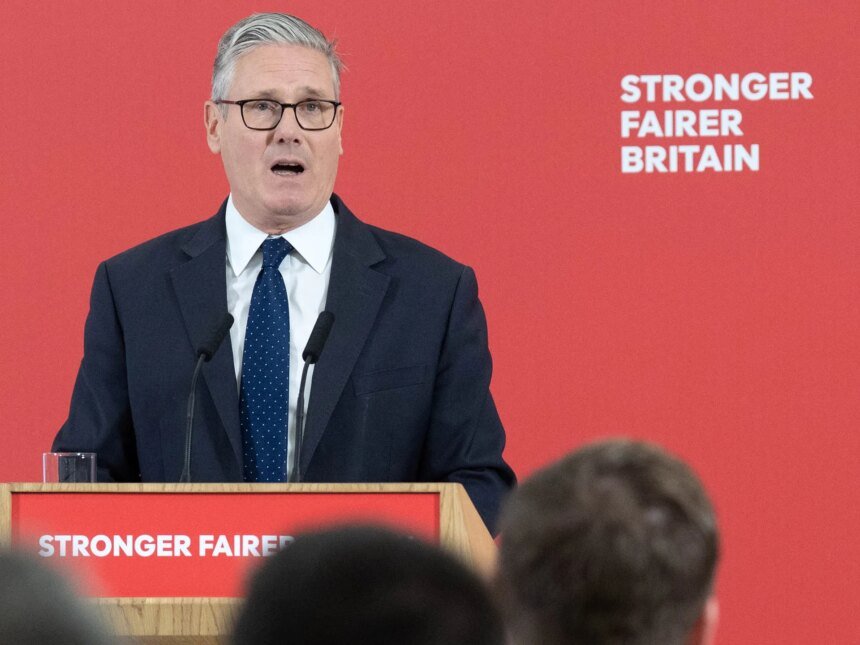
The Financial Times reported that British Prime Minister Keir Starmer decided to allocate 15 billion pounds (about 20 billion dollars) to increase the defense budget, but warned that this would entail canceling important road and energy projects.
Starmer said on Tuesday that the long-delayed defense investment plan would help develop the armed forces, which had suffered from “lack of funding and inadequacy to confront existing threats,” as he put it.
Read also
list of 4 itemsend of list
Starmer stressed that the additional investment in defense expenditures, which raises the total budget of the Ministry of Defense to about 300 billion pounds (about 400 billion dollars) in 4 years, will not violate the financial rules that the government follows to regulate its expenditures, and will stop other projects to allocate their expenditures to defense.
He described the canceled projects to build roads and energy networks as “important but not urgently vital.”

Sharp disagreements
The announcement of this plan has been repeatedly postponed due to funding disputes, after Starmer originally pledged to present it before the NATO summit in Türkiye on July 7-8.
This delay exacerbated the political crisis that led to Starmer announcing his resignation from office last week, after Defense Secretary John Healey resigned in protest against weak defense allocations.
He accused Haley Starmer and Chancellor of the Exchequer Rachel Reeves of not providing sufficient resources “to defend the country in this period of heightened threats”.
Pressure has mounted on Starmer from members of his party to resign and make way for Andy Burnham, the former mayor of Greater Manchester, to assume leadership of the party and become prime minister.
Starmer described this plan, which he hopes will be one of the pillars of his political legacy, according to what Agence France-Presse reported, as “a game-changing investment.”

Development of defense systems
For its part, the Ministry of Defense said in a statement that the plan allocates more than 5 billion pounds (about 6.6 billion dollars) for drones and autonomous systems over the next four years.
She added that this investment will enhance capabilities ranging from “advanced autonomous mine-hunting drones, small quadcopter tactical drones, and low-cost attack attack drones.”
The wars in Ukraine and the Middle East have highlighted the role of drones and combat robots in conflicts, where they are being used extensively.
The Ministry of Defense pointed out that Ukraine uses about 200,000 drones per month in the war with Russia, while 700 attack drones were launched daily in the Middle East at the height of the war against Iran.
Washington has repeatedly called on the allies to increase their military spending to 5% of GDP by 2035, and to reduce their dependence on Washington to ensure their security.
Starmer said that the defense plan would increase military spending to 4.2% of GDP.
However, the amount of 15 billion pounds ($20 billion) remains lower than the amount requested by military leaders earlier, amounting to 28 billion pounds (about 38 billion dollars).
The plan also provides for mobilizing more than 8 billion pounds (about 10.8 billion dollars) to create the next generation of stealth aircraft, as well as 64 billion pounds (about 86 billion dollars) to modernize Britain’s nuclear deterrent capabilities.