Published on 6/30/2026
|
Last update: 12:08 (Mecca time)
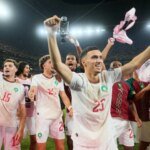
A new historical dawn was recorded by the Moroccan national team in the 2026 World Cup finals, after clinching the qualification ticket to the round of 16 (round of 16) at the expense of its Dutch counterpart with a score of (3-2) on penalty kicks, following a breathtaking confrontation in the round of 32.
The joy was not only sporting, but Arab social media platforms turned into an arena for celebrating an exceptional football epic in which the spirit of victory was mixed with the innocence of childhood and the depth of family loyalty.
The story of Ismail Sibari’s struggle
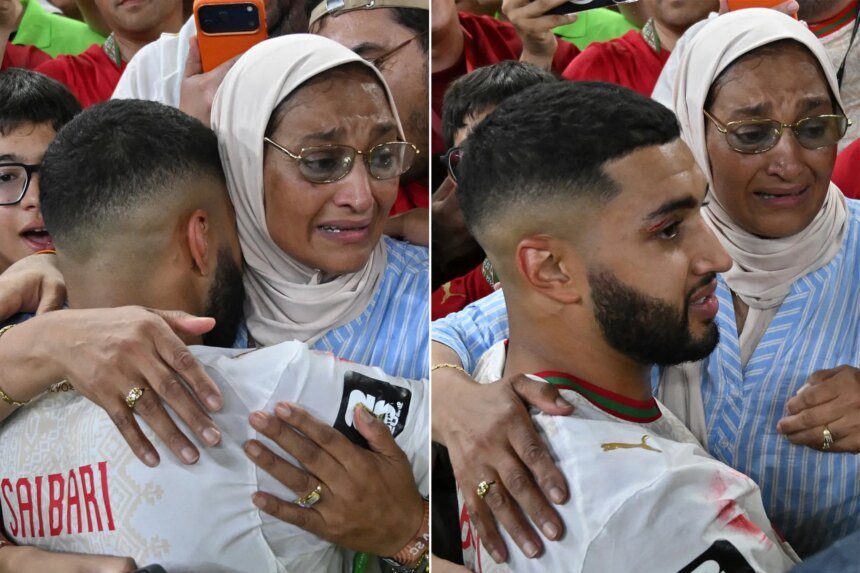
With the final whistle blowing and the decisive penalty kick scored, the photographers’ lenses captured the most influential shot of the World Cup, a warm embrace between star Ismail Sibari and his mother in the stands.
Read also
list of 2 itemsend of list
This embrace was not just a passing celebration. Rather, it summed up an inspiring story of struggle that filled the platforms. The child who was born with a congenital deformity and severe curvature of his legs, and whose family was told by doctors one day that his football future seemed impossible, today became the hero who led his country past the Dutch windmills.
The Confederation of African Football (CAF) reacted to the scene with an eloquent phrase: “Behind every dream…a mother who believes in it.”
Social media witnessed a wave of sympathy and pride in the Moroccan model of filial piety, as tweeters linked the mother’s tears and her long stays up to treat her child and his orthopedic medical device, and his current stardom.
One of the followers wrote: “Anyone who heard the story of Saibari and his suffering in his childhood knows the reason for his mother’s tears. A free, fighting and strong Moroccan mother who was patient, fought, and believed in her son’s future, and now she is proud of him in front of the whole world.”
The Arab public also expressed its emotional solidarity with this phenomenon that has continued since the Qatar World Cup, and tweeters commented: “When we see the Moroccan national team players with their mothers, it is as if their mothers are our mothers as well,” referring to the warm family values that have become a registered trademark in the name of the “Atlas Lions.”
Morocco is no longer a “dark horse” but a candidate for the title
On the technical level, the Moroccan performance received wide praise from analysts and fans, who considered the qualification a resounding shock to Dutch football, coinciding with the defeats of other European powers such as Germany on the same day. The tweets unanimously agreed that football no longer recognizes ancient names, but rather rewards those who fight and deserve it on the field.