
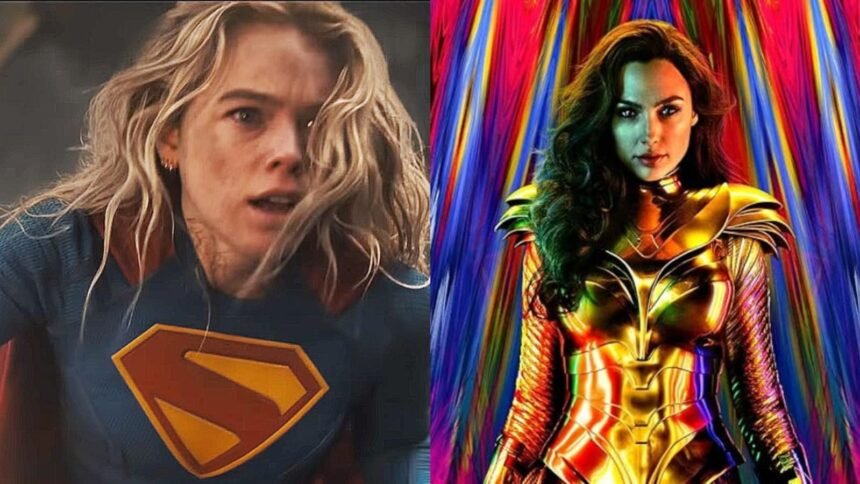
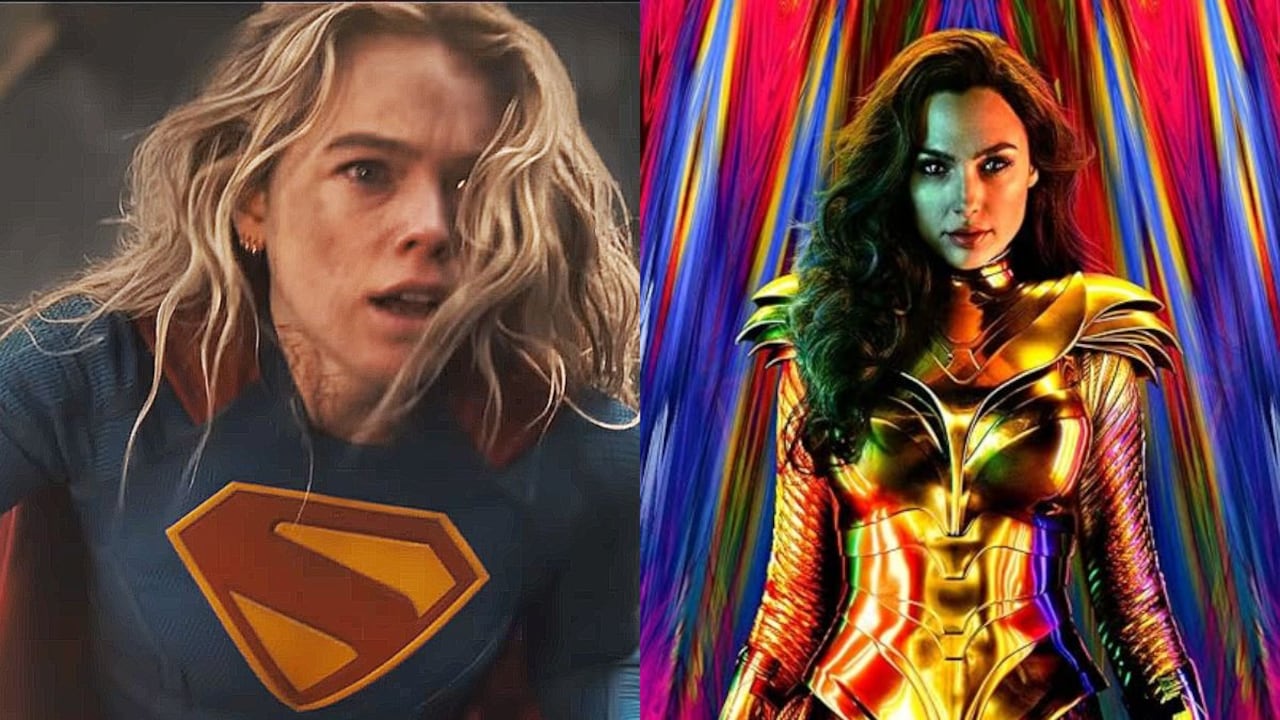
When Supergirl landed with a softer-than-expected box office debut and a mixed critical response, it wasn’t merely another stumble for the rebooted DCEU. It reignited a question Hollywood has struggled to answer for over a decade: Why do female-led superhero films remain so difficult to get right? The latest film opened well below expectations despite the momentum created by last year’s Superman reboot, adding another chapter to an uneven history of women-led comic-book blockbusters.
The irony is that audiences have repeatedly shown they’re ready for female superheroes. They’ve embraced them in animation (Spider-Man: Across the Spider-Verse’s Spider-Woman), television (Supergirl, WandaVision, Agatha All Along), and ensemble films (Avengers: Endgame). Yet, when studios hand these characters their own tentpole films, something often gets lost in translation.
The problem isn’t women superheroes. It’s how Hollywood keeps trying to build movies around them.
The “Event” Trap
Too many female superhero films arrive carrying the weight of representation before they carry the weight of storytelling.
Instead of asking, “What’s the most compelling story we can tell?”, studios sometimes seem to ask, “How do we make this character historic?”
That burden has affected films as varied as Captain Marvel, The Marvels, Wonder Woman 1984, Eternals, Madame Web, and now Supergirl. Their quality varies dramatically, but they share one common challenge: Each was expected to prove something about women-led blockbusters rather than simply being a great movie.
Contrast that with Iron Man in 2008. Robert Downey Jr.’s Tony Stark wasn’t introduced as “Marvel’s first serious male superhero”. He was simply allowed to be charismatic, flawed and entertaining.
Female heroes deserve the same freedom.
Origin Stories Aren’t Enough Anymore
There’s another structural issue.
After nearly 20 years of interconnected superhero cinema, audiences have become fluent in the language of capes and cosmic threats. Simply introducing another hero isn’t exciting on its own.
The biggest superhero successes of recent years, from The Batman to Guardians of the Galaxy Vol 3, succeeded because they had a distinctive emotional or stylistic identity.
Many female-led superhero films, by comparison, have leaned too heavily on familiar franchise formulas.
A superhero’s gender can make a story richer. It cannot be the story.
Even Visionary Directors Struggle
It’s tempting to think that better filmmakers automatically solve the problem. But the evidence suggests otherwise.
Oscar-winner Chloe Zhao brought lyrical visual storytelling to Eternals. Zack Snyder gave Wonder Woman one of her most memorable introductions in Batman v Superman before handing the solo franchise to Patty Jenkins. James Gunn has built one of the most successful modern superhero careers through emotionally driven ensemble films. Kevin Feige has overseen the highest-grossing franchise in cinema history.
Yet none has fully cracked the code for consistently successful female-led superhero franchises.
That suggests the issue runs deeper than any individual director or producer. It’s an industry challenge.
Audiences Have Changed
Another factor is simple fatigue. Superhero films are no longer guaranteed cultural events.
The post-Avengers: Endgame era has seen audiences become far more selective. High-concept originality now competes directly with franchise familiarity.
That means every superhero film, male or female-led, must justify its own existence.
Supergirl appears to have suffered from this broader slowdown rather than creating it. Recent superhero disappointments have included films centred on both male and female protagonists, suggesting audiences are rejecting formula, not gender.
What India Wants
The Indian audience offers an interesting perspective.
Indian moviegoers have enthusiastically embraced women-led action stories when the emotional stakes feel authentic. From Mardaani and Raazi to Gangubai Kathiawadi, viewers have shown they will turn up for female protagonists who feel grounded, complex and emotionally engaging.
Even outside superheroes, audiences respond to character first, spectacle second. Nothing proves this better than the mixed responses to YRF’s upcoming Alpha, starting Alia Bhatt and Sharvari Wagh as leads.
The same expectation increasingly applies to Hollywood. A cape alone isn’t enough.
The Future Looks Brighter Than It Seems
Despite recent setbacks, there are reasons for optimism.
Television has arguably done a better job exploring female superheroes because longer storytelling allows characters to develop beyond their powers. Melissa Benoist’s Supergirl series, for example, earned consistently strong reviews across much of its run by focusing as much on Kara Danvers the person as Supergirl the symbol.
The lesson may be surprisingly simple.
Audiences don’t necessarily want “strong female characters”. They want interesting characters who happen to be women.
Characters who fail. Who laugh. Who make bad decisions. Who aren’t burdened with representing half the world’s population every time they step on screen.
Hollywood’s next breakthrough female superhero film may not come from making its heroine more powerful.
It may come from making her more human.
Because the most enduring superheroes, from Superman to Spider-Man to Batman, were never remembered simply because they could save the world.
They were remembered because, beneath the cape, they looked a little like us.
And perhaps that’s the superpower female superhero movies have been searching for all along.
Also Read | House Of The Dragon Season 3: 8 Things You Can Expect (Spoiler-Free)