Neither the sky nor the seaways are neutral spaces in the Western Pacific; Rather, it has become a frequent scene for the display of wills between rising powers and others seeking to maintain their traditional superiority.
As military movements around Taiwan intensify and US-Japanese alliances expand, Beijing and Moscow are building a joint deterrence theater over the same seas that the US Navy has occupied for decades.
Read also
list of 4 itemsend of list
In this context, Chinese-Russian air and naval maneuvers near Japan and Taiwan come. Coinciding with profound shifts in the balance of naval capabilities between Beijing and Washington, the recent Chinese-Russian air maneuvers are not a passing event as much as they are an advanced step in building a joint deterrence system, carrying direct messages to Japan and its allies, and indirect messages to the United States about the balance of power in the Western Pacific.
Strategic air patrols
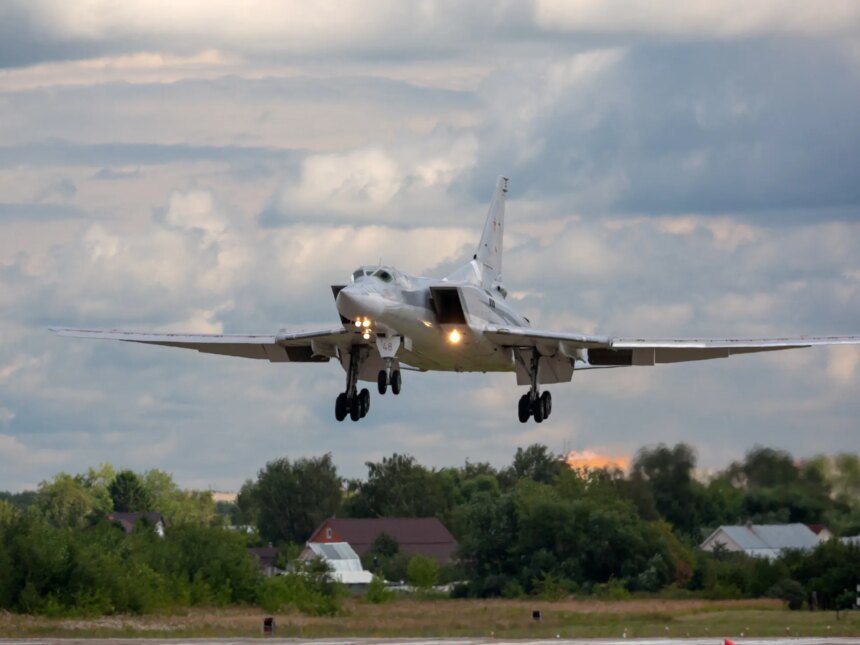
The Chinese newspaper Global Times indicates that the joint strategic air patrols between China and Russia reached their 11th sortie this year since 2019, on a path extending over the Sea of Japan, the East China Sea, and the Western Pacific Ocean.
In his statement to the newspaper, military affairs expert Zhang Xiu Feng believes that this year’s sorties have highlighted two basic features: first, the approach based on an integrated system; It integrates bombers, fighters, electronic warfare aircraft, early warning and air refueling, and, secondly, high combat readiness with live armament and advanced capabilities to detect and confuse enemy radars.
This level of integration and armament; It transforms air sorties from mere political messages into an actual operational test of the operation of an integrated missile air system in a potential conflict environment.
Zhang Xiu Feng:
The Chinese-Russian air sorties highlighted two key features: the integrated system approach; And high combat readiness
Reaction
The South China Morning Post explains that Japan and South Korea quickly moved their fighters in response to the recent joint patrol, with Tokyo confirming that it tracked the Chinese H-6 and Russian Tu-95 bombers and their accompanying fighters, some of which crossed the Miyako Corridor, the vital outlet to the western Pacific Ocean from the East China Sea.
The newspaper notes that Seoul announced the entry of more than ten Chinese and Russian warplanes into the air defense identification zone without violating sovereign airspace, which reflects a calculated action on the edge of the legal line to create permanent pressure without exceeding the limits of direct engagement.
In the same context; The South China Morning Post links these moves to statements by Japanese Prime Minister Sanae Takaichi about the possibility of Japanese military intervention if a Taiwanese emergency occurs, raising the value of maritime airspace around Japan as a pre-emptive deterrent theater.

Coordination around the straits
In the maritime dimension, the South China Morning Post records the crossing of a group of Chinese Navy Type 055 and D-052 destroyers through the Tsushima Strait, heading to the East China Sea, after they crossed this strait several times in the past months, demonstrating their ability to continue operations away from their ports and using highly armed platforms against aircraft, anti-submarines, and surface ships.
On the other hand, the newspaper quotes the Japanese Ministry of Defense as monitoring the crossing of a group of the Russian Pacific Fleet through the same strait after a four-day technical visit to the Chinese port of Qingdao, which included a courtesy visit from the commander of the Russian task force to lead the Northern Theater of the Chinese Navy.
This succession in the use of the same waterways and sea straits by Chinese and Russian ships establishes a pattern of undeclared operational coordination, the aim of which may be to demonstrate a joint ability to pressure Japan by increasing military activities in the waters near it.

Monitoring and intensifying partnership
At a time when Chinese reports describe the Japanese reaction as an “exaggeration” used to justify military expansion and amending the constitution, the Global Times conveys the assertion of military expert Zhang Junshi, saying, “Tokyo’s harassment of the Chinese aircraft carrier group (Liaoning) comes within the framework of creating an atmosphere of tension that gives it justifications for building a greater military force.”
But the South China Morning Post monitors another aspect of Japan’s response, which is expanding its defense partnerships in Southeast Asia and strengthening its alliances in the Indo-Pacific region, from signing a defense cooperation agreement with Indonesia to discussing the transfer of used destroyers to the Philippine Navy and full participation with combat units in the “Balikatan” exercises with the United States and the Philippines.
This movement reflects a Japanese awareness that the response to Chinese-Russian maneuvers is not only through tactical interceptions in the air and sea, but rather by consolidating its position in the structure of broader Atlantic regional alliances extending from Washington to Jakarta and Manila.
A leaked intelligence slide from the US Navy revealed that China has a shipbuilding capacity 232 times greater than that of the United States.
The American fleet and the deterrence equation
In a further context, a report on the Asia Times website reveals a strategic dimension that may be the most important in the deterrence equation, which is called the “repair gap” in the US Navy, as a study quoted in the report warns that the ability to repair damaged “R. Lee Burke” destroyers in the Indo-Pacific theater is much less than what a major war with China requires.
The report infers from a group of testimonies from studies and research centers that the US Navy is suffering from a severe shortage of industrial capabilities, a shortage of spare parts, and a decline in the supporting fleet, which may turn it into a “base protecting force” rather than an offensive naval force in a long war of attrition.
The writer highlights the huge deficit in shipbuilding, based on a report by The War Zone website, according to which a leaked intelligence chip from the US Navy revealed that China possesses a shipbuilding capacity 232 times greater than that of the United States, at a time when Washington only has eight large military yards.
Maneuver or deterrence message?
From a political-military perspective; The accumulation of these events makes the joint Chinese-Russian patrols near Japan and Taiwan part of a long-term deterrence strategy, and not just fleeting air sorties.
Coordinated repetition; The increasing complexity of air and naval formations, the use of vital straits, and symbolic communication between the Chinese and Russian fleets are all elements that point to the construction of a “high-density” pattern intended to mentally prepare adversaries to accept a higher level of risk around the front lines.
The US fleet repair crisis also reveals the difficulty of returning damaged ships to service in a long war scenario, which gives the Chinese-Russian maneuvers an additional deterrent dimension based on structural superiority in the ability to withstand losses and regenerate force.
In light of this, for Beijing and Moscow, these joint air sorties appear to be exercises in force integration on the margins of a potential conflict, while for Washington and its allies, they are a reminder that the balance of deterrence in the Western Pacific is not reshaped by the number of missiles and aircraft, but rather by whoever has the manufacturing and organizational capacity to keep his fleet at sea and in the sky for the longest possible period.